
Description
Key Technical Specifications
| Parameter | Typical Value / Note |
|---|---|
| Manufacturer lineage | Motorola / Emerson / Artesyn / SMART EC |
| Form factor | 6U VMEbus, single slot |
| Processor | NXP/Freescale MPC864xD, dual PowerPC e600 |
| Clock speed | 1.067 GHz or 1.33 GHz |
| System memory | 512 MB, 1 GB, 2 GB, or 4 GB DDR2 ECC |
| NOR flash | 128 MB |
| NAND flash | 2 GB, 4 GB, or 8 GB; up to 32 GB reported |
| MRAM | 512 KB MRAM reported |
| VMEbus | VME64/VME64x, 2eSST, up to 320 MB/s |
| Ethernet | 4x 10/100/1000 Mbps |
| Serial | Up to 5x RS-232 via front panel and RTM |
| Expansion | Dual PMC-X 33/66/100 MHz; PCI Express expansion; XMCspan |
| RTM | MVME7216E/MVME721ET rear transition module |
| OS support | VxWorks, Linux, LynxOS reported |
| Operating temperature | Commercial and extended-temperature variants; extended range reported around -40 to +71°C |
| Cooling | Minimum 10 CFM airflow required |
| Mechanical | 233 mm x 160 mm x 20 mm; approx. 0.680 kg |
Product Introduction
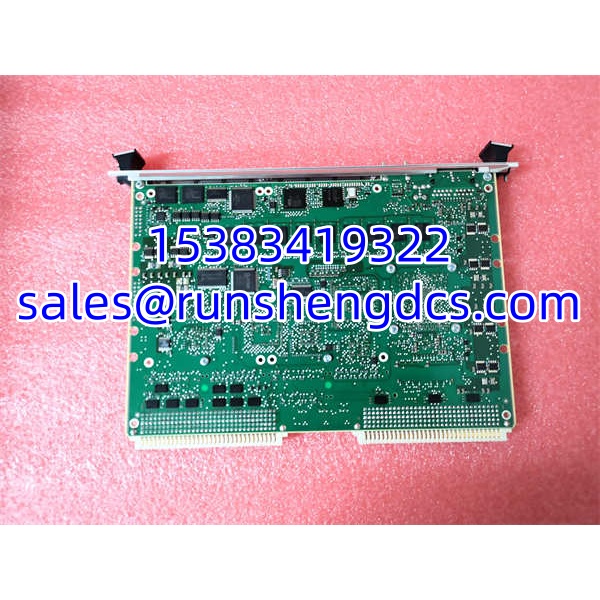
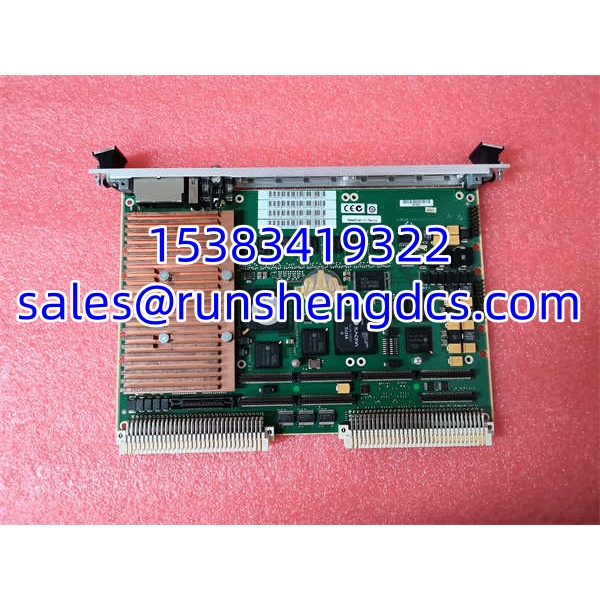
The MVME7100 is a 6U VMEbus single-board computer built around the NXP/Freescale MPC864xD system-on-chip with dual PowerPC e600 cores. It was originally introduced under the Motorola embedded computing portfolio and later carried through Emerson Network Power, Artesyn Embedded Technologies, and SMART Embedded Computing. With up to 4 GB DDR2 ECC memory, 128 MB NOR flash, multiple NAND flash options, and four Gigabit Ethernet ports, it is designed for real-time control, data acquisition, communications gateway, and embedded computing roles where VMEbus infrastructure must be retained.
From an integration standpoint, the MVME7100 is strongest when used as a VME system controller or high-performance processor node. It supports 2eSST VMEbus transfers, dual PMC-X sites, PCI Express expansion, and rear I/O through an RTM such as the MVME7216E/MVME721ET. It is commonly found in industrial automation backplanes, telecom chassis, test systems, and legacy aerospace platforms. Because “GE MVME7100” is not a standard OEM branding, the exact manufacturer, board revision, memory size, flash configuration, and enabled interfaces must be confirmed from the physical nameplate before purchase or replacement.
QA/QC Transparency SOP
- Nameplate Verification: Record manufacturer, marketing number such as MVME7100-0161/0163/0171/0173, serial number, board revision, and firmware version.
- Visual Inspection: Check PMC connectors, VME P1/P2 pins, heat sink mounting, battery/RTC area, and signs of rework or corrosion.
- Power and POST Test: Install in a compatible VME chassis. Verify boot, MOTLoad diagnostics, and LED status.
- Memory and Flash Test: Confirm DDR2 ECC capacity, NOR flash readability, and NAND flash health. Verify MRAM/RTC if populated.
- Interface Validation: Test all four Gigabit Ethernet ports, serial ports, PMC sites, and RTM rear I/O if available.
- VMEbus Function Test: Verify 2eSST operation, VME addressing, interrupt handling, and system controller behavior if required.
- Final Packaging: After full power-cycle validation, pack in ESD shielding with desiccant. Label with full part number, revision, memory, flash, and test results.
Field Engineer Gotchas
- “GE” Label Is Unusual: The MVME7100 is a Motorola/Emerson/Artesyn/SMART EC product. If a unit is marked GE, confirm whether it is an OEM-specific build, relabel, or mislisted surplus.
- Multiple Hardware Revisions: Memory, NAND flash, Ethernet PHY, and PMC options vary by marketing number. Do not assume two MVME7100 boards are interchangeable.
- RTM Dependency: Rear serial, Ethernet, and PIM access may require the correct MVME7216E/MVME721ET transition module.
- Firmware and BSP Match: VxWorks, Linux, and LynxOS BSPs must match the board revision and memory map. Mismatched firmware can cause boot or Ethernet failures.
- Thermal and Airflow: The board requires at least 10 CFM airflow at elevated ambient temperatures. Poor chassis cooling can cause intermittent faults.
- PMC Compatibility: Not all PMC/XMC modules are supported. Processor PMCs and XMCspan configurations require explicit validation.
GE MVME7100
Application Scenarios
- Legacy VME system controller: Replacing older MPC74xx-based SBCs while retaining existing VME chassis, backplane, and I/O boards.
- Industrial process computing: Running real-time data aggregation, protocol conversion, or supervisory control in VME-based automation racks.
- Telecom and network gateways: Using the four Gigabit Ethernet ports for packet processing, routing, or interface bridging.
- Test and measurement controllers: Serving as the embedded host for VXI/VME instrumentation, data logging, and automated test sequences.
FAQ
No. The originates from Motorola and later moved through Emerson, Artesyn, and SMART Embedded Computing. “GE” should be verified from the nameplate before procurement.
2. What processor does it use?
NXP/Freescale MPC864xD with dual PowerPC e600 cores at 1.067 or 1.33 GHz.
3. How much memory does it support?
DDR2 ECC configurations of 512 MB, 1 GB, 2 GB, or 4 GB are reported, depending on board variant.
4. How many Ethernet ports does it have?
Four 10/100/1000 Mbps Gigabit Ethernet ports.
5. Does it need a rear transition module?
For rear serial, additional Ethernet, and PIM access, yes. The MVME7216E/MVME721ET RTM is commonly used.
6. What operating systems are supported?
VxWorks, Linux, and LynxOS BSPs have been reported for the family.
Confirm the marketing number, board revision, DDR2 memory size, NAND flash capacity, Ethernet/serial functionality, PMC sites, RTM inclusion, and firmware/BSP compatibility.