
Description
Key Technical Specifications
- Input Channels: 4 Independent Analog Inputs
- Output Channels: 2 Independent Analog Outputs
- Supported Signals: 0-10VDC, ±10VDC, 4-20mA (and others)
- Electrical Isolation: 1500V between channels/bus
- Communication Protocol: Genius Bus Protocol
- Operating Voltage: 24/48VDC (±15%)
- Power Consumption: 6W Typical
- Configurability: Custom filtering (up to 1024ms), alarm thresholds, output hold strategies
- Operating Temperature: 0°C to +65°C
- Storage Temperature: -40°C to +85°C
- Physical Dimensions: 22.44cm (H) x 8.48cm (W) x 9.93cm (D)
- Weight: ~1.8 kg
- Mounting: Standard DIN Rail
Product Introduction
Analog signal noise and ground loops frequently corrupt data in distributed control systems, forcing engineers to add expensive external signal conditioners. The IC660ELB912 eliminates this hardware overhead by integrating 1500V electrical isolation directly into the module, allowing direct wiring of field transducers to the Genius bus without intermediate isolation barriers.
This board serves as a critical analog interface node in GE’s distributed I/O architecture. It handles multi-signal types natively, meaning a single module can process temperature sensors (4-20mA) and valve positioners (0-10VDC) simultaneously. With configurable input filtering up to 1024ms and independent channel scaling, it adapts to specific process dynamics rather than forcing a one-size-fits-all approach. Bottom line — it’s a workhorse for legacy analog conditioning.
QA/QC Transparency SOP
- Intake & Origin Verification: Validate IC660ELB912G (or variant) serial numbers against GE manufacturing records to identify field-repaired units with non-OEM components.
- Live Functional Testing: Inject calibrated 4-20mA and 0-10VDC signals across all 6 channels using a Fluke 754 process calibrator to verify ADC/DAC linearity.
- Electrical Parameter Tests: Perform dielectric withstand testing to confirm the 1500V isolation barrier hasn’t degraded from years of transient voltage spikes.
- Firmware/Config Verification: Read module EEPROM via Genius bus programmer to ensure configuration memory is intact and matches target PLC logic.
- Final QC & Anti-Static Packaging: Inspect terminal blocks for pitting/corrosion, then package in ESD-shielding bags with desiccant and serialized QC documentation.
Field Engineer Gotchas
- Isolation Barrier Degradation: 1500V isolation is rated at manufacture, not after 15 years of field transients. If this module sits in a high-surge environment (VFDs, motor starters), the isolation may have partially broken down. Always Megger test between bus and field terminals before installing in a new panel. I’ve seen “good” modules arc to ground during commissioning because the isolation was already compromised.
- Filter Time Constant Trap: Default filter times can mask real process oscillations or introduce unacceptable lag. If your control loop is sluggish post-replacement, verify the input filter isn’t set to 1024ms. I once chased a tuning issue for two hours before realizing the replacement module shipped with max filtering enabled.
- Genius Bus Grounding: Genius bus requires a single-point ground. Installing this module without verifying bus ground topology can create ground loops that manifest as noisy analog readings. Check the ELB921M line barrier modules in your network — they’re your isolation reference.
- Output Hold Strategy: Configure output hold behavior BEFORE a fault occurs. If power drops and outputs default to zero instead of holding last value, you could trip a process. Verify this parameter in your configuration software during commissioning, not during an emergency.
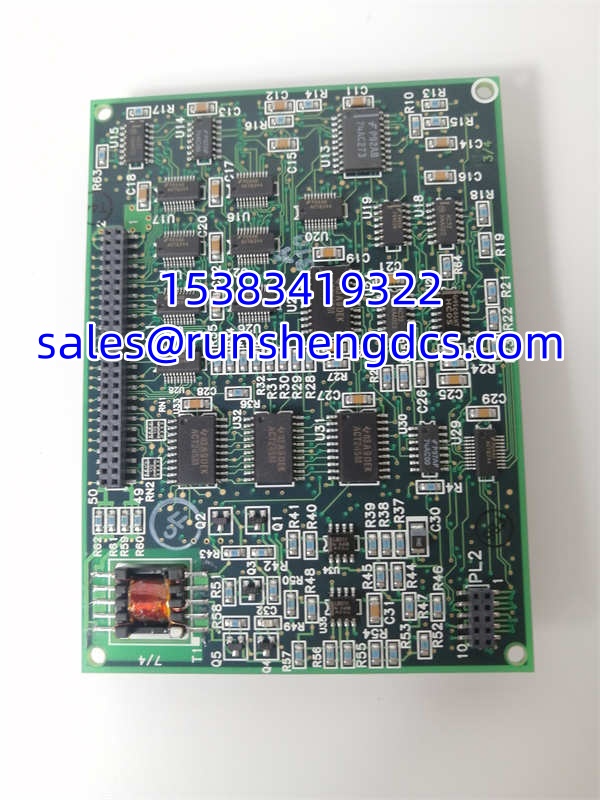
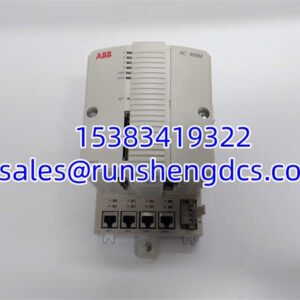
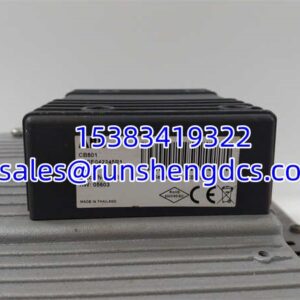
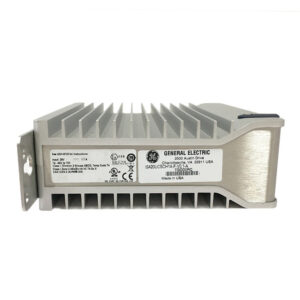
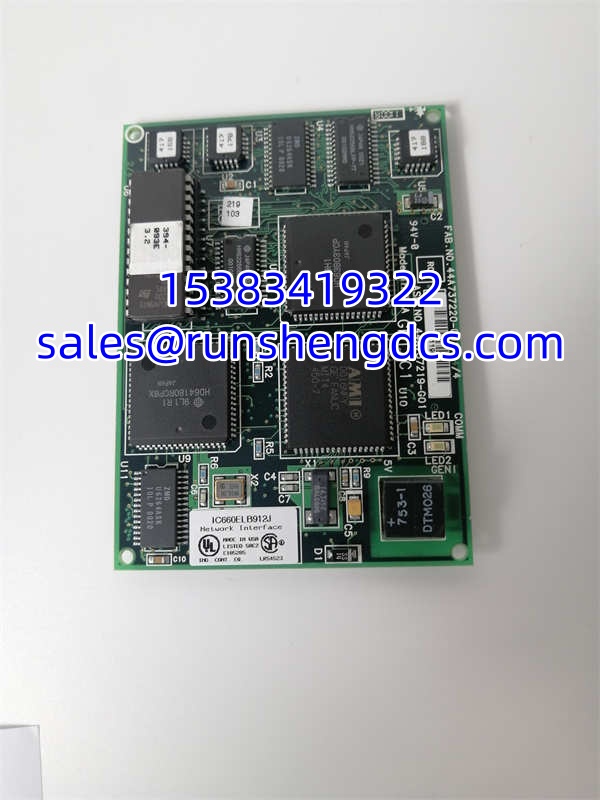
GE IC660ELB912
Application Scenarios
- Chemical Reactor Temperature Control: Exothermic reactions require precise 4-20mA feedback from RTDs; the 1500V isolation prevents VFD-driven agitator noise from corrupting temperature readings and causing runaway conditions.
- Power Plant Steam Valve Positioning: Valve actuators demand ±10VDC position feedback with sub-second response; configurable filtering eliminates mechanical chatter while maintaining control loop stability.
- Water Treatment Filtration Monitoring: Differential pressure transmitters (4-20mA) across filter banks need reliable analog acquisition in wet, electrically noisy environments where ground loops are inevitable.
FAQ
- Is IC660ELB912G the same as IC660ELB912?
The “G” suffix typically indicates a hardware revision or manufacturing date code. Functionally identical, but firmware and internal component tolerances may differ. Always match suffixes when replacing in a redundant pair, or verify cross-compatibility in your Genius bus configuration tool. - Can I hot-swap this module?
Yes, Genius I/O supports hot-swapping. However, verify your PLC logic handles module removal gracefully. I’ve seen systems fault out because the ladder logic didn’t account for “module missing” status bits during replacement. Plan your swap during a controlled maintenance window, not mid-process. - What configuration software do I need?
Use GE Fanuc’s CIMPLICITY or VersaPro for Genius I/O configuration. Modern PACSystems machines can also communicate via Genius protocol, but you’ll need the appropriate Genius bus interface card (e.g., IC660ELB921MM PCIM). Don’t assume your new PLC talks Genius natively. - Why are my analog readings noisy after replacement?
Three common culprits: (1) Shielded cable not grounded at the module end only, (2) Genius bus ground loop from multiple ground points, (3) Input filter time set too low for your process. Check all three before blaming the module. - Does this module support HART protocol?
No. IC660ELB912 is a standard analog I/O module. HART requires a dedicated HART interface module (e.g., IC660BBD025 or similar). If you need HART diagnostics, plan for a hardware upgrade. - What’s the expected lifespan in service?
Electrolytic capacitors on these boards typically fail after 12-18 years in continuous 65°C operation. If your module is approaching that age and sits in a hot panel, budget for proactive replacement. Waiting for failure means unplanned downtime. - Can I use third-party Genius bus masters with this module?
Technically yes, but GE’s Genius protocol is proprietary. Third-party implementations often miss diagnostic features or handle fault states differently. Verify with the third-party vendor that their master fully supports IC660ELB912 configuration and diagnostics before committing.