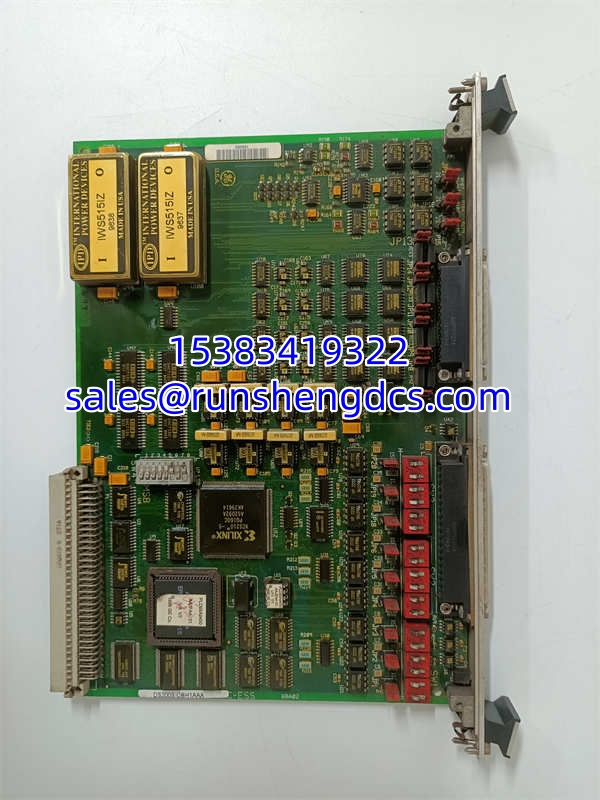

Description
Key Technical Specifications
| Parameter | Value |
|---|---|
| Manufacturer | General Electric (GE) |
| Product Series | Mark V Speedtronic |
| Board Type | I/O Signal Conditioning |
| Signal Types | 4-20mA, LVDT, Thermocouple, Pulse |
| Isolation | Optical (Field-to-Backplane) |
| Mounting | Mark V I/O Core Rack |
| Connectors | 3PL, JE, JFR, JG (Board Dependent) |
| Operating Temp | -20°C to +60°C (Typical) |
| Compliance | CE, UL, CSA |
| Diagnostics | LED Status Indicators |
| Configuration | Hardware Jumpers & Software |
Product Introduction
Turbine trips due to “bad I/O” are often just a failed signal conditioner, not the processor. The GE DS200SIOBH1AAA sits in the Mark V core, acting as the analog front-end that scales raw sensor signals (like LVDT position or thermocouple mV) into digital values the CPU can trust. It handles the dirty work of filtering noise and protecting the backplane from field transients. Without this specific board revision, your turbine control logic is flying blind.
Bottom line — it’s the translation layer for turbine physics. The GE DS200SIOBH1AAA uses optical isolation to prevent ground loops from frying the core, and its jumper configuration defines whether it’s reading a servo valve or a pressure transmitter. Don’t just swap it and pray; the scaling factors are hardware-defined. If your fuel valve is hunting or your exhaust temp is reading -400°F, check the jumpers on this board first.
QA/QC Transparency SOP
- Intake & Origin Verification: We trace the GE DS200SIOBH1AAA to its decommissioning site. Mark V boards are high-value targets for counterfeiters; we verify the PCB revision, solder mask color, and component date codes against GE’s manufacturing records.
- Live Functional Testing: The board is installed in a live Mark V test rack. We inject simulated 4-20mA and LVDT signals and verify the CPU reads the correct engineering units. We also check the 3PL bus communication for CRC errors.
- Electrical Parameter Tests: Using a Fluke 87V, we verify the internal 5V and 24V rails under load. We also perform a megger test on the optical isolation barriers to ensure field-to-backplane integrity hasn’t degraded from years of electrical noise.
- Jumper/Config Verification: We document every jumper position (3-pin and 2-pin) and compare it to the standard Mark V configuration manual. Any non-standard jumpers are noted; the board is reset to factory defaults unless a specific config is requested.
- Final QC & Anti-Static Packaging: After passing, the GE DS200SIOBH1AAA is sealed in an anti-static bag with desiccant. A QC sticker with the test date and verified jumper map is applied to the exterior.
Field Engineer Gotchas
- Jumper Mismatch: The GE DS200SIOBH1AAA is not plug-and-play. Jumpers define signal type (e.g., TC vs. RTD) and scaling. If your old board had jumpers in positions 2-3 and the replacement ships at 1-2, your sensor will read out of range. War Story: I’ve seen a tech swap a board and trip the turbine because he didn’t copy the jumpers. The new board defaulted to “voltage input” on a 4-20mA loop.
- 3PL Connector Damage: The 3PL connector carries the data bus. Bent pins here cause intermittent communication faults that look like CPU failures. Inspect the connector before plugging it in. A single bent pin can take down the entire core.
- LVDT Excitation Wiring: If this board handles LVDTs, verify the excitation wiring. Reversing the AC excitation leads won’t fry the board, but it will invert the position signal, causing the servo valve to drive full open on a “close” command. Blunt warning: Check your wiring diagram.
- Ground Loops: The optical isolation is good, but not magic. If you’re seeing 60Hz hum on your analog signals, check your field cable shielding. The GE DS200SIOBH1AAA can only reject so much common-mode noise before the scaling drifts.
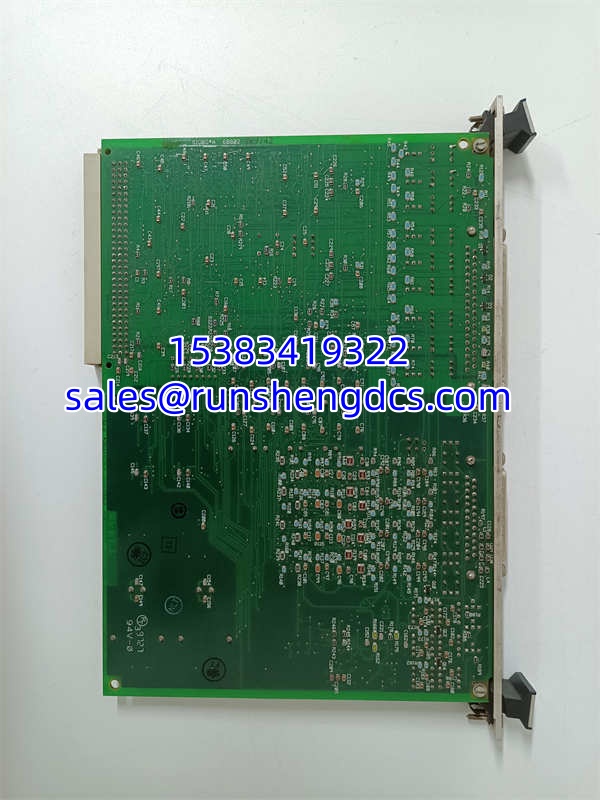
GE DS200SIOBH1AAA
Application Scenarios
Gas Turbine Fuel Control: The conditions the LVDT feedback from the fuel servo valve. Precise scaling here is critical; a 1% error means 1% less power or a rich-mixture trip.
Steam Turbine Exhaust Monitoring: Thermocouple inputs are scaled and filtered to detect hot spots. The board’s filtering prevents false trips from electrical noise during generator synchronization.
Lube Oil Pressure Protection: 4-20mA pressure transmitters feed into this board. If the signal scales incorrectly, the turbine might not trip on low oil pressure, risking a bearing wipe.
FAQ
No. The is strictly Mark V. Mark VIe uses different I/O packs and backplanes. Do not attempt to force-fit.
How do I know if my jumpers are correct?
Check the Mark V Configuration Manual for your specific turbine model. The jumper map is printed in the I/O chapter. If you don’t have the manual, copy the jumpers from the old board before removing it.
Does this board support hot-swap?
No. Mark V I/O boards are not hot-swappable. You must take the turbine offline or at minimum, disable the affected control loop in software before pulling the .
What if I can’t find the exact revision?
GE often has backward-compatible revisions. A DS200SIOBH1BAA might work in place of a DS200SIOBH1AAA, but verify with the OEM or a qualified refurbisher. Don’t guess on turbine control.
Is the optical isolation repairable?
Not in the field. If the isolation barrier has failed (measured by megger), the board must be replaced or sent to a specialist with the proper test equipment.
Why is my LVDT reading backwards?
Check the LVDT wiring polarity at the terminal board. The expects a specific phase relationship. Reversing the secondary leads inverts the signal.
Can I repair this board myself?
Only if you have Mark V schematics and the right test gear. The analog scaling networks use precision resistors that drift. If you’re asking, you probably shouldn’t. Send it to a pro.