
Description
Key Technical Specifications
- Communication Protocol: PROFIBUS DP
- Max Data Rate: 6 Mbps
- Power Supply: 24 VDC
- Input Signal: PROFIBUS DP bus
- Output Signal: 8000 Series I/O module interface
- Operating Temp: -40°C to 70°C
- Storage Temp: -40°C to 85°C
- Humidity Tolerance: 5% to 95% non-condensing
- Installation: DIN rail or rack mount
Product Introduction
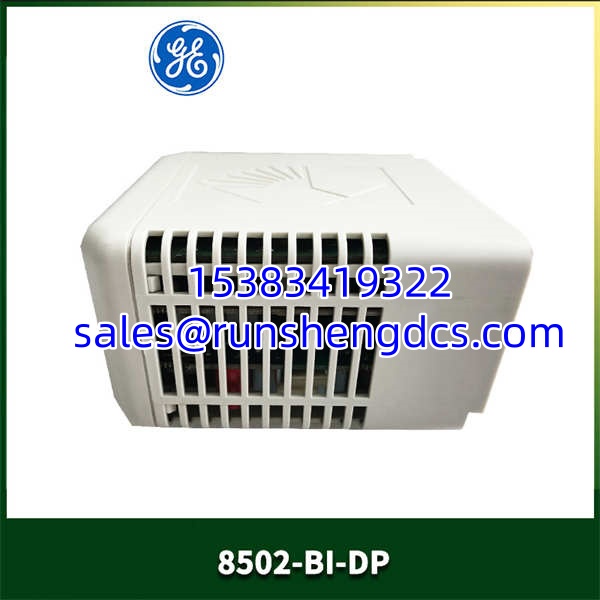
Integrating legacy I/O racks into modern fieldbus networks usually requires expensive hardware replacements. The GE 8502-BI-DP solves this by acting as a universal translator between PAC8000 I/O modules and PROFIBUS DP networks. It mounts directly onto the I/O backplane, allowing a central PLC or DCS to poll and control distributed field devices without upgrading the entire local I/O infrastructure.
Bottom line — it keeps your distributed I/O talking. This module handles the heavy lifting of high-speed serial communication, supporting data transfer rates up to 6 Mbps to satisfy real-time control demands. Built with industrial-grade components, it withstands harsh environments ranging from -40°C to 70°C and up to 95% humidity. For facilities running Emerson or GE PAC8000 systems, this BIM is the critical link that prevents fieldbus isolation.
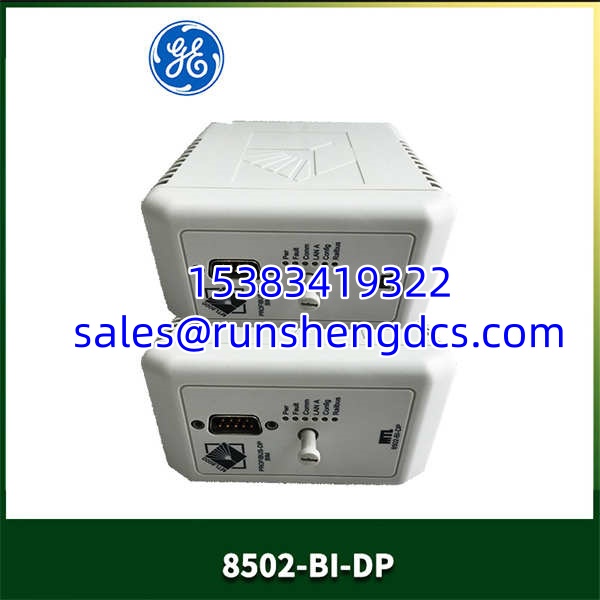
GE-8502-BI-DP
QA/QC Transparency SOP
Fieldbus modules are highly sensitive to electrical noise and physical wear. Here is our exact validation protocol for surplus stock:
- Intake & Origin Verification: We verify the module was pulled from an active, climate-controlled control room rather than a scrap yard, checking for signs of moisture or chemical exposure.
- Live Functional Testing: We mount the BIM on a PAC8000 test rack and connect it to a PROFIBUS DP master simulator. We verify network handshaking, node addressing, and data polling across the full 6 Mbps range.
- Electrical Parameter Tests: Using calibrated Fluke multimeters, we test the 24 VDC power regulation, check backplane pin continuity, and verify isolation barriers to prevent ground loops.
- Firmware/Config Verification: We read the onboard configuration EEPROM to ensure the node parameters are uncorrupted and match standard PROFIBUS DP specifications.
- Final QC & Anti-Static Packaging: The module is cleaned, connector pins are inspected for micro-abrasions, and it is sealed in anti-static shielding with desiccant packs to prevent transit moisture damage.
Field Engineer Gotchas
- PROFIBUS Ground Loops: Connecting this BIM to a noisy fieldbus can cause intermittent comm drops. Solution: Ensure the PROFIBUS shield is grounded at one end only, and verify the BIM’s chassis ground. Warning: I’ve seen a BIM pass all bench tests but fail on-site because a stray VFD induced noise directly into the unshielded DP cable.
- Backplane Seating Issues: The DIN rail or rack mount connectors can loosen over years of thermal cycling. Solution: Always verify the backplane locking mechanism is fully engaged before applying 24 VDC power. Warning: A partially seated module will arc and burn out the backplane receptacle when power is applied.
- Node Address DIP Switches: The physical node address must match the master station configuration exactly. Solution: Double-check the hardware DIP switches against the GSD file and master config. Warning: A mismatched address won’t just fail to communicate; it can cause bus collisions that bring down the entire PROFIBUS segment.
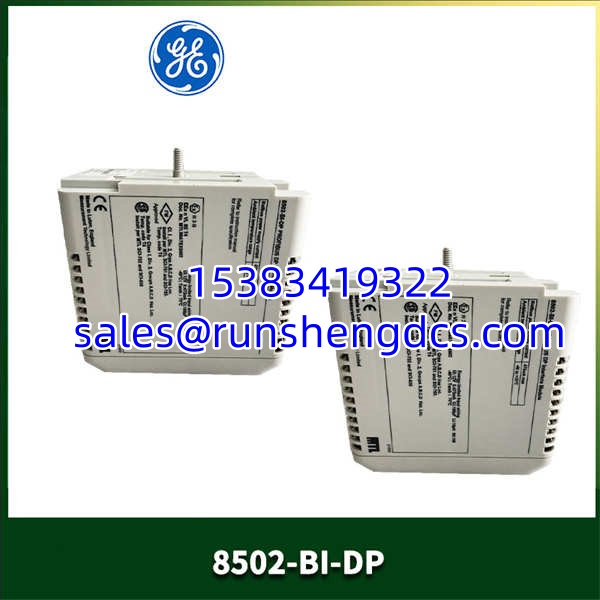
GE-8502-BI-DP
Application Scenarios
- Oil & Gas Processing Plants: Requires reliable PROFIBUS DP communication in high-EMI environments to monitor distributed pressure and flow transmitters.
- Automated Packaging Lines: Demands 6 Mbps fieldbus speeds to synchronize PAC8000 I/O with high-speed servo drives and PLCs.
- Water Treatment Facilities: Needs robust environmental tolerance (-40°C to 70°C) for outdoor pump station control cabinets.
- Case Study: A chemical processing plant faced constant PROFIBUS timeout faults on a legacy PAC8000 skid. Diagnostics showed the original 8502-BI-DP had degraded internal termination resistors causing signal reflections. Swapping in a verified surplus BIM with fresh termination restored clean bus communication and eliminated the intermittent I/O faults within an hour.
FAQ
Q: Is this module compatible with standard Siemens or Allen-Bradley PROFIBUS masters?
A: Yes. The 8502-BI-DP adheres to the standard PROFIBUS DP protocol. As long as you have the correct GSD file loaded into your master station, it will communicate regardless of the master brand.
Q: Can I hot-swap this module while the 24 VDC backplane is energized?
A: Absolutely not. While PROFIBUS cables can sometimes be hot-swapped, the BIM itself must be powered down before insertion or removal. Backplane hot-swapping risks frying the I/O module logic.
Q: What does the “-V1” suffix mean on some units?
A: The “-V1” typically denotes a specific hardware revision or manufacturing batch. Functionally, they are usually identical, but always verify the exact revision matches your existing modules if you are running redundant BIMs.
Q: How do I configure the baud rate?
A: The baud rate is typically auto-negotiated or set via hardware jumpers/DIP switches on the module itself. Consult the PAC8000 hardware manual for the exact switch positions for 6 Mbps, 3 Mbps, etc.
Q: Will this work with older GE Fanuc Series 90 PLCs?
A: No. This is specifically designed for the distributed I/O platform. Series 90 systems use different bus interface modules (like the IC697BEM7xx series).