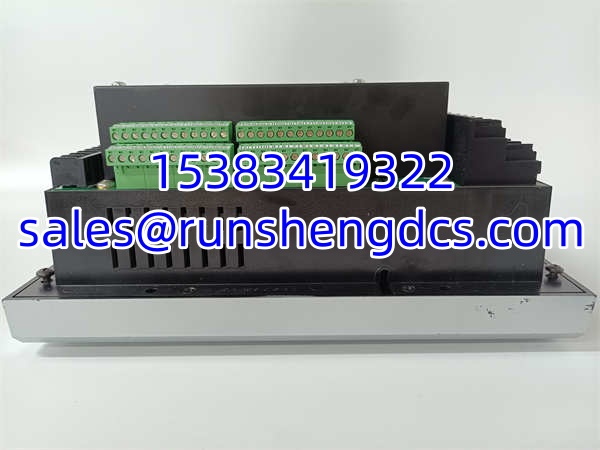

Description
Key Technical Specifications
- Product Model: 369-HI-0-M-0-0-0-E
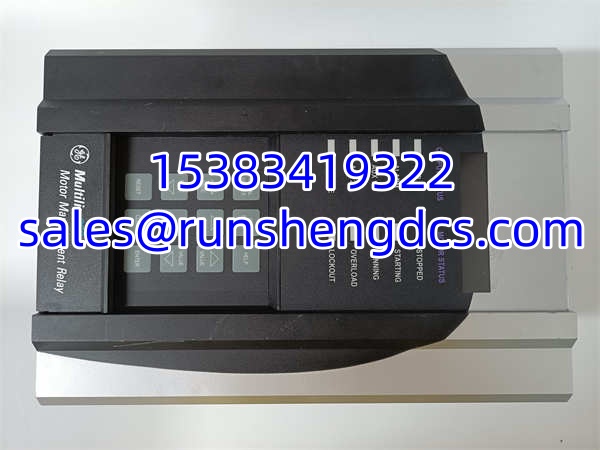
- Manufacturer: GE Multilin (General Electric)
- Product Category: Motor Management Relay
- Input Rating: HI (High Current Input Range)
- Metering: Integrated Power, Energy, and Thermal Capacity
- Protection Functions: Overload, Phase Unbalance, Ground Fault, Locked Rotor
- Communication: RS-485 (Modbus), Optional Ethernet (E-Suffix)
- Control Logic: Programmable Logic & Event Recording
- Operating Voltage: Universal AC/DC Control Power
- Safety Rating: SIL 2 / SIL 3 Capable (Config Dependent)
- Mounting: Panel Mount / Rack Mount Options
- Diagnostics: Real-time Waveform Capture & Oscillography
Product Introduction
MV motor trips on a false ground fault during start? The GE 369-HI-0-M-0-0-0-E is designed to stop that nonsense. It’s a high-end motor management relay that doesn’t just measure current; it models the motor’s thermal state in real-time. The “HI” suffix means it handles high-current inputs directly, eliminating external CTs for smaller MV motors. The “M” confirms built-in metering, so you don’t need separate power transducers for your SCADA.
Why does this specific suffix matter? The “E” typically denotes enhanced communication or Ethernet capability, critical for modern plant networks. It records events and captures waveforms right before a trip, giving you the forensic data to prove whether it was a real fault or a nuisance trip. Bottom line: it’s the difference between guessing and knowing. If you’re running critical MV pumps or compressors, this is the standard.
Troubleshooting Quick Reference
- Nuisance Ground Fault on Start: 85% chance of capacitive charging current misconfiguration. MV motors have high inherent capacitance. Check the “Ground Fault Pickup” setting. It must be above the motor’s capacitive charging current. Verify the Zero-Sequence CT polarity.
- Thermal Overload but Motor is Cool: 80% chance of incorrect FLA or Thermal Capacity settings. Verify the nameplate FLA matches the relay setting exactly. Check the “Thermal Capacity Used” parameter. If it’s stuck at 100%, reset it via the front panel or software.
- Communication Loss (Ethernet/Modbus): 70% chance of termination or IP conflict. The 369-HI-0-M-0-0-0-E requires 120-ohm termination on RS-485. For Ethernet, check the link LED. Verify the IP subnet matches your network. Long cable runs need shielded twisted pair.
- Relay Display Blank / Dead: 60% chance of control power failure. Measure voltage at the control power terminals. The 369 needs stable 120/240VAC or 125VDC. If power is good but it’s dead, check the internal fuse (requires module removal).
- Phase Unbalance Alarm: 50% chance of real grid issue or bad CT. Measure voltage at the motor terminals. If voltage is balanced, check the CT ratio and wiring. A single reversed CT will cause massive unbalance readings.
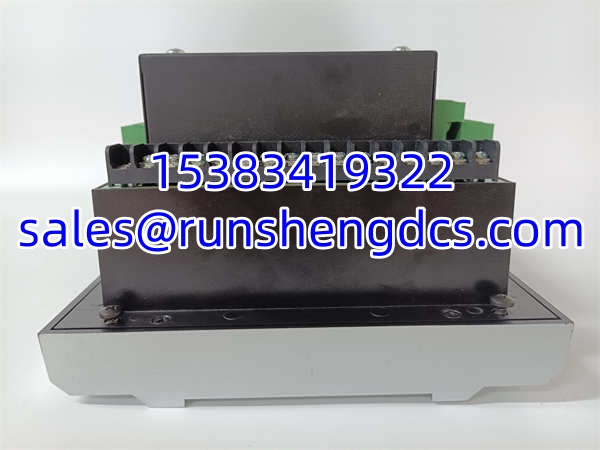
GE 369-HI-0-M-0-0-0-E
Application Scenarios & Pain Points
- Mining Conveyor Drives: Long cable runs, high capacitive current. Pain Point: Ground fault trips during acceleration. Fix: Configure the “Ground Fault During Start” inhibit timer. Set pickup to 20-30% of capacitive charging current. The 369-HI-0-M-0-0-0-E handles this logic natively.
- Water/Wastewater Lift Stations: Frequent starts, thermal fatigue. Pain Point: Generic overload relays tripping on normal heat soak. Fix: Use the 369’s exact thermal damage curve. Enable “Start Inhibit” to prevent hot restarts. The “M” metering lets you track energy per pump cycle.
- HVAC Chiller Plants: VFD harmonics, multiple motors. Pain Point: False overcurrent from harmonics. Fix: Enable harmonic restraint in the 369 configuration. Verify CT ratio matches actual load, not just nameplate. The “E” suffix helps integrate with BMS for better visibility.