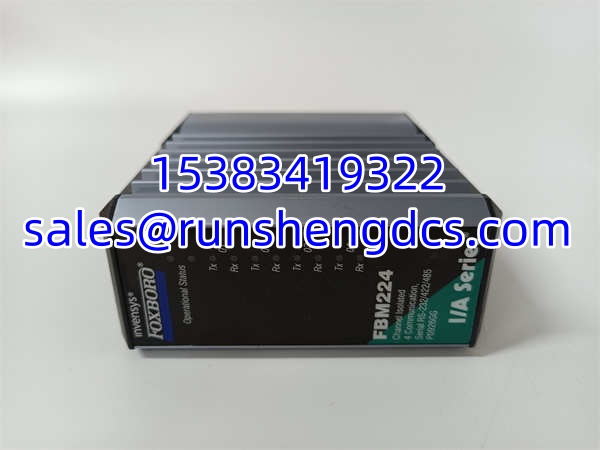

Description
Key Technical Specifications
| Parameter | Specification | Notes |
|---|---|---|
| Channels | 4 Independent | Configurable per port |
| Max Slaves | 32 per Channel | Total 128 slaves max |
| Protocols | Modbus RTU/ASCII | Slave device interface only |
| Physical Layer | RS-232, RS-422, RS-485 | Jumper/Config selectable |
| Baud Rates | 9600 – 115200 bps | 9.6k, 19.2k, 38.4k, 57.6k, 115.2k |
| Data Format | 8 Data Bits | 1 or 2 Stop Bits |
| Parity | None, Odd, Even | Configurable per port |
| Backplane Bus | Redundant 2 Mbps Module Fieldbus | Accepts Path A or B |
| Power Req | 24 VDC | Internal regulation |
| Op. Temp | -40°C to +75°C | Verify cabinet derating |
| Humidity | 5% – 95% Non-condensing | Standard industrial spec |
| Transactions | Up to 64 per Device | Configurable scan rates |
Product Introduction
Legacy Modbus RTU devices don’t speak I/A Series natively, and ripping out field instruments for native Fieldbus isn’t always in the CAPEX plan. The FBM224 P0926GG solves this integration gap by acting as a protocol translator, polling up to 128 total Modbus slaves and mapping their registers directly into the I/A Series database for unified historian logging and alarm management.
This module handles the heavy lifting of serial timing and error checking so the FCP270/280 controller doesn’t choke on scan overruns. It supports redundant 2 Mbps fieldbus connections, meaning a single cable failure won’t blind your HMI to critical skid data. With an operating range down to -40°C, it’s built for unheated remote valve chambers, not just climate-controlled control rooms. Bottom line — it’s a workhorse for brownfield serial integration, provided you get the termination right.
QA/QC Transparency SOP
- Intake & Origin Verification: Visual inspection for PCB delamination, capacitor bulging, or corrosion. We verify the P0926GG suffix against the Foxboro BOM to ensure it’s not a P0926GH mislabeled (different compression assembly).
- Live Functional Testing: Module mounted on a live I/A Series test rack. We force a Modbus poll to a known slave simulator, verifying data mapping to the I/A database point-by-point.
- Electrical Parameter Tests: Backplane 24VDC draw measured under full 4-channel load. Continuity check on all RS-485 A/B terminals and shield grounds using a Fluke 87V.
- Firmware/Config Verification: Readout of internal EPROM/FPGA revision via diagnostic tool. We back up the factory default config block to ensure no rogue site-specific parameters are locked in.
- Final QC & Anti-Static Packaging: Functional test report printed and attached. Module sealed in ESD shielding bag with desiccant; rigid corner protectors applied to prevent terminal block cracking during transit.
Field Engineer Gotchas
- Termination Assembly Mismatch: Risk: P0926GG uses a specific compression termination assembly. Installing a P0926GH or generic FBM224 base without checking the suffix causes intermittent RS-485 reflections and CRC errors. Fix: Match the suffix exactly. War Story: Saw a plant run for 3 weeks with random comms drops because someone swapped a GG for a GH during a midnight outage; the impedance was just close enough to pass ping tests but fail under load.
- Baud Rate vs. Cable Length: Risk: Pushing 115200 bps on RS-485 runs over 100m without proper termination causes data corruption. Fix: Stick to 9600 or 19200 for long runs; use 120Ω termination at both ends only. Warning: The FBM224 doesn’t auto-terminate. I’ve seen guys leave the jumper off and wonder why the last slave in the daisy chain never responds.
- Ground Loop Hum: Risk: Connecting RS-485 shields to chassis ground at both the FBM224 and the remote slave creates a ground loop, frying the transceiver. Fix: Ground shield at the FBM224 side only; use isolated repeaters for long-distance runs. Blunt Truth: If your RS-485 cable runs near a VFD drive, no amount of shielding will save you. Move the cable or add fiber.
- Transaction Limit Overflow: Risk: Configuring >64 transactions per slave or exceeding the total module transaction limit causes silent polling failures. Fix: Audit your Modbus map; consolidate registers or split slaves across channels. Note: The configurator won’t always throw a hard error; it just stops scanning.
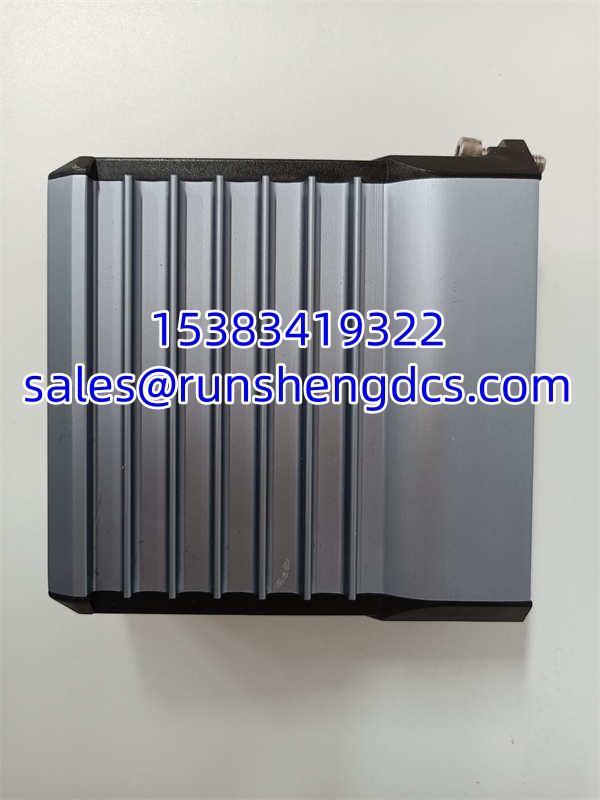
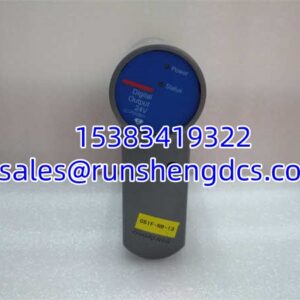
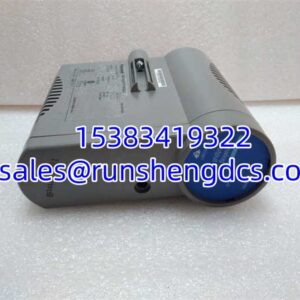
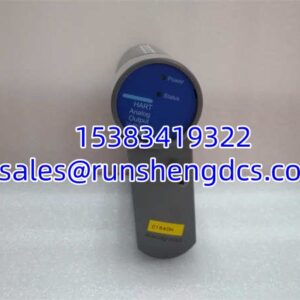
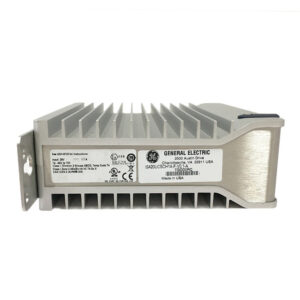
FOXBORO FBM224 P0926GG
Application Scenarios
- Remote Wellhead Skids: Unheated enclosures (-30°C ambient) requiring Modbus RTU polling of flow computers and RTUs where native Fieldbus is cost-prohibitive.
- Packaging Line Integration: Legacy PLCs (Siemens S5/Allen-Bradley PLC-5) with serial cards needing data historian integration into a modern I/A Series DCS without replacing the PLC.
- Wastewater Lift Stations: Distributed RS-485 networks spanning 800m+ requiring redundant backplane connectivity to ensure pump status is never lost during fieldbus maintenance.
FAQ
Q: Can I hot-swap this module while the FCP270 is running?
A: Yes, the I/A Series supports hot-swapping FBMs. However, expect a 30-60 second re-initialization period where the channel goes blind. Don’t do this during a critical batch; schedule it for a safe state.
Q: Is P0926GG compatible with P0926GH termination assemblies?
A: No. The compression geometry differs. Forcing a GH assembly onto a GG module can damage the PCB pads or create high-resistance joints. Verify the suffix on the module faceplate before ordering spares.
Q: Does this support Modbus TCP?
A: No. This is strictly a serial (RS-232/422/485) module. For TCP, you need an FBM233 (Ethernet) or a gateway. Don’t try to wire an Ethernet switch to the RS-485 terminals; you’ll just fry the port.
Q: What’s the max cable length for RS-485 at 19200 baud?
A: Theoretically 1200m, but in industrial noise environments, keep it under 300m for reliable polling. Beyond that, use a fiber-optic repeater. The doesn’t have built-in signal regeneration.
Q: Why is my scan time 2x slower than configured?
A: Check for “Response Timeout” settings. If a slave is slow to reply, the waits the full timeout before moving to the next poll. Lower the timeout or fix the slow slave. Also, verify you aren’t exceeding the 64-transaction-per-device limit, which forces multi-frame polling.
Q: Do I need to configure parity on the slave device?
A: Yes. The does not negotiate parity. It must match exactly (None, Odd, or Even) on both the module config and the slave DIP switches/software. Mismatched parity = 100% CRC errors.
Q: Is this module discontinued?
A: It’s considered “Legacy Active” or “Mature.” Foxboro/Schneider still supports it, but new production runs are rare. Most stock is surplus/refurbished. Secure your spares now; lead times for new units can stretch 20+ weeks if a factory run ever happens.