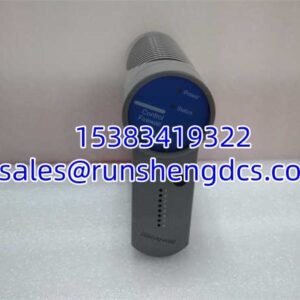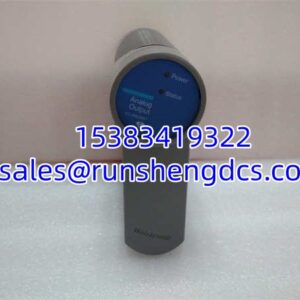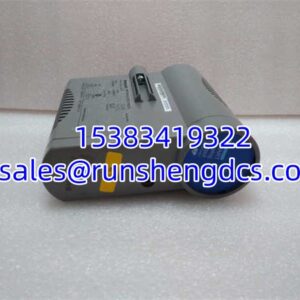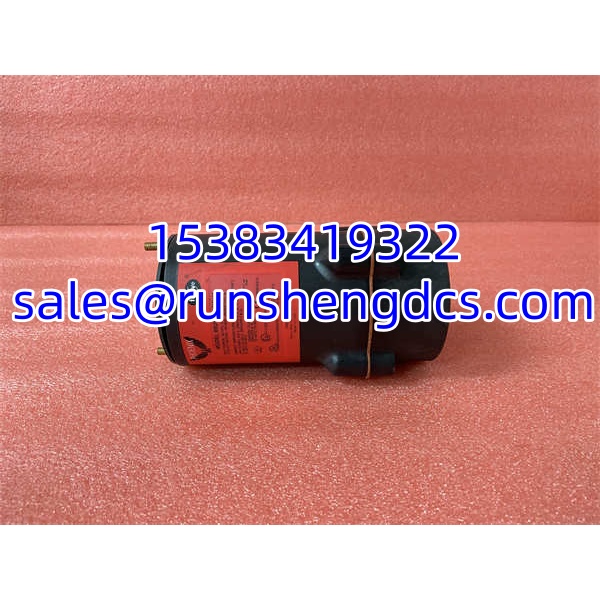

Description
Key Technical Specifications
| Parameter | Details |
|---|---|
| Manufacturer | FIREYE |
| Product type | Integrated UV flame scanner |
| Model | 85UVF1-1QDK3 |
| Family | Phoenix 85UVF |
| Detection principle | Solid-state UV flame flicker detection |
| Spectral range | Extended UV up to ~500 nm (K3 optical filter option) |
| Standard 85UVF range | 295–340 nm typical for non-K3 85UVF |
| Supply voltage | 24 VDC |
| Electrical connection | 8-pin quick-disconnect (QD) |
| Analog output | 4–20 mA flame strength (standard) |
| Relay outputs | Internal flame relay; fault relay typical for Phoenix 85UVF |
| Configuration | Local keypad/LED; auto ON/OFF threshold learning |
| Flame failure response | Adjustable FFRT, commonly 1–4 s; verify project setting |
| Typical applications | Duct burners, gas burners, low-NOx burners, waste-gas units, incinerators, blast-furnace/coke-oven gas |
| Product status | Installed-base spare; surplus/refurbished common |
Product Introduction
The real risk with surplus flame scanners is not the part number — it is the optical suffix. The FIREYE 85UVF1-1QDK3 is a Phoenix-series UV flame scanner, but the “K3” option changes its optical sensitivity. Standard 85UVF units target roughly 295–340 nm UV. The K3 variant shifts sensitivity toward longer wavelengths, up to about 500 nm, so it can see the weaker or spectrally different UV/visible emission from blast-furnace gas, coke-oven gas, and certain low-NOx or waste-gas flames.
This is not a simple on/off photocell. The scanner measures flame flicker modulation, stores the target-flame signature during setup, and auto-selects gain and ON/OFF thresholds. It provides a 4–20 mA flame-strength signal plus internal flame and fault relays, all on 24 VDC through an 8-pin QD connector. For procurement, treat it as an installed-base spare. If the original unit was K3, a non-K3 replacement may fail to see the flame reliably.
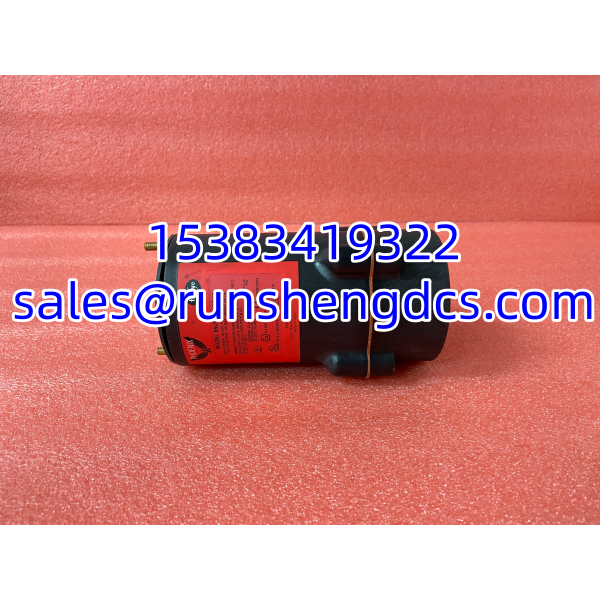
QA/QC Transparency SOP
- Intake & Origin Verification — Photograph the nameplate. Confirm 85UVF1-1QDK3, not 85UVF1-1QD, 85UVF1-1CEX, or 85IRF. Check the lens/window for cracking, carbon deposits, or moisture ingress.
- Live Functional Testing – Power the scanner on 24 VDC. Verify LED display, keypad response, flame relay, fault relay, and 4–20 mA output behavior. Confirm the scanner completes self-check without persistent fault codes.
- Electrical Parameter Tests — Measure supply current, 4–20 mA loop output, relay contact continuity, and insulation resistance. Check the 8-pin QD connector for bent pins, corrosion, or poor mating.
- Configuration Verification — Read stored FFRT, gain, threshold mode, and flame-strength baseline. Back up settings before deploying. Verify the K3 optical option matches the burner fuel and flame spectrum.
- Final QC & Anti-Static Packaging — Validate stable zero, clean flame/fault indications, and correct analog output. Seal the optical window, protect the QD connector, and pack with ESD and moisture protection.
Field Engineer Gotchas
- K3 vs. non-K3 is not cosmetic. A standard 85UVF1-1QD may not detect weak UV from blast-furnace gas or certain low-NOx flames. If the original was K3, do not substitute a non-K3 unit without flame-signal verification.
- UV vs. IR confusion. 85UVF is UV. 85IRF is infrared. They are not interchangeable. Swapping UV for IR on an oil-fired or coal-fired burner can mask real flame-loss conditions.
- QD pinout matters. The 8-pin quick-disconnect carries power, relay outputs, and the 4–20 mA signal. A miswired harness can backfeed the analog loop or defeat the flame relay.
- FFRT setting is a safety parameter. Changing the flame-failure response time without burner-management approval can delay trip action. Record the original FFRT before replacement.
- Lens fouling looks like flame loss. Carbon, dust, or oil film on the optical window reduces signal strength. Clean the window with the correct procedure; do not just raise gain to compensate.
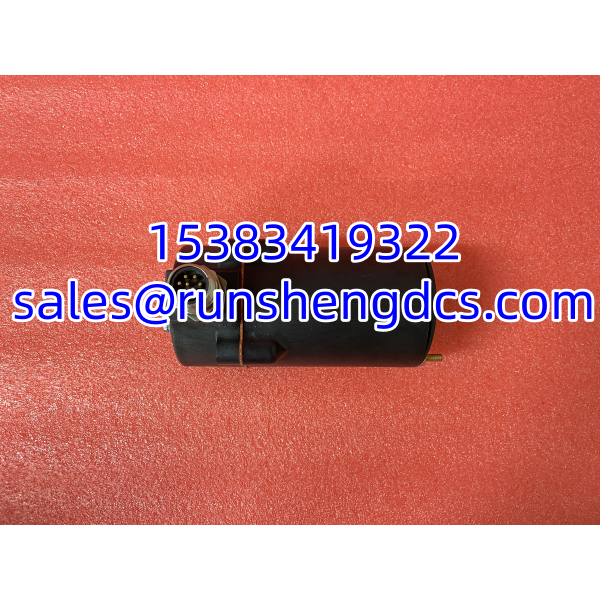
FIREYE 85UVF1-1QDK3
Application Scenarios
- Blast-furnace gas burners in steel mills: The K3 optical option helps detect flames with weaker or shifted UV emission compared to clean natural gas.
- Coke-oven gas firing: Similar spectral challenge; standard UV scanners can under-read if the flame lacks strong short-wave UV.
- Low-NOx industrial gas burners: Flame shape and emission can change with staged combustion, making auto-threshold learning important.
- Waste-gas incinerators: Variable gas composition demands a scanner that can re-learn flame flicker characteristics after fuel changes.
- Duct burners and process heaters: Used where a compact, self-checking UV scanner with 4–20 mA feedback is required.
FAQ
Is 85UVF1-1QDK3 the same as 85UVF1-1QD?
No. The K3 version has an extended optical response up to about 500 nm for weak-UV flames. A standard 85UVF1-1QD may not perform the same on blast-furnace gas or certain low-NOx applications.
Does it work on oil or coal flames?
UV scanners are typically best on gas and light-oil flames. For heavy oil, coal, or mixed fuels, an IR or dual-sensor scanner is often more appropriate. Verify with the burner OEM.
What output does it provide?
It provides a 4–20 mA flame-strength signal plus internal flame and fault relays. It is not just a dry-contact flame switch.
Can I adjust the flame-failure response time?
Yes, FFRT is typically adjustable (commonly 1–4 s on Phoenix 85UVF), but it must match the burner-management safety logic.
Is it still in production?
Availability varies. Most units circulate as surplus, used, or refurbished. Confirm the K3 option, QD connector condition, and stored configuration before purchase.
Can I substitute an 85IRF or 95-series scanner?
Not without engineering review. 85IRF is infrared, and 95-series scanners have different configuration, communication, and certification profiles. Do not swap based on physical fit alone.