
Description
Key Technical Specifications
| Parameter Name | Parameter Value |
|---|---|
| Product Model | EMERSON MVME61006E-0163 |
| Manufacturer | Emerson (Artesyn/Motorola Heritage) |
| Processor | MPC7457 PowerPC® |
| Clock Speed | 1.267 GHz |
| L3 Cache | 2 MB On-chip |
| Memory | Up to 2GB DDR ECC |
| Flash | 128 MB |
| VME Protocol | 2eSST (320 MB/s) |
| Ethernet | Dual Gigabit (10/100/1000Base-T) |
| Expansion | 2x PMC-X Sites (33/66/100 MHz) |
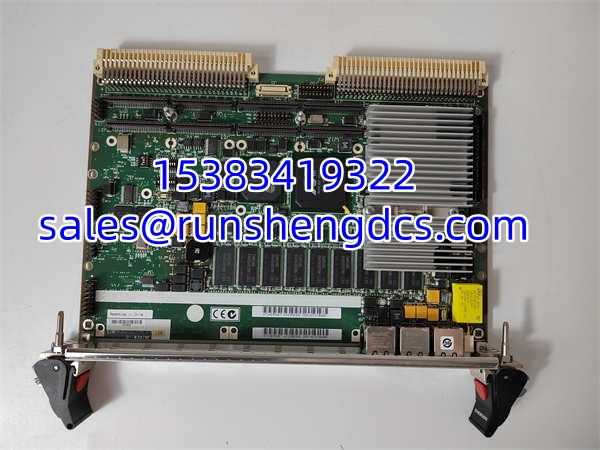
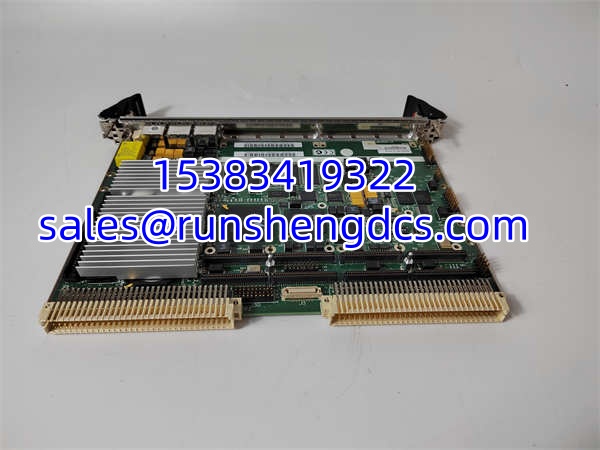
| Form Factor | 6U VME Eurocard |
| Operating Temp | -40°C to +85°C |
Product Introduction
Standard VME boards often choke on modern data loads, but the EMERSON MVME61006E-0163 was built to break that bandwidth ceiling. As the first VME SBC to utilize the Tundra Tsi148 bridge chip, the EMERSON MVME61006E-0163 unlocks 2eSST protocol speeds, pushing actual transfer rates to 320 MB/s on standard backplanes. This isn’t just a CPU upgrade; it’s a bus architecture overhaul that prevents I/O bottlenecks in data-intensive medical imaging and radar applications.
Engineers rely on the EMERSON MVME61006E-0163 because it pairs the 1.267 GHz MPC7457 with a 128-bit AltiVec coprocessor, effectively turning a legacy VME slot into a vector processing powerhouse. It supports up to 2GB of DDR ECC memory and dual Gigabit Ethernet, ensuring that compute and network I/O never starve the application. With OEM manufacturing long ceased, verified surplus EMERSON MVME61006E-0163 modules are the only viable path for sustaining high-performance VME systems without a costly backplane migration.
QA/QC Transparency SOP
- Intake & Origin Verification: We trace the EMERSON MVME61006E-0163 to its original lot. Visual inspection checks the VME P1/P2 connectors for gold wear, verifies the MPC7457 heat sink attachment, and ensures the DDR DIMM sockets are free of oxidation.
- Live Functional Testing: We install the module into a VME test chassis and run a POST diagnostic. We verify the 1.267 GHz clock stability and confirm the 2eSST handshake negotiates correctly with the Tsi148 bridge.
- Electrical Parameter Tests: Using a precision multimeter, we verify the 5V/3.3V/12V backplane current draw under load. We also stress-test the DDR ECC by running a memory scrubber pattern to catch bit flips.
- Firmware/Config Verification: We read the boot flash to verify the BSP (Board Support Package) version and ensure the AltiVec unit is enabled in the hardware configuration.
- Final QC & Anti-Static Packaging: The is sealed in an ESD-safe bag with a printed test certificate confirming 2eSST throughput and memory integrity.
Field Engineer Gotchas
- 2eSST Backplane Compatibility: The requires a backplane with Tsi148-compatible transceivers to hit 320 MB/s. Solution: Check your backplane spec. Blunt warning: If you plug this into a 20-year-old backplane with degraded receivers, it will fall back to standard VME speeds or fail to boot. Don’t blame the CPU; blame the bus.
- PMC-X vs. Standard PMC: The two expansion slots are PMC-X, supporting 100 MHz PCI-X. Solution: Verify your mezzanine cards are rated for 3.3V PCI-X. Blunt warning: Forcing a 5V-only legacy PMC into these slots can fry the I/O ring. Always check the keying and voltage.
- Thermal Management: The MPC7457 at 1.267 GHz runs hot. Solution: Ensure your chassis has adequate airflow across the 6U faceplate. I’ve seen these modules throttle or crash because someone blocked the front bezel with cables. The -40°C to +85°C rating assumes proper convection cooling.
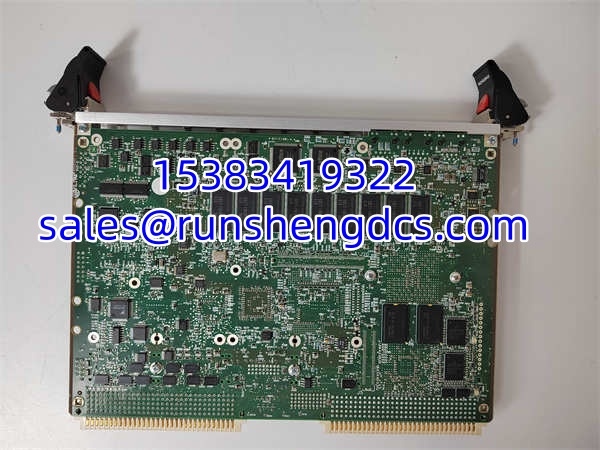
EMERSON MVME61006E-0163
Application Scenarios
- Medical Imaging (MRI/CT): Reconstruction algorithms demand massive vector throughput. The uses the AltiVec engine to process k-space data in real-time, reducing scan-to-image latency from seconds to milliseconds.
- Radar & EW Systems: Signal processing requires deterministic, high-bandwidth data movement. The ’s 2eSST protocol ensures that ADC data from the backplane reaches the CPU without dropping samples during high-pulse-repetition modes.
- Industrial Motion Control: Multi-axis coordination needs microsecond jitter. The provides the stable 1.267 GHz clock and low-latency VME access required for synchronized servo loops in semiconductor manufacturing.
- Case Study: A defense contractor’s radar test bench was dropping frames during high-bandwidth sweeps. The old MVME2600 couldn’t keep up with the VME bus saturation. We swapped in the , and the 2eSST bandwidth increase to 320 MB/s eliminated the dropped frames entirely, saving a $150,000 system upgrade.
FAQ
- Is this compatible with standard VME64 backplanes?
Yes, but to get 320 MB/s, the backplane must support 2eSST signaling. The is backward compatible with standard VME64 at lower speeds. - Can I use standard DDR or must it be ECC?
The is designed for DDR ECC. Non-ECC modules may not boot or will cause uncorrectable errors in safety-critical code. Stick to the spec. - Does this support Linux/VxWorks?
Yes. The has BSPs for VxWorks, Linux, and Solaris. Verify the specific BSP revision matches your OS version before deployment. - What is the difference between 0163 and 0163R?
The 0163R is typically a revised build with updated component sourcing or minor firmware fixes. Functionally, they are interchangeable, but always verify the revision in your configuration manager. - Is the AltiVec unit enabled by default?
Yes, but your application must explicitly use AltiVec instructions to benefit. The hardware supports it, but the compiler flags are on you. - Are these still manufactured?
No. The is end-of-life. Verified surplus is the only source for new or refurbished units. - How do I know if the 2eSST is working?
Check the VME bus utilization in your system monitor. If you’re seeing >200 MB/s sustained, 2eSST is active. If you’re capped at ~80 MB/s, you’ve fallen back to standard VME.