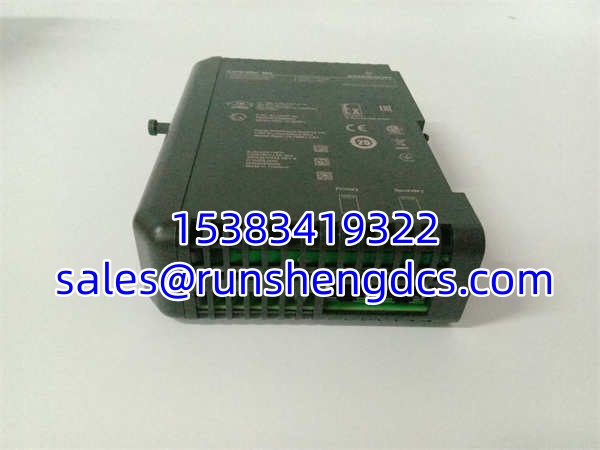
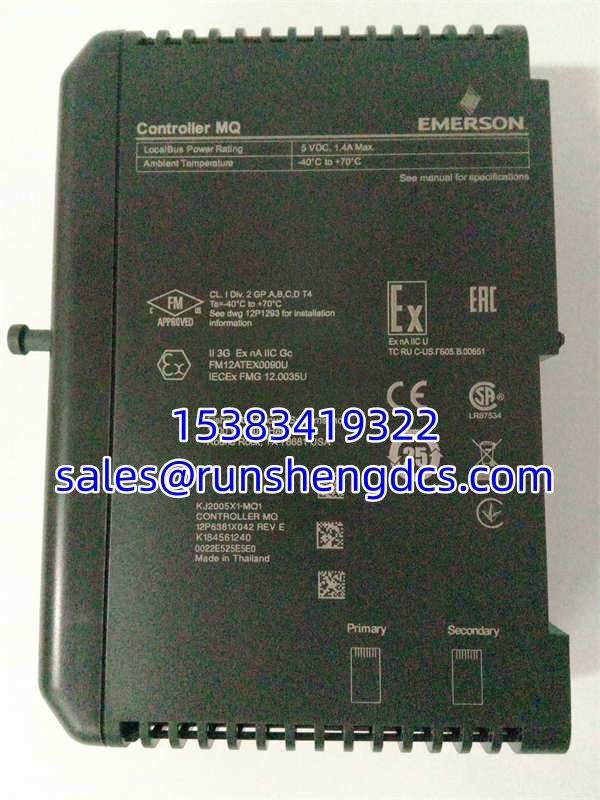

Description
Key Technical Specifications
| Parameter | Value |
|---|---|
| Product Model | EMERSON CE30089 |
| Manufacturer | EMERSON / DeltaV |
| Product Type | S-Series Process Controller |
| System Series | DeltaV™ S-Series |
| CPU Architecture | Multi-Core Processor |
| CPU Speed | > 1 GHz |
| Memory / Storage | > 1 GB RAM / > 1 GB Storage |
| Communication | 2x Ethernet Ports, 1x USB Port |
| Dimensions | 233 mm x 160 mm x 40 mm |
| Weight | ~2 kg |
| Operating Temp | Verify with OEM Manual (Typical 0-60°C) |
| Hot-Swap Support | Yes (Redundant Configuration) |
Product Introduction
Your DeltaV S-Series rack is running, but the controller is flagging a memory fault or you’re expanding a legacy unit, and the old single-core cards are choking on the new APC logic. You need the processing headroom that only the newer silicon can provide.
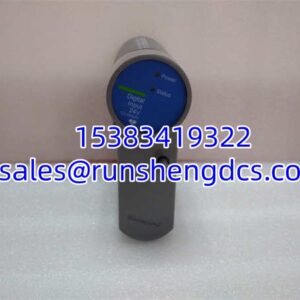
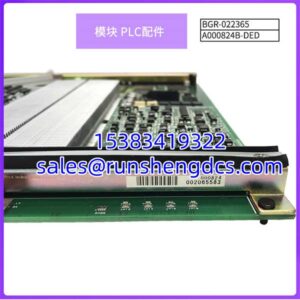
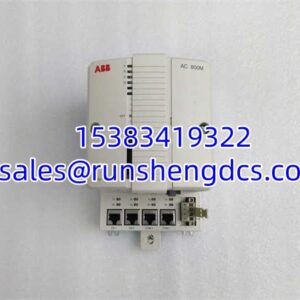
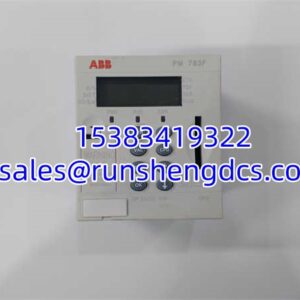
The EMERSON CE30089 is the high-performance workhorse for the DeltaV S-Series. It features a multi-core processor running over 1 GHz with >1 GB of RAM and storage, specifically designed to handle complex control strategies, massive data buffering, and advanced alarm management without breaking a sweat. It’s not just a logic solver; it’s the central nervous system of your S-Series node, managing backplane communication, I/O querying, and engineering tasks through the dedicated engineering card slot.
Why does this specific module matter? Because in the S-Series architecture, the controller handles the heavy lifting. The CE30089 supports redundant power and communication paths, ensuring that when one path fails, the other takes over seamlessly. It’s built for the harsh reality of process control—high EMI, thermal cycling, and 24/7 uptime demands. Bottom line — if you’re running DeltaV S-Series, this is the brain you want in the rack.
QA/QC Transparency SOP
Controllers are the heart of the DCS. We don’t ship untested hearts. Here is our validation process for the CE30089:
- Intake & Origin Verification: We verify the CE30089 part number, lot code, and Emerson/DeltaV markings against our authenticity database. We inspect the Ethernet ports, USB port, and backplane connector for physical damage or tampering.
- Live Functional Testing (Logic, Comms, Load): The module is seated in a calibrated DeltaV S-Series test chassis. We load a verified S-Series firmware image and verify the control execution schedule. We test both Ethernet ports, USB functionality, and backplane communication with I/O cards.
- Electrical Parameter Tests (Megger, Continuity): Using a Fluke 87V, we verify 24VDC input stability and check for continuity on all backplane pins. We test isolation between the Ethernet ports and the control logic ground to prevent ground loops.
- Firmware/Config Verification (Readout & Backup): We read the module’s firmware revision and compare it against the latest Emerson security patches. We verify the multi-core processor is correctly recognized and the extended memory is accessible.
- Final QC & Anti-Static Packaging: Visual inspection checks for cold solder joints or connector pin damage. The CE30089 is sealed in an anti-static bag with desiccant, labeled with the verified firmware revision and test date.
Field Engineer Gotchas
Firmware Version Mismatch: The requires specific S-Series firmware versions. Loading an older legacy image designed for single-core controllers will result in boot failures or unutilized multi-core performance. Always check the DeltaV compatibility matrix before flashing. We’ve seen plants spend hours troubleshooting a “bad” controller that was actually just running the wrong firmware.
Engineering Card Dependency: The relies on the engineering card in the same rack for backplane communication control and maintenance access. If you’re replacing a controller, verify the engineering card is healthy and running compatible firmware. A faulty engineering card can make a perfectly good appear dead to the host.
Power Supply Sizing: The multi-core processor and >1 GB RAM draw more power than older single-core units. If you’re upgrading from an older controller, verify your rack power supply has sufficient headroom. Overloading the backplane 24VDC rail causes brownouts that manifest as intermittent controller resets. Nasty to troubleshoot at 2am.
ESD Sensitivity on Hot-Swap: Yes, the DeltaV S-Series supports hot-swap. But the ’s multi-core CPU and Ethernet PHYs are sensitive to ESD. Wear an ESD strap. The backplane powers up the module the instant it seats. One static zap and the CPU is toast. We’ve seen modules pass bench test but fail in-field after an ungrounded swap. Ground yourself. Always.
Thermal Management: The runs hotter than older single-core units due to the multi-core architecture. Verify cabinet airflow. We’ve seen controllers throttle performance or trip on thermal alarms because the cabinet fan failed. The module can take the heat, but not if it’s suffocating.
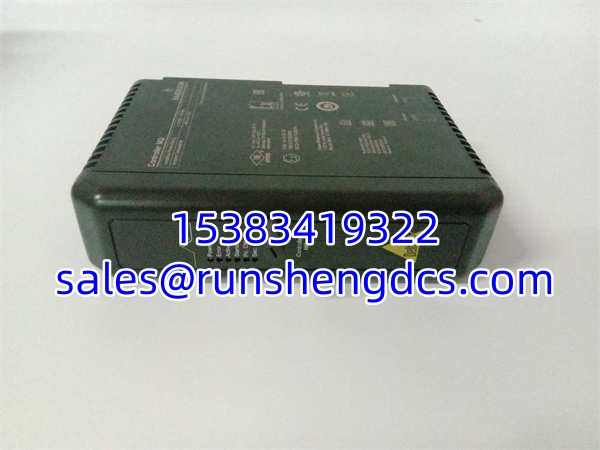
EMERSON CE30089
Application Scenarios
Refinery Unit Control: Distillation columns and reactors require deterministic execution for safety-critical interlocks. The ’s multi-core architecture ensures that complex fractionation logic and safety interlocks execute on a constant, predictable schedule, regardless of background data logging.
Power Plant Boiler Management: Steam drums and feedwater systems demand high-speed PID control and massive data buffering. The ’s >1 GB RAM stores extended trend data and alarm history locally, ensuring no data is lost during network interruptions. The dual Ethernet ports allow redundant communication paths to the HMI and historians.
Chemical Batch Processing: Recipe management and data acquisition require massive memory buffers. The ’s extended memory stores batch reports and audit trails locally, ensuring compliance and data integrity. The USB port allows for easy data export and firmware updates without network access.
Case Study — Memory Exhaustion Reset: A chemical plant in Texas was experiencing random controller resets on their DeltaV S-Series system. The trend data showed memory usage climbing to 99% before the crash. Maintenance replaced the legacy single-core controller with a . The >1 GB RAM absorbed the growing historian buffer and complex logic expansion. System stable for 18 months. Lesson: don’t let legacy hardware dictate your process growth.
FAQ
- Yes, physically and electrically. However, you must use the correct S-Series firmware image for multi-core controllers. Loading legacy single-core firmware will result in boot failure or degraded performance. Verify the firmware version before installation.
- Yes. The supports hot-swap replacement in a redundant S-Series configuration. The standby controller takes over while you replace the faulty unit. Wear an ESD strap; the multi-core CPU and Ethernet PHYs are sensitive to static.
- The is the multi-core, high-memory variant (>1 GHz, >1 GB RAM). The CE3008 (if referring to an older variant) typically has lower specs. Always verify the exact part number for your application’s memory and processing requirements.
- Check the label for , lot code, and Emerson/DeltaV markings. Verify the multi-core processor designation and >1 GB memory specs. Genuine modules have high-quality Ethernet jacks with integrated magnetics. Counterfeits often use cheaper components that fail under load. Buy from a supplier who tests DeltaV firmware compatibility.
- The typically operates from 0°C to +60°C (verify with OEM manual for exact spec). The module must be installed in a control cabinet with adequate airflow. If your cabinet exceeds 60°C at the module face, add cooling. Exceeding the temp range causes thermal throttling and potential safety trips.
- The requires a compatible engineering card in the same rack for backplane communication and maintenance. Verify the engineering card model and firmware version match the requirements in the DeltaV documentation. Mismatched cards can cause communication failures.
- Yes. The ’s multi-core processor and >1 GB RAM are specifically designed for APC and complex control strategies. The extended memory handles large model matrices and real-time optimization calculations without impacting basic control loop performance.