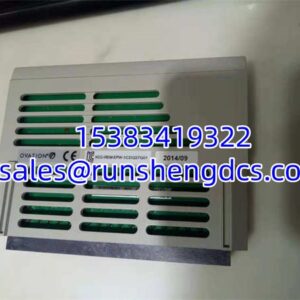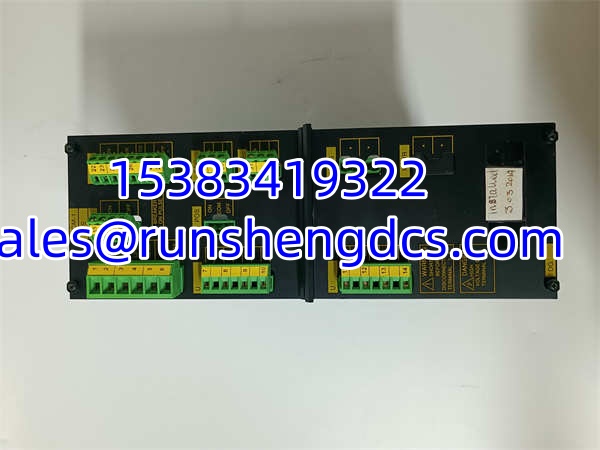

Description
Key Technical Specifications
- Product Model: SCM-1
- Manufacturer: DEIF
- Product Type: Synchronization / measurement module
- Function: Automatic genset-to-bus or generator-to-bus synchronization
- Measurement Parameters: Voltage, current, frequency, power-related parameters
- Control Outputs: Raise/lower pulses for governor and AVR
- Frequency Compatibility: 50/60 Hz
- Mounting: 35 mm DIN rail
- Installation Environment: Clean, dry control cabinet with adequate ventilation
- Application Type: Standalone synchronizer; no PLC required in typical use
- Integration: Works with typical governor and AVR raise/lower control schemes
Product Introduction
Open a genset control panel and SCM-1 is the kind of module that decides whether a generator closes onto a live bus cleanly — or slams into a bad phase angle. DEIF SCM-1 is a microprocessor-based synchronization and measurement module used where generators must be matched to a bus before the breaker closes. It measures voltage, frequency, and related power parameters, then coordinates governor speed and AVR voltage adjustments through raise/lower pulse outputs.
Why it matters in the field: a failed or misapplied synchronizer can cause mis-closing, breaker damage, generator stress, or unsafe re-energization. SCM-1 is useful because it is a focused synchronization device rather than a full PLC-based scheme. It supports 50/60 Hz systems, uses familiar raise/lower control, and can be combined with DEIF load-sharing modules when more generators are added later. For spare-parts planning, the real value is having a verified DEIF SCM-1 available so a failed sync module does not turn a routine genset start into a switchboard outage.
Troubleshooting Quick Reference
| Fault | Likely Cause | Quick Check | Fix |
|---|---|---|---|
| No display / no power | 24 VDC or module supply missing, fuse open, wiring fault | Measure supply at SCM-1 terminals; check fuse/breaker | Restore correct supply; replace fuse; check polarity |
| Will not synchronize | Governor/AVR raise-lower wiring wrong, settings incorrect, breaker interlock active | Check raise/lower outputs and breaker close permissive | Verify wiring; check sync settings; confirm breaker permissives |
| Voltage mismatch | AVR raise/lower circuit fault, AVR not responding, wiring error | Measure generator voltage vs. bus voltage; check AVR pulses | Repair AVR control path; verify raise/lower pulse wiring |
| Frequency mismatch | Governor not responding, speed actuator fault, wiring fault | Check governor raise/lower pulses and engine speed feedback | Repair governor circuit; verify speed sensor/feedback |
| Breaker closes at wrong angle | Lead-time compensation wrong, breaker timing changed, settings drift | Compare breaker close timing with lead compensation | Adjust lead compensation; verify breaker mechanical timing |
| Intermittent sync faults | Loose terminal, EMI near power cables, bad sensor wiring | Inspect terminals; check cable routing near VFDs/contactors | Reseat terminals; separate low-voltage control wiring from power cables |
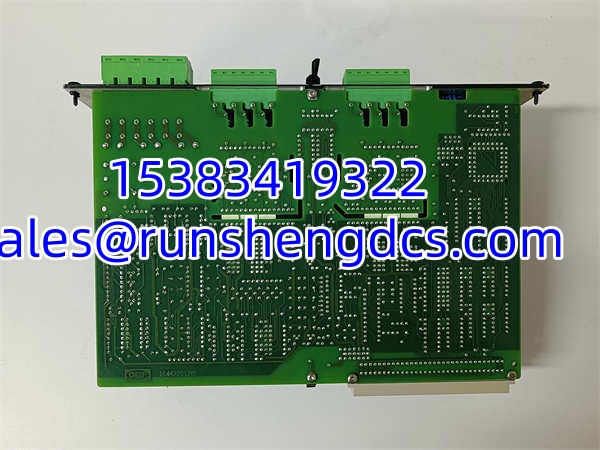
SCM-1
Application Scenarios & Pain Points
- Genset-to-mains synchronization: Used where a standby or prime-power generator must match the utility or main bus before closing. The pain point is usually incorrect voltage/frequency matching or wrong breaker close timing.
- Islanded power plants with multiple generators: can be part of a generator-to-bus synchronization scheme. The risk is mixing load-sharing settings, governor types, or AVR control methods without verifying compatibility.
- Industrial cogeneration / CHP systems: Soft transfers matter because a bad sync can disturb process loads. The challenge is confirming that raise/lower pulse timing matches the existing governor and AVR.
- Marine switchboards: Aux gensets, harbor-to-ship transfers, and vessel power management depend on reliable synchronization. Vibration, salt air, and cabinet heat can affect terminals and wiring long before the module logic fails.
- Data centers, hospitals, utilities: Controlled re-energization is critical. The pain point is procurement risk — ordering “” without confirming it is the DEIF synchronizer, not an unrelated instrument or lab device.