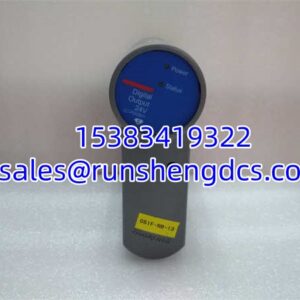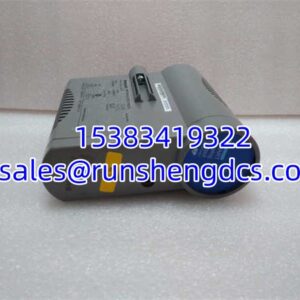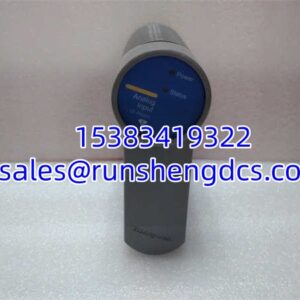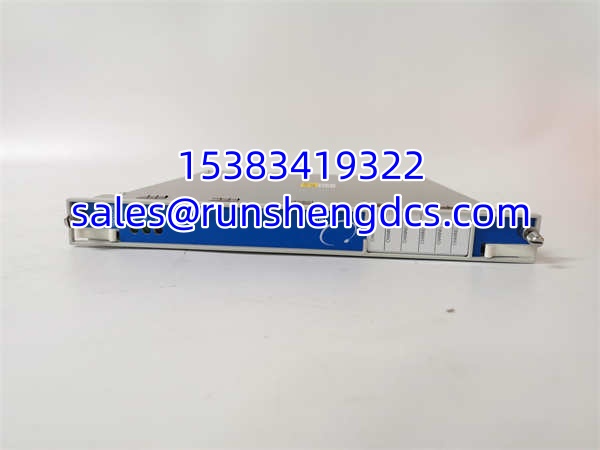

Description
Key Technical Specifications
| Parameter | Specification |
|---|---|
| Product Type | Temperature Monitor |
| Model Number | 3500/60-01-00 |
| Front Panel P/N | 163179-01 |
| Backplane P/N | 133819-01 |
| Channel Count | 6 Independent Channels |
| Input Types | RTD (Pt100, Cu10, etc.) or Thermocouple (J, K, T, E, etc.) |
| Power Consumption | Typical 9.0 Watts |
| Operating Temp | -30°C to +65°C (-22°F to +150°F) |
| Isolation | Channel-to-Channel (Isolated version available) |
| Accuracy | ±1°C typical at 25°C (Standard Rack) |
| TMR Support | Yes (Triple Modular Redundant) |
| Dimensions | 241.3 mm x 24.4 mm x 241.8 mm |
Product Introduction
You can’t protect a turbine if you can’t trust the temperature reading. The 3500/60 (163179-01) sits in the Bently Nevada 3500 rack as the dedicated temperature acquisition point. It accepts inputs from Resistance Temperature Detectors (RTDs) or Thermocouples, conditions the signal, and drives the protection logic. If a bearing starts cooking, this module is the one that tells the relay to trip the machine before you lose the asset.
Why stick with this legacy hardware? It’s about API 670 compliance and system continuity. The 3500/60 supports TMR (Triple Modular Redundancy) configurations, meaning you can run three modules side-by-side to vote on a trip condition, eliminating single-point failures. With a typical power draw of just 9W and an operating range down to -30°C, it handles the harsh environment of a control cabinet without breaking a sweat. Just remember, this is a monitor, not a recorder—if you need analog outputs to a DCS, you’re looking for the 3500/61.
QA/QC Transparency SOP
- Intake & Origin Verification: We verify the front panel P/N (163179-01) matches the internal PCB revision. We check for physical damage, specifically bent pins on the rear connector and corrosion on the RTD/TC terminal blocks.
- Live Functional Testing: The module is seated in a live 3500/05 Power Supply frame. We verify the “OK” LED status and check for communication with the 3500 Rack Configuration software.
- Electrical Parameter Tests: Using a Fluke 724 or equivalent process calibrator, we inject precise resistance (for RTD) or millivolt (for TC) signals. We verify the channel reads the correct value within the ±1°C accuracy spec. We also Megger the isolation barriers on isolated versions.
- Firmware/Config Verification: We read the firmware revision via the front panel or software. We ensure the module accepts a configuration load without hanging.
- Final QC & Anti-Static Packaging: The unit is cleared of site-specific data (unless requested otherwise), packed in an anti-static bag with bubble wrap, and shipped in a rigid box to prevent transit damage.
Field Engineer Gotchas
- The “Recorder” Trap: Don’t confuse the 3500/60 (163179-01) with the 3500/61 (163179-02). The /61 has recorder outputs (analog current loops) for each channel. The /60 does not. If your DCS relies on 4-20mA signals from this slot, the /60 will leave you hanging.
- RTD vs. TC Wiring: This module handles both, but the wiring topology differs. RTDs usually require 3-wire or 4-wire connections to compensate for lead resistance. If you wire a 2-wire RTD without bridging the sense leads correctly, your temperature reading will drift significantly with ambient changes.
- TMR Alignment: If you are running a TMR setup, the three modules must be in adjacent slots. You cannot skip slots. Also, ensure the “Voting” configuration in the software matches your safety logic requirements (e.g., 2oo3 voting).
- Firmware Mismatch: Swapping a module with a significantly older firmware revision into a newer rack can cause communication timeouts with the 3500 Communication Gateway. Check the revision on the old unit before ordering the spare.
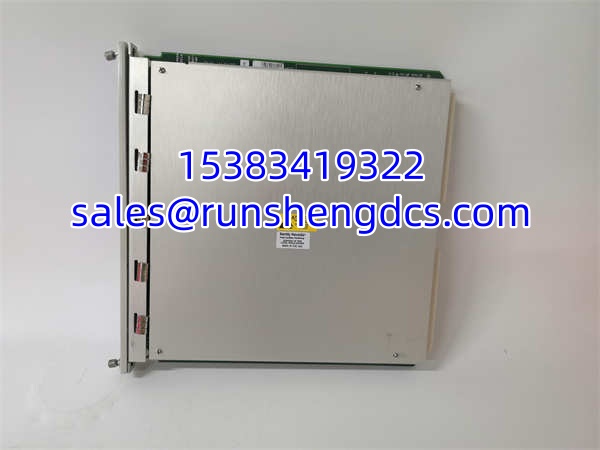
Bently 3500/60 163179-01
Application Scenarios
- Gas Turbine Bearing Protection: Monitoring babbitt temperature on journal bearings using embedded RTDs to prevent catastrophic wipe-out.
- Compressor Lube Oil Cooling: Tracking oil supply and return temperatures to modulate cooling water valves or trip on high temp.
- Motor Stator Winding Protection: Large high-voltage motors use embedded thermocouples in the stator slots; the 3500/60 aggregates these signals for the protection system.
Field Case: A refinery compressor trip occurred during startup. The 3500/60 reported a “Sensor Fail” on Channel 4. The ops team blamed the module. We pulled the module, tested it on the bench—it passed perfectly. The issue was the field wiring. The RTD cable had been pinched by a cable tray cover during maintenance, causing an intermittent open circuit that the module correctly flagged as a failure. Replaced the cable, not the module.
FAQ
Q: Can I mix RTD and Thermocouple inputs on the same 3500/60 module?
A: Yes. The 3500/60 is flexible. You can configure Channel 1 for a Pt100 RTD and Channel 2 for a Type K Thermocouple. You just need to define the sensor type for each channel individually in the configuration software.
Q: Is the 163179-01 compatible with the 3500/05 power supply?
A: Yes. The 163179-01 is the front panel part number for the 3500/60, which is designed to plug into the standard 3500 series backplane, powered by the 3500/05 or 3500/15 power supplies.
Q: Does this module provide 4-20mA outputs?
A: No. The 3500/60 (163179-01) does not have analog outputs. If you need 4-20mA recorder outputs for your DCS, you need the 3500/61 (P/N 163179-02).
Q: My system is showing “Bad” on the display, but the sensor is fine. What gives?
A: Check your wiring. If it’s an RTD, check for an open lead or a short between wires. If it’s a Thermocouple, check for reverse polarity. The module will flag “Bad” if the input impedance is out of range or if the voltage is outside the measurable limits.
Q: Is this module still manufactured by Bently Nevada?
A: The 3500 series is considered a legacy product line. While Bently Nevada (Baker Hughes) supports it, they are pushing the Orbit 60 series for new installations. However, 163179-01 modules are widely available through surplus channels for maintenance and replacements.