
Description
Key Technical Specifications
| Parameter | Typical Value / Note |
|---|---|
| Brand | Bently Nevada (Baker Hughes) |
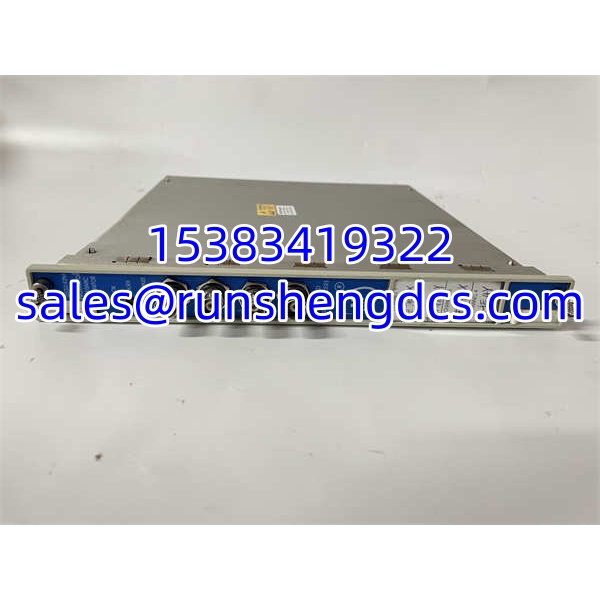
| Module | 3500/42M Proximitor/Seismic Monitor |
| Front Board P/N | 176449-02 |
| I/O Module | 128229-01 (3500/42M I/O Module with internal terminals) |
| Channels | 4, software-configurable in paired groups |
| Sensor Inputs | Proximitor (eddy-current) and seismic (velocity/acceleration) |
| Channel Functions | Radial vibration, thrust position, differential expansion, eccentricity, REBAM, velocity, acceleration, absolute shaft, circular acceptance zone |
| Analog Outputs | 4–20 mA per channel (3500/42M provides this; 3500/40M does not) |
| Alarm Outputs | Via associated 3500/32, 3500/33, or 3500/34 relay modules |
| Configuration | 3500 Rack Configuration Software (*.rak), stored in non-volatile memory |
| Standards | API 670 compliant; 3500 system SIL 2 capability per OEM documentation |
| Installation | 3500/05 rack, hot-swappable with power removed per OEM procedure |
Product Introduction
A vibration monitor card that does not match the failed one can pass power-up checks and still deliver wrong alarm behavior. The 3500/42M 176449-02 is the Bently Nevada monitor module that turns proximitor and seismic sensor signals into actionable vibration and position measurements — radial vibration, thrust position, differential expansion, eccentricity, velocity, acceleration, and absolute shaft — then compares them against configured alarm and danger setpoints.
This is not a generic analog input card. It is an API 670-class monitor inside the 3500 machinery protection architecture, with per-channel 4–20 mA outputs and software-defined alarm logic that feeds the relay modules. The 176449-02 front board paired with the 128229-01 I/O module is the correct assembly for a standard 3500/42M slot. If the failed card is labeled 176449-02, a verified replacement restores the original measurement path without re-engineering the protection logic.
QA/QC Transparency SOP
- Intake & Origin Verification — Record 3500/42M, 176449-02, 128229-01, serial numbers, and rack configuration revision. Inspect front-board connectors, I/O module terminals, and PCB for corrosion, burnt components, or bent pins.
- Live Functional Testing — Install in a compatible 3500/05 test rack with a known-good 3500/15 power supply and 3500/20 or 3500/22M RIM. Upload a test *.rak configuration and verify channel recognition, sensor fault detection, and alarm flagging.
- Electrical Parameter Tests — Measure backplane supply rails, 4–20 mA channel outputs, and sensor excitation circuits. Check for shorts, ground faults, and abnormal current draw before placing the module in a live rack.
- Firmware/Config Verification — Read module identity, firmware revision, and stored configuration via the RIM. Back up the existing *.rak file from the host rack before any replacement.
- Final QC & Anti-Static Packaging — Label with module type, front board P/N, I/O module P/N, serial, and test date. Pack in ESD bag with anti-static foam and rigid outer box.
Field Engineer Gotchas
- Wrong front board revision: 176449-01 (3500/40M) and 176449-02 (3500/42M) are not the same. The 40M does not provide 4–20 mA outputs; the 42M does. Swapping them can break recorder feeds and alarm mapping.
- Missing I/O module: The 3500/42M requires the correct I/O module, typically 128229-01. A missing or mismatched I/O module will cause sensor input failures even if the front board powers up.
- Configuration mismatch: The module must match the existing *.rak configuration for channel type, probe model, range, and alarm delays. Dropping in a blank or differently configured card will not trip correctly.
- Hot-swap discipline: 3500 modules are hot-swappable in principle, but only when the system is configured for it and the remaining channels are healthy. Pulling a monitor during an active alarm can mask the fault or force a relay state change.
- Shielding and grounding: Proximitor signals are sensitive to cable routing and shield grounding. Running sensor cables near VFD outputs or ungrounded shields can create false vibration readings that look like a bad monitor.
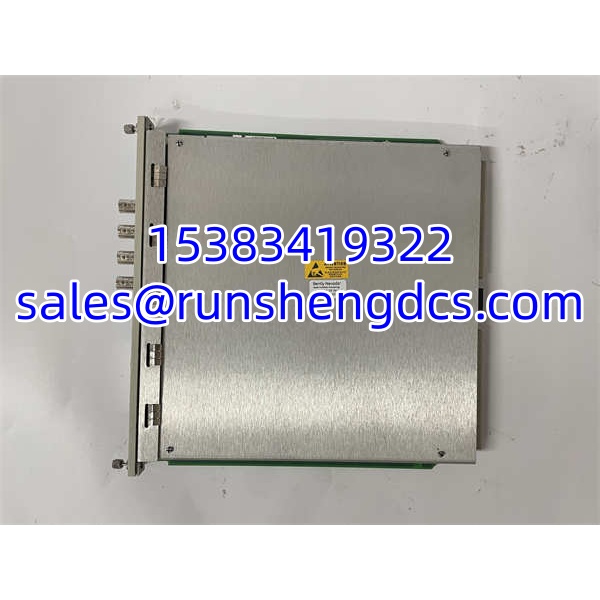
Bently Nevada 3500/42M 176449-02
Application Scenarios
- Steam turbine radial vibration monitoring: Accepts 3300 XL proximitor inputs and provides 4–20 mA outputs to the DCS while driving relay trips through 3500/32 or 3500/33 modules.
- Compressor thrust position and differential expansion: Channels are paired so channels 1–2 handle one function and channels 3–4 handle another, such as thrust position and differential expansion.
- Gas turbine absolute shaft vibration: Combines proximitor and seismic inputs to derive absolute shaft vibration for API 670-compliant protection.
- Large motor or gearbox condition monitoring: Configured for velocity or acceleration channels with 4–20 mA recorder outputs for trending.
FAQ
Is 176449-02 the same as 176449-01?
No. 176449-01 is associated with 3500/40M, while 176449-02 is the 3500/42M front board. The 42M provides 4–20 mA outputs; the 40M does not.
What I/O module does this require?
The 3500/42M typically uses the 128229-01 I/O module with internal terminals. Verify this against the existing card and rack documentation.
Can this module drive relay trips directly?
No. The 3500/42M generates alarm/danger states, but relay outputs come from associated 3500/32, 3500/33, or 3500/34 relay modules.
Does it support hot-swapping?
3500 modules are designed for hot-swapping when the system is configured for it and power is stable. Follow OEM procedures and confirm alarm behavior before pulling the card.
What software configures this module?
Bently Nevada 3500 Rack Configuration Software (*.rak), accessed through the 3500/20 or 3500/22M RIM.
Is this module still in production?
The 3500 platform remains active, but individual board revisions may be supplied as surplus, refurbished, or tested used. Confirm condition and revision with the vendor.