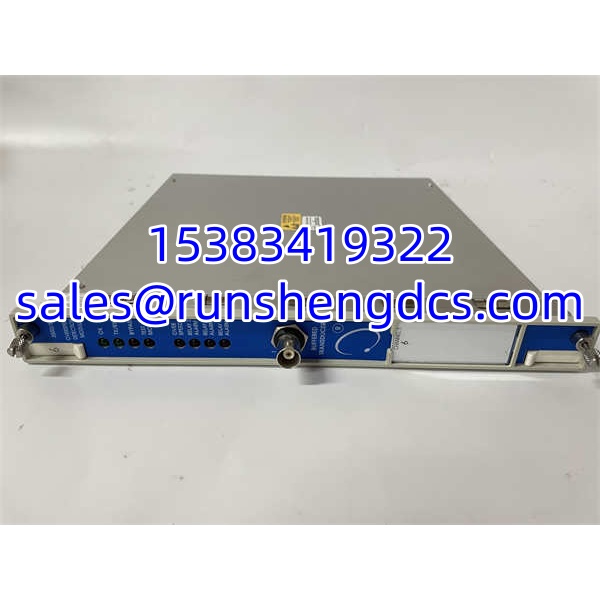

Description
Key Technical Specifications
| Parameter | Value / Notes |
|---|---|
| Manufacturer | Bently Nevada |
| Product Family | 3500 Machinery Monitoring System |
| Module Type | 3500/53 Electronic Overspeed Detection Module |
| Part Number | 133388-01 |
| Primary Function | Redundant speed measurement and overspeed protection |
| Sensor Inputs | Proximity probe or magnetic pickup |
| Input Signal Range | +10.0 V to −24.0 V, per typical module data |
| Input Impedance | 20 kΩ, per typical module data |
| Power Consumption | ~8.0 W typical |
| Voting Logic | 2oo2 or 3oo2 overspeed voting, depending on system configuration |
| Application Standard | API 670 / API 612 overspeed protection context |
| Installation | 3500 rack-mounted module |
Product Introduction
Overspeed protection is one of those functions where “close enough” is not acceptable. A speed module that reads RPM correctly during normal operation can still fail a real overspeed event if the voting logic, sensor input, firmware, or rack power architecture is wrong. The Bently Nevada 3500/53 133388-01 is an electronic overspeed detection module for the 3500 machinery monitoring system, used to detect shaft speed and initiate protection actions when configured as part of an overspeed trip system.
This module is typically applied on turbines, compressors, generators, fans, blowers, and other high-value rotating equipment where speed must be continuously monitored. Bottom line — it is a protection-grade speed module, not a general-purpose tachometer display. When used correctly in a redundant 3500 rack, it supports fast response and voting-based overspeed detection, but only if the surrounding system — power supply, sensors, keyphasor where required, configuration software, and relay outputs — is matched properly.
QA/QC Transparency SOP
- Intake & Origin Verification
Check the nameplate for 3500/53 and part number 133388-01. Confirm the label is original, legible, and consistent with the purchase order. Reject units with reprinted labels, mismatched part numbers, missing revision information, or evidence of board-level repair unless supported by OEM documentation. - Visual & Mechanical Inspection
Inspect the backplane connector, front panel LEDs, mounting hardware, enclosure, and PCB edges. Look for bent pins, cracked housings, corrosion, burnt components, lifted traces, or liquid damage. The backplane connector is a common mechanical weak point on pulled 3500 modules. - Live Functional Testing
Install the module in a known-good 3500 rack with compatible power and frame interface modules. Verify that the module powers up, the OK LED behaves normally, and the module communicates with the rack. If a test sensor or signal source is available, confirm that speed input is recognized and that configured alarm/overspeed setpoints respond correctly. - Electrical Parameter Tests
Perform continuity and insulation checks only where safe and permitted by OEM procedures. Do not apply high-voltage megger tests to sensor input circuits, backplane pins, or low-voltage logic areas unless the Bently Nevada procedure explicitly allows it. - Final QC & Anti-Static Packaging
Record the exact part number, revision, physical condition, LED status, and test results. Package in ESD-safe materials, protect the backplane connector and front panel, and include a note to verify firmware, sensor type, voting logic, and rack configuration before energizing the system.
Field Engineer Gotchas
Firmware and software version mismatch
Risk: Adding a 3500/53 to an existing rack without checking firmware/software compatibility.
Fix: Verify the required minimum firmware and software versions for the 3500 system before installation. Older frames or mismatched configuration software can block recognition, prevent configuration, or cause communication faults.
Blunt warning: A “new” 3500/53 that the rack does not recognize is usually a configuration/firmware problem, not always a bad module.
Voting logic confusion
Risk: Assuming one 3500/53 alone gives full overspeed protection.
Fix: Confirm whether the application requires 2oo2, 3oo2, or another redundant arrangement. Overspeed voting must match the machine protection philosophy and the number of installed speed channels.
War story: A turbine trip system passed bench checks but was flagged during commissioning because the protection logic expected redundant speed agreement that the installed configuration did not support.
Sensor type mismatch
Risk: Connecting the wrong proximity probe, magnetic pickup, or cabling.
Fix: Confirm the sensor type, cable length, impedance, and signal level expected by the 3500/53 installation.
Bottom line — the module may be fine, but the wrong sensor signal will make it look defective.
Redundant power requirement
Risk: Installing overspeed detection in a 3500 rack without verifying the power architecture.
Fix: Overspeed detection systems typically require redundant power in the 3500 rack. Confirm the power modules, rack wiring, and protection philosophy before relying on the module for trip functions.
Surplus listing confusion
Risk: Suppliers may list 3500/53 modules with similar Bently part numbers or mix them with 3500/50, 3500/54, or generic speed cards.
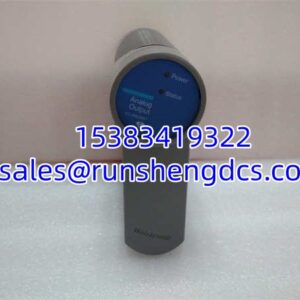
Fix: Require a clear photo of the full nameplate showing 3500/53 and 133388-01 before purchase.
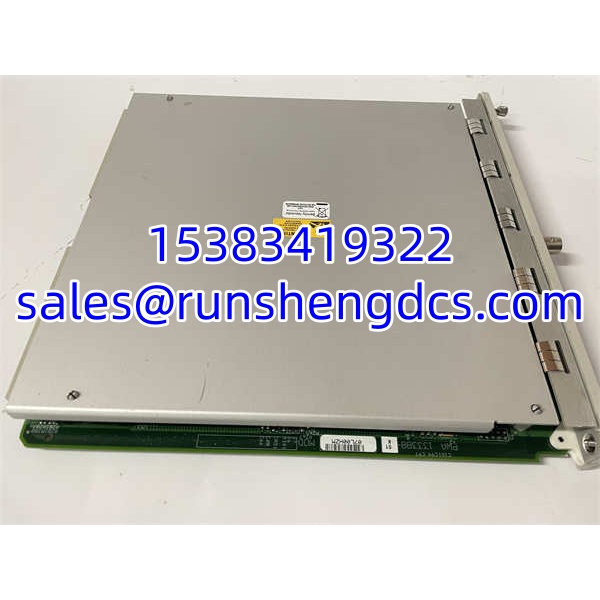
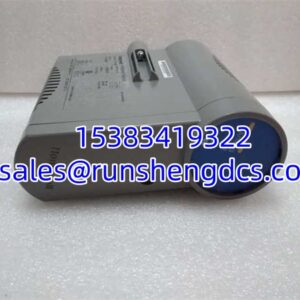
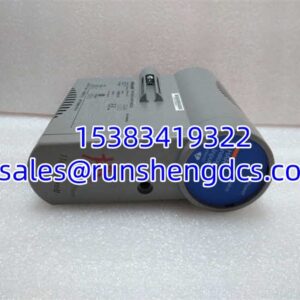
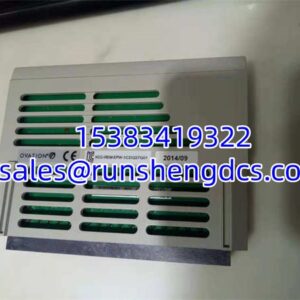
BENTLY 3500/53 133388-01
Application Scenarios
- Steam turbine overspeed protection where redundant speed channels must detect dangerous speed rise before mechanical damage occurs.
- Gas turbine driver trains with API-style machinery protection requirements.
- Centrifugal compressor trains requiring continuous speed monitoring and overspeed trip coordination.
- Generators and large motor drives where speed loss, overspeed, or erratic speed signals indicate serious mechanical or control issues.
- Fans, blowers, and high-speed rotating equipment where a dedicated electronic overspeed module is preferred over a basic tachometer.
Anonymized Field Case
A refinery turbine train had an existing 3500 protection rack. During a planned outage, maintenance replaced a suspected speed module with a surplus 3500/53. After power-up, the rack recognized the module physically, but the configuration software showed communication and configuration errors. The team first suspected a failed module. After checking the rack firmware and configuration software versions, they found the existing system required newer firmware/software support than what the installed configuration could handle. Once the firmware and configuration environment were aligned, the module communicated correctly and the overspeed channels validated. The lesson: in 3500 overspeed systems, the module is only one part of the protection chain.
FAQ
Is 133388-01 definitely a 3500/53 overspeed module?
It is commonly associated with the 3500/53 overspeed detection module, but do not rely on the part number alone. Confirm the physical nameplate shows 3500/53 and that the configuration suffix matches the application.
What sensors does the 3500/53 accept?
Typical installations use proximity probes or magnetic pickups. The exact compatible sensor, cable, and signal level must be verified against the Bently Nevada documentation and the installed configuration.
Can I install this module in any 3500 rack?
Not automatically. The rack must support the 3500/53, and overspeed detection applications generally require redundant power. Verify the power modules, frame interface, firmware, and configuration software before installation.
What is the difference between 2oo2 and 3oo2 here?
These are voting logic arrangements used to balance protection reliability and spurious trip avoidance.
- 2oo2 usually means two channels must agree.
- 3oo2 usually means two out of three channels must agree.
The correct choice depends on the machine protection philosophy and how many speed channels are installed.
Is this module a direct replacement for a 3500/50?
No. The 3500/53 is an overspeed detection module. The 3500/50 is a tachometer/speed monitor module family. They are not automatically interchangeable, even if some part numbers look similar.
What should I check before using surplus stock?
Check the nameplate, revision, physical condition, backplane connector, LED behavior, firmware/software compatibility, sensor compatibility, and rack power architecture. For overspeed protection, visual inspection alone is not enough.
Where should exact specs be verified?
Use the Bently Nevada nameplate, 3500 system documentation, configuration software, and official Bently Nevada technical support. Third-party surplus listings are useful for identification, but they are not a substitute for OEM documentation.