
Description
Key Technical Specifications
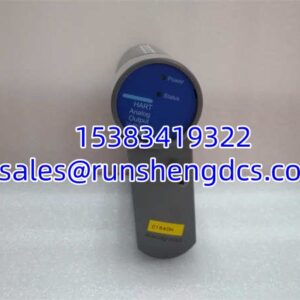
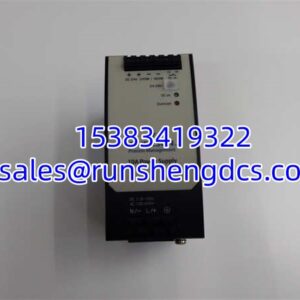
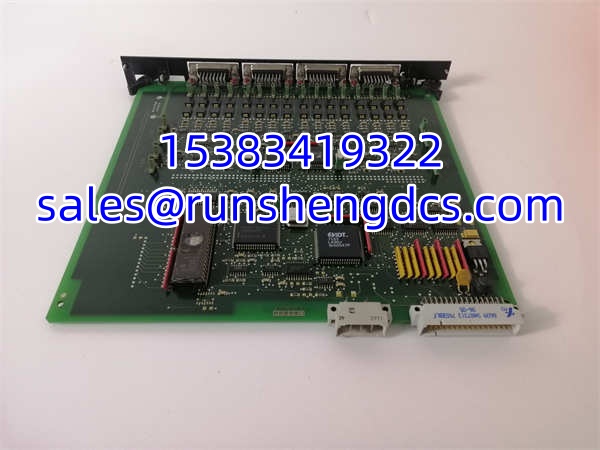
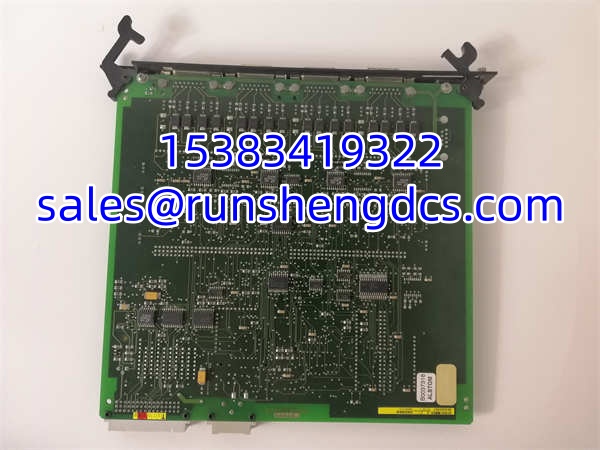
- Product Model: ALSTOM IR139-1
- Manufacturer: ALSTOM
- Product Type: Control Motherboard / Communication Module
- Core Processing: High-Performance Processor for Rapid Data Handling
- Communication Protocols: Modbus, Profibus, EtherNet/IP, CAN
- Diagnostic Features: Advanced Real-Time Monitoring and System Diagnostics
- I/O Interfaces: Multiple Input/Output Ports for Industrial Environments
- Target Industries: Power Generation, Petrochemical, Metallurgy, Water Treatment
- Operating Environment: Designed for Harsh Industrial Conditions
- Safety & Reliability: Engineered for Continuous, Stable Operation
Product Introduction
Your distributed control system is experiencing processing bottlenecks or communication failures, and the core logic board is showing its age. The ALSTOM IR139-1 is the central processing module that needs to be evaluated or replaced. This isn’t a standard peripheral card; it is the high-performance control core responsible for executing complex logic, managing massive data throughput, and coordinating control signals across the entire ALSTOM network.
Why does this specific module matter? Because it serves as the brain of your control architecture. Equipped with advanced real-time diagnostics and support for multiple industrial protocols (like Modbus and Profibus), the ALSTOM IR139-1 ensures that your critical processes maintain precise control and stability even under heavy computational loads. Bottom line—it’s the difference between a responsive, optimized plant and a sluggish system plagued by unexplained communication drops.
Troubleshooting Quick Reference
| Fault Symptom | Probable Cause | Relevancy | Quick Check | Fix |
|---|---|---|---|---|
| Processing Delays | CPU Overload or Thermal Throttling | 80% | Check module temperature and system load | Verify cooling airflow; clear diagnostic buffer; replace module |
| Comm Protocol Failure | Firmware Mismatch or Port Degradation | 70% | Inspect physical ports and protocol settings | Reseat cables; verify Modbus/Profibus configuration |
| Diagnostic Alarm Active | Internal Component Degradation | 60% | Read advanced diagnostic registers via SCADA | Cross-reference error codes; initiate hot-swap if supported |
| Signal Output Failure | I/O Interface Damage | 50% | Measure voltage at output terminals | Test individual channels; replace IR139-1 if dead |
| System Intermittent Resets | Backplane Power Ripple or Seating Issue | 40% | Reseat module; check backplane power bus | Clean edge connectors; verify power supply stability |
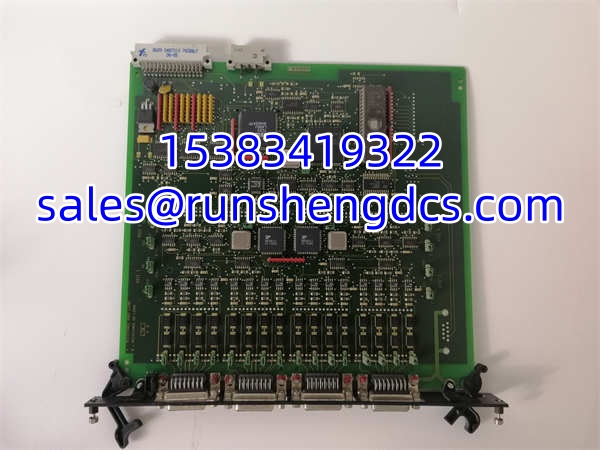
ALSTOM IR139-1
Application Scenarios & Pain Points
- Power Generation Plants: Turbine control logic requires microsecond-level precision. The high-speed data processing of the ALSTOM IR139-1 prevents timing jitter that can lead to inefficient combustion or grid synchronization issues.
- Petrochemical Refineries: Complex chemical processes rely on flawless communication between distributed nodes. Built-in advanced diagnostics allow engineers to pinpoint communication bottlenecks before they cause batch failures.
- Heavy Metallurgy: Extreme electromagnetic environments can corrupt standard control signals. The robust design of the IR139-1 ensures reliable signal output and data integrity in high-noise mill environments.
- Real-World Case: Controls engineer at a thermal power plant faced recurring DCS communication timeouts that standard troubleshooting couldn’t resolve. Swapped in a verified , utilized its advanced diagnostic features to identify a degrading backplane interface, and restored stable network performance within a single shift.