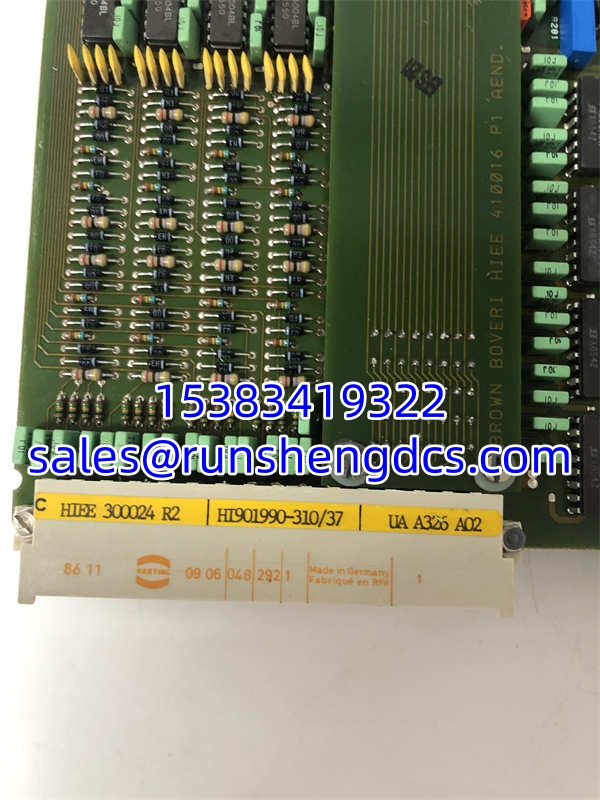

Description
Key Technical Specifications
- Product Model: UAA326A02 / HIEE300024R2
- Operating Voltage: 24V DC
- Signal Processing: Analog (4-20mA, 0-10V) & Digital I/O
- Communication Protocols: Modbus RTU, Profibus, CANopen, DriveCOM
- Core Processor: High-Performance DSP / FPGA
- Control Algorithms: Vector Control, Direct Torque Control (DTC)
- Protection Features: Overcurrent, Overvoltage, Overheating Diagnostics
- Physical Dimensions: 373mm x 142mm x 73.5mm
- Product Weight: 1.53 kg
- Installation Method: Control Room / DIN Rail Mount
Product Introduction
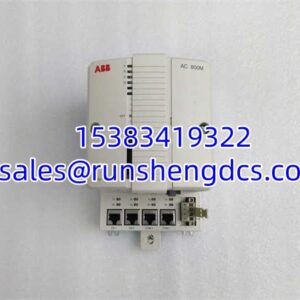
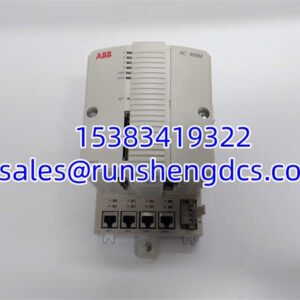
When dealing with medium-to-high voltage drive systems, a single point of failure in the control unit can bring an entire production line to a grinding halt. The ABB UAA326A02 serves as the critical brain inside these massive systems, acting as the central interface unit responsible for real-time signal processing and system coordination. Whether it’s managing an ACS6000 frequency converter or coordinating grid-connected converters, the UAA326A02 ensures that complex logic executes flawlessly without missing a beat.
I’ve seen this module handle everything from rolling mills to wind power converters, and its reliability comes down to its hardware architecture. Built around high-performance DSP and FPGA cores, the UAA326A02 guarantees the microsecond-level response times required for Direct Torque Control (DTC) algorithms. It doesn’t just pass signals; it actively monitors them, running self-diagnostics on ADC/DAC accuracy and communication links to catch faults before they escalate. It’s a heavy-duty piece of industrial engineering that demands respect and proper environmental conditions to keep running for decades.
Quality SOP & Tech Pitfalls (The Reality Check)
The Lab Report:
We don’t just trust the label. Every UAA326A02 gets a visual inspection under magnification to check for micro-fractures on the BGA components and corrosion on the multi-pin connectors. We mount it on a test bench, apply 24V DC, and use an oscilloscope to verify the DSP boot sequence and internal rail voltages. Next, we inject simulated 4-20mA and digital signals to confirm the I/O mapping and check the LED fault indicators. Finally, it gets sealed in anti-static shielding with a silica pack.
The Engineer’s Warning:
Here is where people get burned: Do not ignore the firmware revision. The UAA326A02 is often part of a larger drive system, and mixing an older card with a newer system controller (or vice versa) can cause communication timeouts or erratic DTC behavior. I’ve seen a plant lose three days of production because they swapped this board without checking the DriveCOM protocol version. Also, photograph the DIP switches and jumper settings before pulling the old card. These modules often have hardware-level address configurations that do not auto-load.
Installation & Configuration Guide
- Pre-Installation Safety: ⚠️ LOCKOUT/TAGOUT. High-voltage drives store lethal energy. Verify the DC bus is fully discharged and wait the manufacturer-specified time. Take a high-res photo of the existing wiring, fiber optics, and DIP switch settings. Do not skip this.
- Removal: Label all analog, digital, and fiber connections. Release the DIN clips or retaining screws gently. Pull the straight back to avoid bending the backplane pins.
- Installation: MATCH ALL DIP/JUMPER SETTINGS. This prevents 90% of startup failures. Slide the new into the slot, ensuring the backplane connector seats fully. Re-terminate wires and fiber optics to the exact same terminals.
- Power-On & Testing: Restore 24V control power first. Watch the module LEDs: Power should be solid, and the system OK LED should illuminate. Check the HMI or SCADA for fault codes. Run a manual output test to verify analog scaling and digital switching.
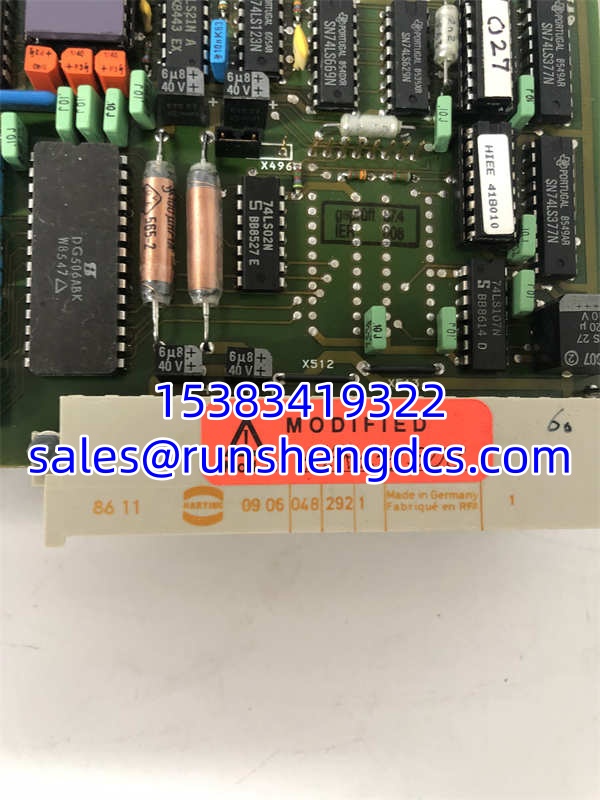
ABB UAA326A02
Compatible Replacement Models
| Model | Compatibility Tier | Notes |
|---|---|---|
| ✅ Drop-in Replacement | Exact hardware/firmware match. Verify HIEE300024R2 suffix. | |
| UAA326A04 | ⚠️ Software Compatible | Same hardware family, newer revision. May require firmware flash or parameter reload. Allow 30 mins. |
| UAC326AE | ❌ Hardware Mod Required | Different form factor/backplane. Requires chassis modification. Not recommended for quick swap. |
Frequently Asked Questions (FAQ)
Can I hot-swap this module while the drive is running?
Absolutely not. The is a core processing unit. Pulling it will cause an immediate loss of control and likely trigger a hard fault in the high-voltage IGBT stage. Schedule a full shutdown and DC bus discharge.
Why is my DriveCOM communication timing out after replacement?
Check the firmware and node ID settings. The must match the network configuration exactly. If you installed a newer revision card, the drive controller might be expecting an older protocol handshake. Verify the DIP switch node address and reload the system parameters.
What does the ADC fault LED indicate?
It means the internal self-diagnostic detected an accuracy drift or failure in the analog-to-digital converter. The continuously verifies its own measurement circuits. If this LED is on, the module can no longer guarantee the precision required for vector control. Replace it immediately.
Is this module used in excitation systems?
Yes. The is frequently deployed as an excitation controller module in power generation, managing the real-time regulation of generator field current. Its fast DSP response is critical for maintaining grid stability during transient events.
Can I use this for standard PLC logic?
Technically yes, but it’s overkill and highly specialized. The is optimized for drive control and high-speed signal processing, not general-purpose ladder logic. If you need standard automation, look at ABB’s AC500 or S800 series.
Does this support fiber optic communication?
Yes. The often includes fiber interfaces for noise-immune communication in high-voltage environments where copper cables would pick up massive EMI. Always handle fiber connectors with care; a single speck of dust can cause intermittent faults.