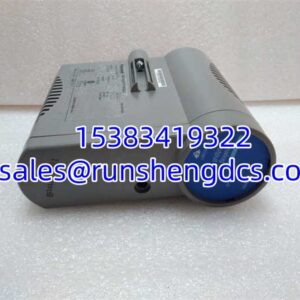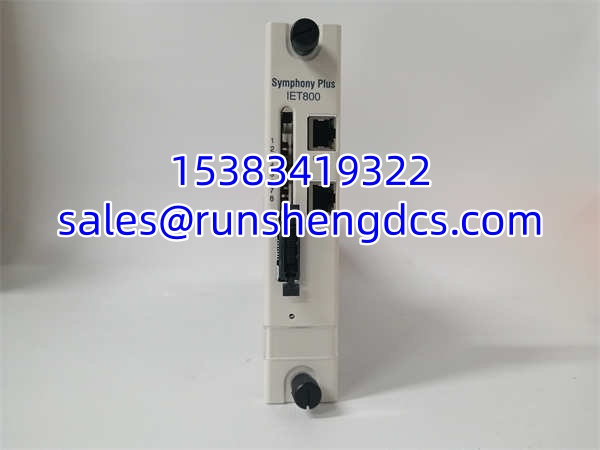

Description
Key Technical Specifications
| Parameter Name | Parameter Value |
|---|---|
| Product Model | SPIET800 |
| Manufacturer | ABB |
| Product Series | S800 I/O / 800xA / Symphony Plus |
| Interface Type | Ethernet (10/100Base-TX) |
| Physical Ports | 2x RJ45 (Redundant Link Support) |
| Supported Protocols | Modbus TCP, PROFINET, IEC 61850 (Verify Rev) |
| Power Supply | 24V DC (via Backplane or External) |
| Mounting Style | DIN Rail / Panel Mount |
| Operating Temp | -20°C to +60°C |
| Humidity | 5% – 95% (non-condensing) |
| Protection Class | IP20 |
| Dimensions | ~110mm x 120mm x 70mm |
Product Introduction
Network bottlenecks in distributed I/O systems usually trace back to a single point of failure in the communication layer. The ABB SPIET800 acts as the critical bridge, converting the proprietary S800 Module Bus into standard industrial Ethernet, allowing your 800xA or Symphony Plus controllers to talk to field I/O without latency. It’s not just a converter; it’s the traffic cop for your entire distributed I/O rack.
Engineers specify the SPIET800 because it handles redundant ring topologies natively, meaning a single cable cut doesn’t take down your pump station. With support for 10/100Base-TX and robust diagnostics LEDs, troubleshooting physical layer issues takes seconds, not hours. Bottom line: if your I/O is dropping off the network during high-load scans, this module is usually the first suspect or the first fix.
QA/QC Transparency SOP
We don’t trust “tested” stickers from unknown vendors. Every SPIET800 undergoes a rigorous five-step validation to ensure it won’t orphan your I/O modules:
- Intake & Origin Verification: We trace the serial number against ABB production batches to filter out high-quality counterfeits. Visual inspection checks for cracked RJ45 housings, corroded DIN clips, or missing configuration labels.
- Live Functional Testing: Module is mounted on a live S800 test rack with an AC800M controller. We force I/O updates and verify data integrity across both Ethernet ports.
- Electrical Parameter Tests: Fluke 115 verifies the 24V DC rail stability and checks for continuity on all backplane pins. No open circuits or voltage drops under load.
- Firmware/Config Verification: We read the internal EEPROM to ensure no hidden fault flags or corrupted boot sectors exist from previous deployments. Firmware version is logged and matched to your spec.
- Final QC & Anti-Static Packaging: Module is sealed in ESD-safe shielding with a printed test report. No bare PCBs in bubble wrap.
Field Engineer Gotchas
- Firmware/OS Version Mismatch: The SPIET800 firmware must match your AC800M controller’s OS version. Risk: A version mismatch causes the I/O bus to hang or the module to fail initialization. Fix: Always check the “Product Information” in the controller before swapping. I’ve seen a tech waste a shift because he put a V4.2 CIU into a V3.1 system.
- DIP Switch/Bootp Configuration: This module doesn’t always auto-negotiate IP addresses. Risk: If the DIP switches are set to “Bootp” but your network has no Bootp server, the module stays offline. Fix: Verify the hardware configuration in Control Builder. If using static IP, ensure the DIP switches match the configuration.
- Ethernet Cable Quality: 10/100Base-TX is picky about cabling. Risk: Using CAT5 instead of CAT5e/6, or bad crimps, causes intermittent packet loss that looks like CPU overload. Fix: Always use shielded CAT5e+ cable with proper grounding at the shield drain. Test with a cable certifier, not just a continuity tester.
- Redundancy Ring Breaks: The SPIET800 supports ring topology, but it’s not magic. Risk: If the ring recovery time exceeds the controller’s timeout, I/O will still drop. Fix: Verify the ring recovery time in the hardware configuration matches your network switch settings. I once had a 2-second ring recovery that was killing the process; we tuned it to 20ms and the problem vanished.
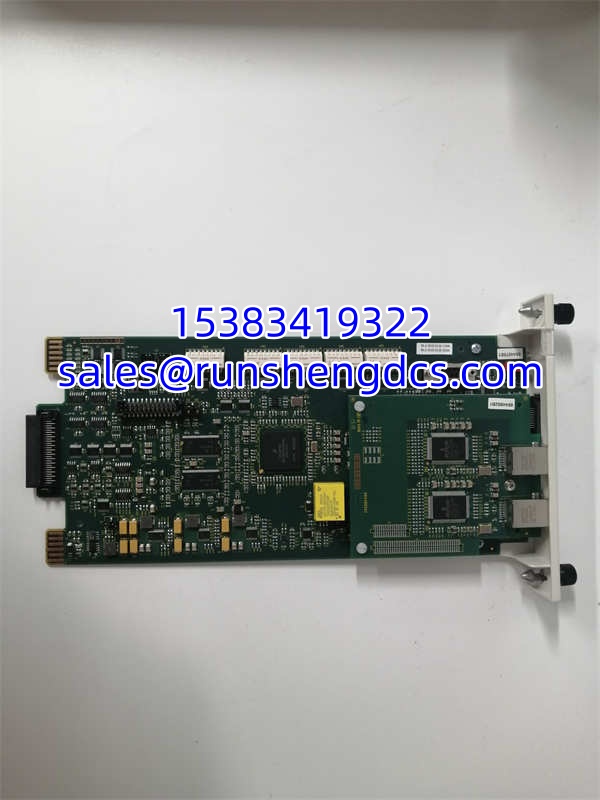
ABB SPIET800
Application Scenarios
- Water/Wastewater SCADA: Connecting remote lift station I/O to a central 800xA server over long Ethernet runs, using the ‘s redundant ring to survive cable cuts during excavation.
- Oil & Gas Offshore Platforms: Bridging hazardous area I/O to the safe area control room, where the module’s industrial temp range and EMI immunity are non-negotiable.
- Power Plant BOP Systems: Integrating legacy S800 I/O into a new Symphony Plus DCS, using the as the protocol translator without replacing field wiring.
FAQ
Is this module hot-swappable?
Yes, the S800 bus supports hot-swapping the , but the I/O modules connected to it will lose communication during the swap. Plan for a brief process interruption or use redundant I/O if the process can’t tolerate it.
Can I use this with a standard Ethernet switch?
Yes, but ensure the switch supports industrial protocols and has low latency. Avoid unmanaged office switches; they lack the QoS and diagnostics needed for process control. Use ABB or recommended industrial switches for best results.
Does it support IEC 61850?
Depends on the firmware revision. Most units support Modbus TCP and PROFINET natively. IEC 61850 support requires specific firmware and licensing. Check the label or the “Product Information” menu before assuming.
What’s the max cable length?
100 meters for 100Base-TX, 200 meters for 10Base-T. If you need longer runs, use fiber media converters. Don’t try to push copper beyond spec; signal integrity degrades fast.
How do I verify the firmware version?
Connect via Control Builder, go to the “Network” folder, right-click the , and select “Product Information.” The firmware version is listed there. Match this to your controller’s OS version before swapping.
No. The CI854 is for Profibus DP. The is for Ethernet. They are not interchangeable. Don’t confuse the two; they look similar but have different backplane connectors and firmware.