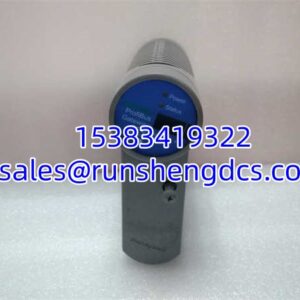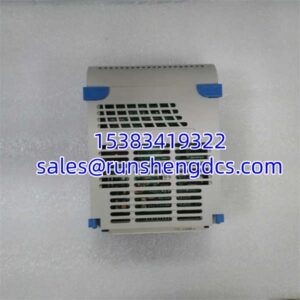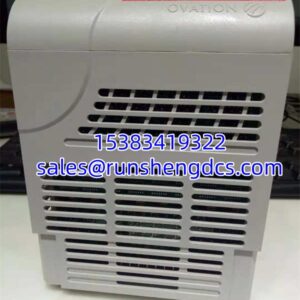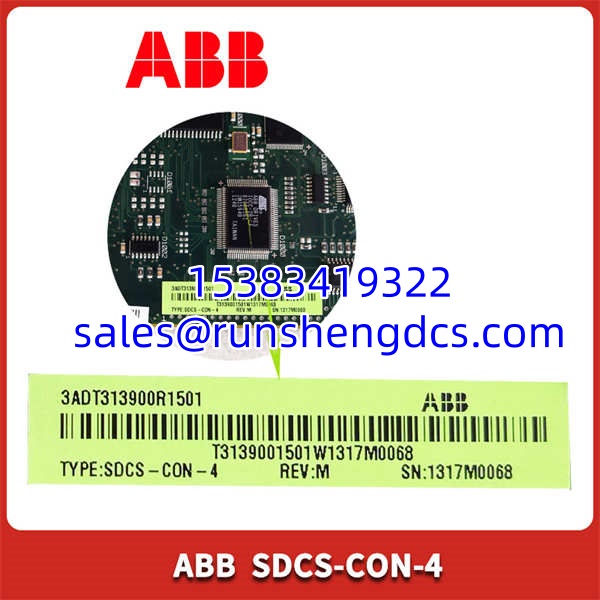

Description
Key Technical Specifications
- Product Model: SDCS-CON-4
- OEM Part Number: 3ADT313900R1501
- Manufacturer: ABB (Switzerland/Sweden)
- Processor: 32-bit high-performance industrial CPU
- Power Supply: 24V DC (±15% tolerance)
- Digital I/O: 16 Opto-isolated Inputs / 16 Transistor Outputs
- Analog I/O: 4 Inputs / 4 Outputs (±10V, 0–20mA, 4–20mA selectable)
- Encoder Interface: Supports HTL / TTL encoders (ABZ phases)
- Communication: 1x Ethernet (Modbus TCP, Profinet), 1x RS-485 (Modbus RTU)
- Control Algorithms: Vector control, V/F control, dual closed-loop regulation
- Protection: Built-in overcurrent, overvoltage, and overtemperature protection
- Operating Temp: -25°C to +60°C
Product Introduction
When a DC drive loses its brain, heavy industrial processes like metal rolling or paper tensioning come to a dead halt. The ABB SDCS-CON-4 serves as the central processing unit for DCS800 and DCS550 series DC drives. It handles the complex mathematical lifting required to execute precise closed-loop control over motor speed, torque, and current.
Bottom line — it translates high-level automation commands into exact physical motor movements. Equipped with a 32-bit processor and rich I/O capabilities, it supports advanced vector control and dual closed-loop regulation. The board also integrates robust safety features, including automatic overcurrent and overtemperature protection, ensuring the drive can survive harsh industrial environments without catastrophic failure.
QA/QC Transparency SOP
Drive control boards are highly sensitive to electrical stress. We verify every unit before it ships:
- Intake & Origin Verification: Visual PCB inspection for blown components, thermal damage, or altered serial numbers.
- Live Functional Testing: Mounted on a DCS800 test bench to verify boot sequence, parameter storage, and closed-loop response.
- Electrical Parameter Tests: 24V power rails and I/O opto-isolators tested with precision multimeters for correct voltage thresholds.
- Firmware/Config Verification: Readout of firmware revision and flash memory integrity to ensure no corrupted sectors.
- Final QC & Anti-Static Packaging: Passed units receive a QC sticker and are sealed in an ESD-safe bag with desiccant.
Field Engineer Gotchas
- Encoder Wiring Errors: The SDCS-CON-4 supports both HTL and TTL encoders. Wiring a 24V HTL encoder into a TTL-only pin will fry the interface chip instantly. Always double-check the encoder spec before connecting.
- Ground Loop Noise: Analog I/O channels are highly susceptible to ground loops. If your 4-20mA signal reads erratically, check your shield grounding. I’ve seen guys spend hours replacing boards when the real issue was a floating ground at the motor.
- Firmware Mismatches: If replacing a failed board, the new SDCS-CON-4 must have the exact same firmware revision as the rest of the drive system. A version mismatch will trigger communication faults on the DriveBus.
- ESD is Fatal: The 32-bit CPU and flash memory are extremely sensitive. Always wear a grounded wrist strap. A static shock can corrupt the firmware, turning a perfectly good board into an expensive paperweight.
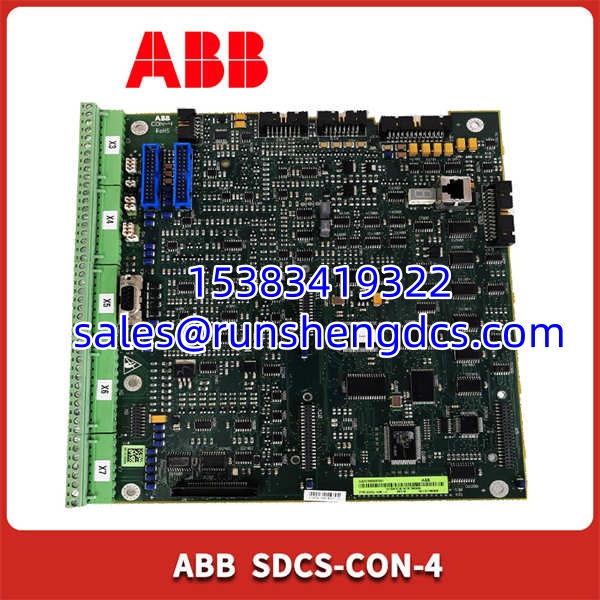
ABB-SDCS-CON-4
Application Scenarios
- Metal Rolling Mills: Executing high-precision speed and torque control for steel rolling stands.
- Paper Machine Tension: Maintaining exact web tension across multiple driven sections.
- Extruder Drives: Providing consistent torque and speed for plastic extrusion processes.
FAQ
Is this compatible with DCS550 drives?
Yes. The SDCS-CON-4 is designed for both DCS800 and DCS550 series DC drives. Just verify your exact drive model and firmware requirements before ordering.
Can I hot-swap this control board?
Absolutely not. Always power down the entire DC drive and wait for the DC bus capacitors to fully discharge before removing or installing the . Hot-swapping will destroy the board.
Does this board store drive parameters?
Yes, it contains FlashPROM for firmware and parameter storage. If replacing a failed board, you will need to restore parameters from your backup or re-commission the drive.
What communication protocols are supported natively?
The base model includes Ethernet (Modbus TCP, Profinet) and RS-485 (Modbus RTU). Profibus DP and DeviceNet are available as optional add-on modules.
My drive shows a “Control Board Fault” alarm. Is the board dead?
Not necessarily. Check the 24V auxiliary power supply first. Undervoltage or noisy 24V power is a common cause of control board faults. Measure the voltage at the board terminals before condemning the module.