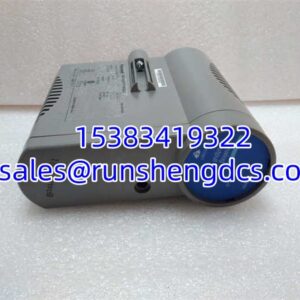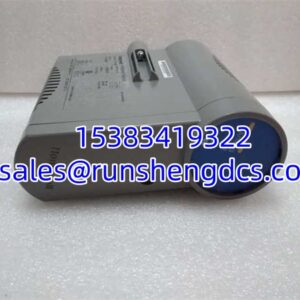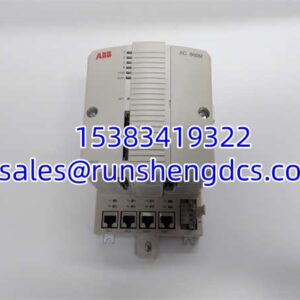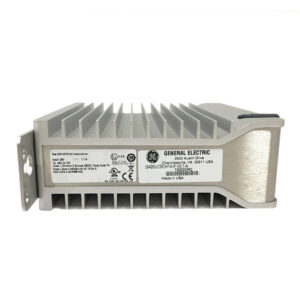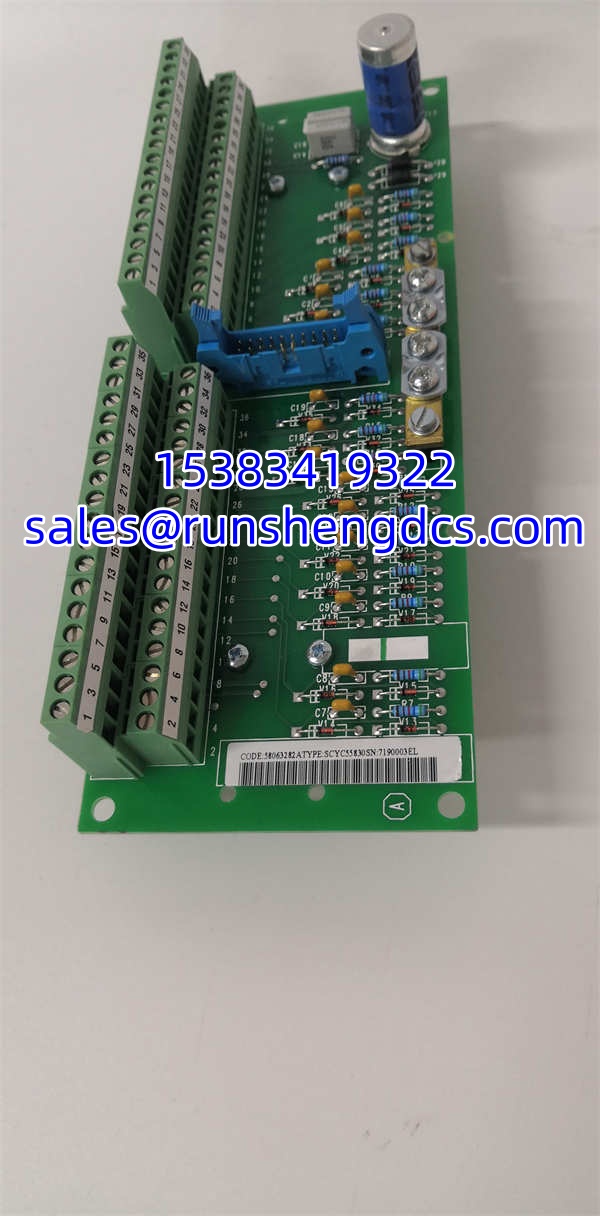

Description
Key Technical Specifications
| Parameter | Detail |
|---|---|
| Part Number | SCYC55830 |
| Order Code | 58063282A |
| Product Family | ABB Advant OCS — AC 400 Series |
| Module Type | Digital Input (DI) |
| Controller Compatibility | Advant Controller 400 chassis |
| Signal Type | Discrete / binary (ON/OFF) |
| Mounting | Backplane-mounted in Advant rack |
| Typical Application | Status monitoring, interlock inputs, permissive signals |
| Programming Environment | Advant OCS engineering tools (Compact Control Builder or legacy toolset) |
| Production Status | Legacy / Discontinued — surplus market only |
Product Introduction
When a legacy Advant OCS rack loses a digital input card and the plant can’t source a replacement through normal channels, the SCYC55830 becomes the part number that keeps showing up on surplus lists. It’s a DI module built for the Advant Controller 400 series — a system that ABB deployed heavily in power generation, pulp and paper, and metals processing from the late 1990s through the mid-2000s.
The module plugs into the controller backplane and reads discrete field signals — limit switches, proximity sensors, permissive contacts, interlock statuses — feeding that binary data to the controller’s scan cycle. It doesn’t do anything fancy. No analog scaling, no HART passthrough. Just clean digital state acquisition. That simplicity is exactly why these modules still show up in active racks 20+ years later. The replacement path today is either surplus hunting or a migration to AC 800M hardware (which is a project, not a swap).
QA/QC Transparency SOP
For surplus or pulled SCYC55830 units, here’s what a defensible test cycle looks like:
- Intake & Origin Verification — Confirm the full part number (SCYC55830) and order code (58063282A) on the module label. Photograph all markings including any date codes, revision stamps, and ABB logos. Log the unit against source documentation.
- Live Functional Testing — Seat the module in a compatible Advant Controller 400 chassis. Apply rack power. Verify the controller recognizes the module in its I/O configuration scan. Check that each input channel reads correctly when a known voltage is applied (typically 24 VDC for a logic HIGH).
- Electrical Parameter Tests — Use a Fluke or equivalent DMM to verify input threshold voltages. Confirm isolation between input channels and backplane ground. Check for shorted or open channels by cycling each input individually.
- Firmware/Config Verification — If the controller reports firmware or hardware revision data for the module, read it out and compare against the target installation’s expected revision. Back up the controller’s I/O configuration.
- Final QC & Anti-Static Packaging — Visual inspection for bent pins, corroded backplane connectors, or cracked components. Package in ESD-safe bags with foam support. Ship with a test record documenting channel pass/fail status.
Field Engineer Gotchas
Gotcha #1: Hardware Revision Suffix Matters
- Risk: The “A” in 58063282A may indicate a specific hardware revision. A different revision could have different input voltage thresholds, channel counts, or backplane pin assignments.
- Solution: Read the exact order code off your existing installed module. Match it precisely. Don’t assume any SCYC55830 will drop in regardless of suffix.
- Blunt warning: I’ve seen a tech grab a “close enough” module from surplus, plug it in, and spend four hours figuring out why half the channels read inverted.
Gotcha #2: Sink vs. Source Wiring
- Risk: Advant DI modules from this era come in sink (NPN) and source (PNP) configurations. Wiring a PNP field device to a sink-configured input (or vice versa) means the controller sees nothing — or sees the opposite of reality.
- Solution: Check the wiring diagram on the module faceplate or in the Advant hardware manual. Confirm whether your field wiring expects common-negative or common-positive inputs.
- War story: A pulp mill swapped a DI card and every limit switch read backwards. Two days of head-scratching before someone noticed the replacement was a source-type card on a sink-wired panel.
Gotcha #3: Backplane Power Draw
- Risk: Adding a replacement module to an already fully-loaded Advant rack can push the backplane power supply past its rated capacity. The rack might boot fine but fault under load.
- Solution: Calculate total backplane current draw with the new module installed. Compare against the rack power supply rating. If you’re close to the limit, consider redistributing I/O across racks.
Gotcha #4: ESD During Hot Insertion
- Risk: Some Advant modules support hot insertion, but the backplane connectors are exposed during the insertion event. A static discharge from the technician’s hands can fry the module’s input buffer ICs.
- Solution: Always wear an ESD wrist strap grounded to the rack chassis before handling any module. Even if the system supports hot-swap, the silicon doesn’t care about your intentions.
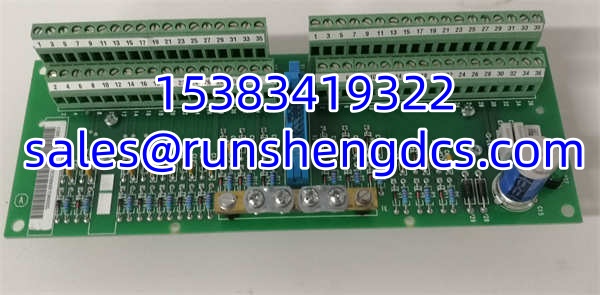
ABB SCYC55830 58063282A
Application Scenarios
- Thermal power plant boiler protection — DI modules read furnace permissive signals (flame scanner status, draft fan run feedback, fuel valve position) into the Advant controller for safe light-off sequencing.
- Pulp and paper machine interlocks — discrete inputs monitor roll position, nip pressure switches, and safety guard closures across paper machine sections.
- Water treatment plant valve status — DI channels confirm open/closed feedback from motorized valve actuators on raw water intake and chemical dosing lines.
- Metals processing mill safety circuits — interlock contacts from roll gap sensors, shear guards, and emergency stop chains feed into the Advant rack for process-safe monitoring.
FAQ
A: No. The Advant OCS product line is legacy/discontinued. ABB’s current controller platform is the AC 800M (part of the 800xA ecosystem). New installations should use current-generation hardware. Existing Advant systems are supported through surplus channels and third-party maintenance providers.
Q: How many digital input channels does this module have?
A: The exact channel count depends on the hardware revision. Common Advant DI modules from this era carry 16 or 32 channels. Verify by reading the module label or checking the controller’s I/O configuration screen — it will report the channel count for each installed module.
Q: Can I use this module in an AC 800M rack?
A: No. The is mechanically and electrically designed for the Advant Controller 400 backplane. The AC 800M uses a different chassis, different bus protocol, and different I/O module form factors. They are not cross-compatible.
Q: What voltage do the inputs expect?
A: Typically 24 VDC for Advant DI modules of this generation, but the exact threshold (what voltage constitutes a logic HIGH vs. LOW) varies by revision. Check the module’s nameplate markings and the Advant hardware reference manual for your specific controller model.
Q: My controller shows a “module mismatch” fault after I installed a replacement. What’s wrong?
A: The controller’s hardware configuration expects a specific module type and revision in that slot. If the replacement has a different order code suffix or hardware revision, the controller flags it. You’ll need to either find an exact-match module or update the controller’s hardware configuration to match the replacement (which requires engineering tool access and may affect the application program).
Q: What’s the typical lead time for a surplus unit?
A: Depends entirely on what’s sitting on a supplier’s shelf. If a match is in stock, it can ship within days. If you need a specific revision and none are available, you’re waiting for one to come off a decommissioned system — which could be weeks or months. Stock spares while you can.