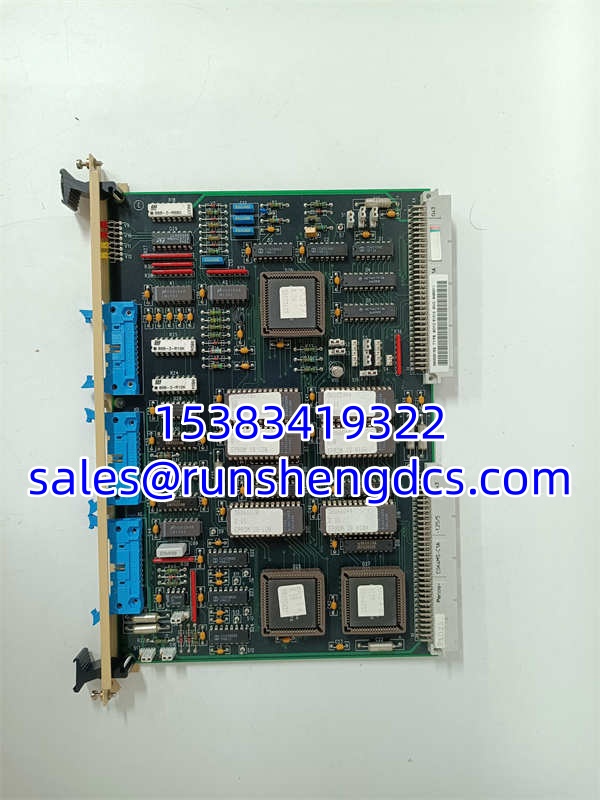
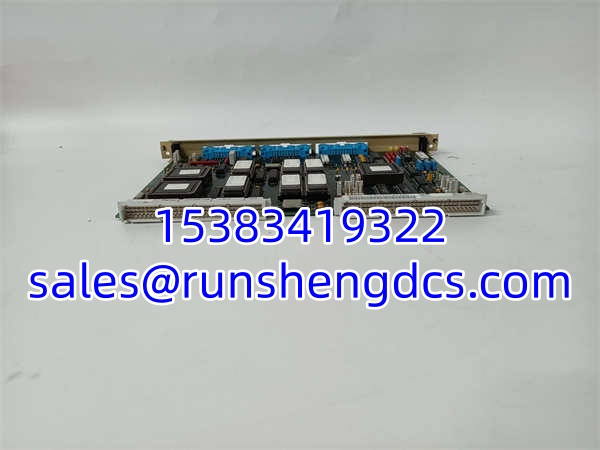

Description
Key Technical Specifications
- Product Model: SCYC51010 58052515G
- Manufacturer: ABB
- Product Type: Pulse Input Board / Signal Processing Unit
- Max Input Frequency: 50 kHz
- Signal Conditioning: Built-in filter circuit for high-frequency noise elimination
- Input Signal Types: TTL/CMOS levels, differential signals
- Core Architecture: High-frequency sampling via FPGA/ASIC counting chips
- Protection: Overload protection functionality
- Functionality: Pulse counting, frequency measurement, speed monitoring
- Product Status: Legacy / Obsolete Spare Part
Product Introduction
In high-speed manufacturing lines, missing a pulse means missing a part, and missing a part means a line stop. The ABB SCYC51010 58052515G is engineered to eliminate that gap. Operating as a dedicated pulse signal processing unit, it takes raw, noisy signals from encoders and proximity switches and conditions them into clean digital data that the PLC can actually trust.
This board handles up to 50kHz input frequencies using internal high-frequency sampling (up to 1MHz clock) to guarantee zero missed counts. Bottom line — it’s a specialized interface that translates physical motion into accurate digital metrics. Whether you’re counting materials on a conveyor or monitoring motor RPM, the ABB SCYC51010 58052515G provides the deterministic accuracy required to keep automated systems running without spurious faults.
QA/QC Transparency SOP
- Intake & Origin Verification: We trace every ABB SCYC51010 58052515G back to its source, checking serial numbers and PCB markings against known ABB specs to rule out counterfeits. Physical inspection checks for trace corrosion and connector pin damage.
- Live Functional Testing: Each module is installed on a live test rack. We inject pulse signals up to the 50kHz threshold and verify that the counting and frequency measurement registers match expected values in the control software.
- Electrical Parameter Tests: Using a calibrated multimeter, we verify the wide voltage input tolerance and check isolation resistance. Any deviation from the specified overload protection parameters results in immediate rejection.
- Firmware/Config Verification: We read the module’s internal configuration and verify the signal conditioning filters are active. For the ABB SCYC51010 58052515G, we confirm the level conversion module is correctly translating input amplitudes to internal standards.
- Final QC & Anti-Static Packaging: After passing all tests, the module is cleaned, labeled with a QC pass sticker, and sealed in anti-static shielding. No unit ships without a full test report attached.
Field Engineer Gotchas
- Signal Noise & Grounding: This board has built-in filters, but it’s not magic. If your field wiring runs parallel to a VFD cable without proper shielding, the ABB SCYC51010 58052515G will still see false pulses. Solution: Verify your cable routing and grounding. I’ve seen techs blame the card for a week before realizing the encoder cable was zip-tied to a 480V motor lead.
- Voltage Level Mismatch: The module supports 5V and 24V inputs, but you must configure or wire it correctly for the specific level. Applying 24V to a 5V-only input pin will fry the internal level conversion module. Solution: Check the wiring diagram twice. Don’t assume the terminal block is auto-sensing.
- Frequency Overload: The 50kHz limit is a hard ceiling. If your encoder RPM increases during a process change and exceeds this, the will start dropping counts. Solution: Calculate your max expected frequency before installation. I once watched a line run 10% fast for an hour because the card silently capped the count at 50kHz while the PLC thought everything was fine.
- Overload Protection Reset: The board has overload protection, but if it trips, it may require a power cycle to reset. Solution: If the module stops responding after a field short, kill the rack power for 30 seconds. Don’t just pull and reseat the card.
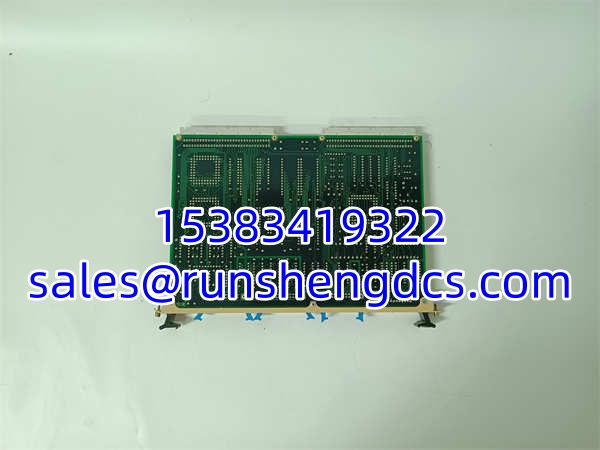
ABB SCYC51010 58052515G
Application Scenarios
- High-Speed Packaging Lines: Reading encoder pulses from conveyor belts to count packages and verify sorting accuracy at speeds exceeding 30kHz.
- Motor Speed Monitoring: Interfacing with shaft encoders on critical motors to calculate real-time RPM for predictive maintenance and closed-loop control.
- Material Handling Systems: Counting parts passing through photoelectric sensors in assembly cells to trigger downstream robotic pick-and-place operations.
- Textile & Paper Manufacturing: Monitoring web speed and tension via pulse sensors where signal integrity is critical to preventing material breaks.
FAQ
A: No. It’s a legacy spare part. What we sell is new surplus or professionally refurbished. Verify your exact revision suffix — ABB often updates these without changing the base model number.
Q: Can I hot-swap this pulse input board?
A: No. The is not designed for hot-swapping. Power down the backplane first. Pulling it live can corrupt the PLC’s I/O map and potentially damage the backplane connector.
Q: What’s the difference between this and a standard DI card?
A: Speed and intelligence. A standard DI card might handle 1-2kHz. The handles 50kHz with dedicated counting hardware and signal conditioning. Don’t try to use a standard DI for high-speed encoders — you’ll miss counts.
Q: How do I know if the signal conditioning filter is working?
A: If you’re seeing erratic counts with a clean mechanical signal, the filter may be misconfigured or failed. Check the module’s diagnostic registers in the PLC. Some revisions allow you to adjust filter constants via software.
A: 12 months functional warranty. We test every unit on a live rack with injected pulse signals before shipping. If it fails under normal use, we replace it. No questions.
Q: Can I use this with a 5V TTL encoder and a 24V PLC?
A: Yes. The has an internal level conversion module that unifies different input amplitudes to the PLC’s standard. Just verify the wiring matches the 5V input terminals.
Q: What if my encoder runs at 60kHz?
A: You’re over spec. The will not accurately count above 50kHz. You need to either reduce the encoder resolution, gear down the shaft, or upgrade to a higher-frequency module. Don’t expect this card to stretch its limits.