
Description
Key Technical Specifications
| Parameter | Specification |
|---|---|
| Product Model | SC520M 3BSE016237R1 |
| Manufacturer | ABB |
| Product Type | Submodule Carrier with Local CPU |
| Program Memory | 8 MByte |
| Data Memory | 6 MByte |
| Processing Speed | 52 MHz |
| Output Frequency | 85 MHz |
| Power Supply | 24 VDC |
| Dimensions | 30mm (W) x 300mm (H) x 291mm (D) |
| Weight | 0.742 kg |
| Operating Temp | 0°C to +60°C |
| Humidity | 60% non-condensing |
Product Introduction
Distributed control architectures live or die by the reliability of their local I/O processors, and the SC520M 3BSE016237R1 is the backbone of that distributed intelligence in legacy ABB systems. This isn’t just a passive backplane; it’s a fully functional local CPU carrier that hosts MB300 or MB300E submodules, executing control logic right at the field level while maintaining high-speed bus communication with the master controller. When this module fails, you don’t just lose I/O; you lose an entire control zone.
Engineers specify the SC520M 3BSE016237R1 because its 8MB program memory and 6MB data memory provide the exact capacity needed for standard MB300 applications without overpaying for unused headroom. The 52MHz processing speed, while modest by modern standards, is deterministic and sufficient for the scan times required in water treatment, power generation, and process control loops where this platform still operates. Bottom line — it’s the exact replacement needed to keep a 20-year-old distributed system running without a costly master controller upgrade.
QA/QC Transparency SOP
Local CPU carriers are the most critical failure point in distributed I/O; we don’t ship untested silicon. Every SC520M 3BSE016237R1 undergoes a rigorous validation protocol:
- Intake & Origin Verification: We verify the 3BSE016237R1 order code against ABB’s manufacturing records and inspect the PCB for signs of rework, capacitor leakage, or backplane connector damage.
- Live Functional Testing: The module is installed in a live Advant OCS test rack with a compatible MB300 submodule. We verify the 24VDC rail, CPU boot sequence, and local I/O scan execution.
- Bus Communication Stress Test: We connect to the Advant bus and flood the port with data requests to verify the 85MHz output frequency and bus arbitration logic hold up under load.
- Memory Integrity Check: Using diagnostic tools, we write/read patterns to the 8MB program and 6MB data memory to detect bit rot or failing SRAM cells common in aged units.
- Final QC & Anti-Static Packaging: The module is cleaned, the backplane pins are inspected for oxidation, and it’s sealed in an anti-static bag with a printed test report detailing the exact memory and bus test results.
Field Engineer Gotchas
- MB300 vs. MB300E Confusion: The SC520M 3BSE016237R1 supports both, but the firmware and configuration differ. Warning: Swapping a carrier from an MB300E system into an MB300 panel without verifying the submodule type can cause bus faults. Always check the submodule label before installing.
- Backplane Pin Corrosion: Advant OCS racks are notorious for oxidized backplane connectors, especially in humid environments. Risk: A new SC520M 3BSE016237R1 will mimic a dead CPU if the backplane pins are corroded. Clean the backplane with contact cleaner and inspect for bent pins before installation. I’ve seen three “bad” carriers returned as good after a simple backplane cleaning.
- 24VDC Power Rail Sag: This module draws significant current during boot. Verify your 24VDC power supply can handle the inrush. A marginal power supply will cause the CPU to brown out during startup, leading to endless reboot loops. Measure the voltage at the module terminals during power-up.
- Firmware/Configuration Mismatch: The local CPU must match the master controller’s configuration. Do not assume a replacement will work with your existing program. You may need to reload the submodule configuration or update the master controller’s hardware database. Always back up the existing configuration before swapping.
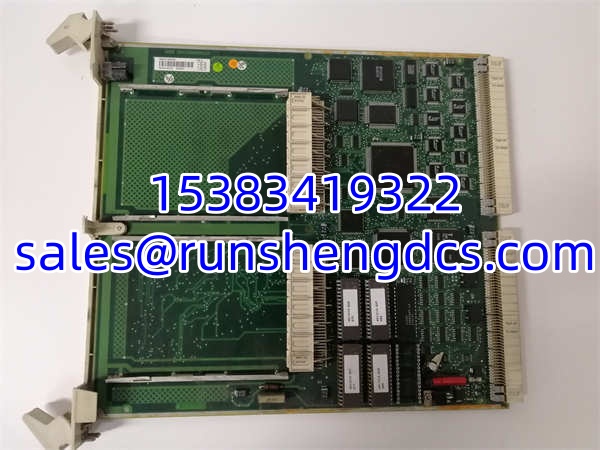
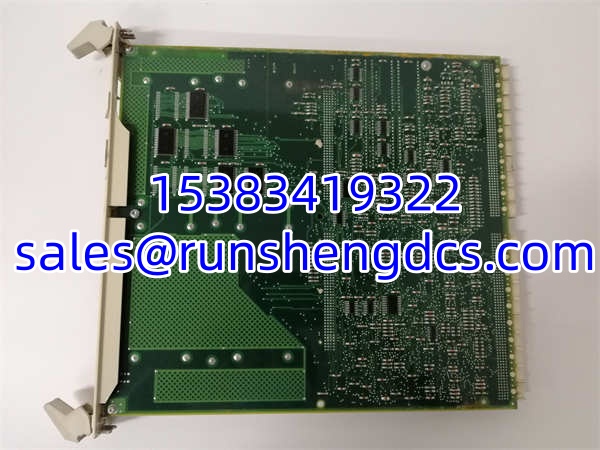
ABB SC520M 3BSE016237R1
Application Scenarios
- Distributed Water Treatment Control: Managing local pump stations and valve arrays via MB300 submodules, with the executing PID loops and communicating status to the central SCADA.
- Power Plant Auxiliary Systems: Controlling coal conveyors, ash handling, and cooling water systems where legacy Advant OCS is still the standard.
- Industrial Process Zones: Serving as the local brain for chemical dosing, mixing, and temperature control in manufacturing plants with 20+ year old DCS.
- Real-World Case Study: A municipal water plant lost a local I/O processor controlling a critical lift station. The master controller showed “Bus Fault,” and the local panel was dead. We sourced a tested and an submodule. After cleaning the backplane and verifying the 24VDC rail, the module booted, the bus recovered, and the lift station was back online in 90 minutes. No master controller reconfiguration was needed because the replacement matched the original firmware revision.
FAQ
Can I use this in an MB300E system?
Yes, the supports both and MB300E submodules. However, verify the firmware version and configuration parameters, as MB300E may require specific bus timing settings.
Is the 8MB memory sufficient for my application?
For standard /MB300E applications, 8MB is typically adequate. If your system uses extensive data logging or complex control algorithms, check your current memory utilization in the Advant OCS configuration tool before ordering.
The includes a local CPU, while the SC510M is a passive carrier without processing capability. Do not substitute a passive carrier for an active CPU carrier; your local control zone will not function.
Does this module support hot-swapping?
No. The must be installed with the rack powered down. Hot-swapping will cause a bus fault and may damage the module or adjacent submodules.
Why is my new module showing a bus fault?
Check the backplane pins for corrosion or damage. Verify the 24VDC power supply is stable during boot. Confirm the submodule is correctly seated and matches the carrier type. If all else fails, the module may require a firmware update to match your master controller.
What is the expected lifespan of this module?
ABB does not publish a specific MTBF for this legacy module. In field experience, these carriers typically last 15-20 years in controlled environments. Keep a tested spare on hand for any critical application, as replacement options are dwindling.