
Description
Product Introduction
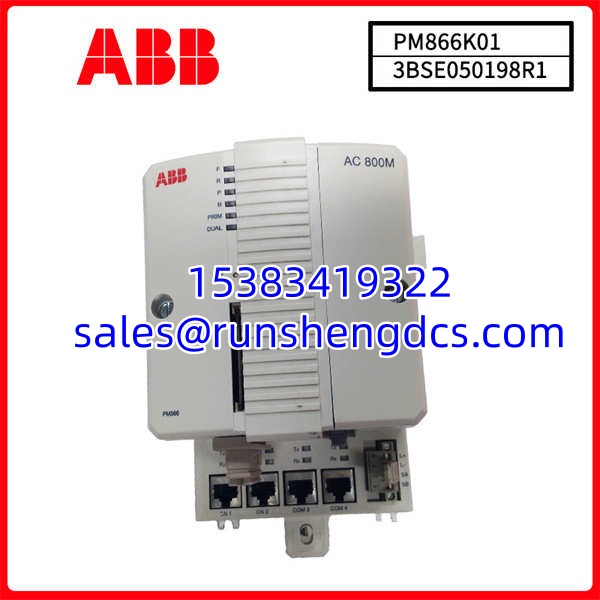
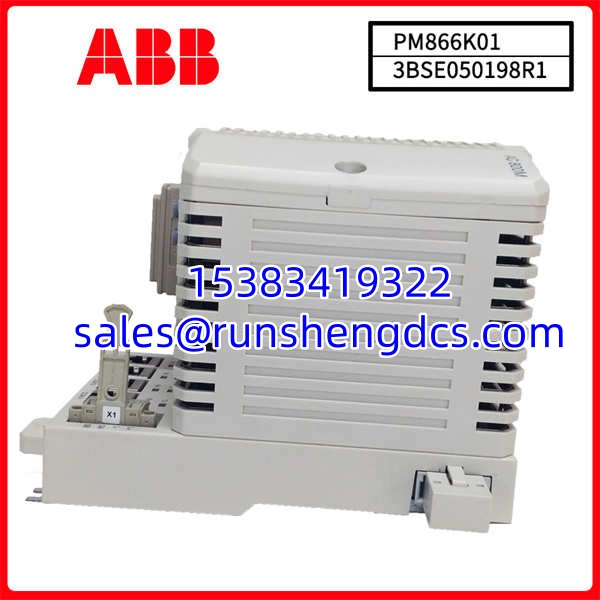
When a continuous production line controller goes down, every minute counts—that’s the context the ABB PM866K01 3BSE050198R1 was built for. This module is the central processing unit for the AC800M system, designed to manage complex control logic in mission-critical process automation.
It delivers approximately 1.4 times the execution performance of the older PM864 controller, which is a significant jump for demanding applications. The real value is in its redundancy; it supports hot-standby configurations with a master/slave failover time of less than 10 milliseconds. Honestly, that sub-10ms switch is what keeps the process stable when a primary CPU fails. It also features an internal battery backup that can sustain memory for a minimum of 158 hours, which is crucial for retaining event logs during a total power loss.
Key Technical Specifications
- Processor: 32-bit RISC
- RAM: 64 MB SDRAM
- Redundancy Switch Time: < 10 ms
- Communication Ports: 2 x Ethernet (10BaseT), 2 x RS-232C
- Safety Certification: TÜV SIL 2/3
- Power Supply: 24 V DC (19.2 to 30 V DC)
- Power Consumption: ~8 W
- Battery Backup Time: Min. 158 hours
- Operating Temperature: 0 to 60 °C
- MTBF: > 100,000 hours
Compatibility & Replacement Matrix
- PM864AK01 (3BSE018161R1) → PM866K01 (3BSE050198R1) : Needs Adaptation — Hardware is compatible, but a firmware and project download is required. The PM866K01 has more memory and faster performance.
- PM866K01 (3BSE050198R1) → PM866K02 (3BSE050199R1) : Direct — These two models form a redundant pair. The K01 is typically the master, and the K02 is the slave.
Quality Inspection & SOP Transparency
- Incoming Inspection: We start by verifying the ABB PM866K01’s source with packing lists and customs documents. Our team performs an anti-counterfeit check, looking for correct serial number formats and label quality. A visual inspection follows, checking for any signs of corrosion, repair marks, or the yellowing that can happen with age. We also verify all accessories are present.
- Live Functional Test: The module is tested on an ABB AC800M rack with a PM866 baseline. We monitor the power-on self-check, watching the LED sequence (the status LED is blue-green, not pure green). We test the comms handshake on both Ethernet ports and run a full-range I/O simulation. Finally, we conduct a 24-hour load run, logging temperature rise to ensure stability.
- Electrical Parameter Test: Using a Fluke 115 multimeter, we verify the 24 V DC supply input. We perform an insulation resistance test with a 500 V megger, ensuring a reading greater than 10 MΩ. Ground continuity is also checked.
- Firmware Verification: We read and record the firmware version. This is critical, as version mismatches are a common cause of communication faults. If multiple versions exist, we note the specific revision. DIP switch and jumper settings are photographed for our records.
- Final QC & Packaging: After passing all tests, a technician signs off on the QC sheet. The ABB PM866K01 is then sealed in an anti-static bag, packed with bubble wrap in a carton, and labeled with a “QC Passed” sticker and the date. Test photos and video are available on request.
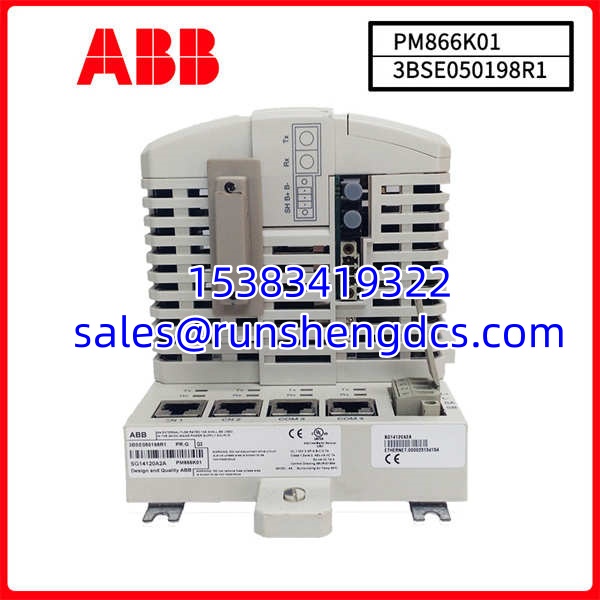
ABB-PM866K01-3BSE050198R1
Common Replacement Pitfalls
- Firmware Revision Mismatch: This is the most common headache. A new module might have a newer firmware version than the rest of your system. Swapping it in can cause a “Communication Timeout” error that’s tough to diagnose. Always record the firmware version of the failed unit before you order a replacement.
- DIP Switch / Jumper Misconfiguration: Factory defaults almost never match your field settings. Things like node address, baud rate, and termination resistors are often set manually. ❗ Take a clear photo of the old module’s switches before you remove it. Then take another photo. This simple step prevents 80% of configuration errors.
- Redundancy Pairing Issues: The is often part of a redundant pair with a PM866K02. You can’t just swap one without considering the other. They must have compatible firmware to synchronize correctly. Replacing one half of a pair requires careful planning.
- Power Budget Shortfall: While the itself only draws about 8 W, replacing an entire rack of modules with newer versions can increase the total power draw. Calculate your full rack power consumption with a 20% headroom. An undersized power supply will cause intermittent faults that are a nightmare to troubleshoot.
- ESD Damage: It sounds basic, but it’s worth repeating. Always use a wrist strap and an anti-static mat. I once watched an engineer grab a module bare-handed on a dry winter day. It smoked on power-up. Two thousand dollars gone in a second.
FAQ
Can I just swap this in directly?
It depends on your situation. If you are replacing a failed with another , it’s usually a direct swap, provided the firmware versions match. If you are upgrading from a PM864, it’s not a simple swap; you will need to download the firmware and the project.
My system runs AC800M V5.0 — will this module work?
Yes, but you need to check the specific firmware revision. The is compatible with AC800M systems, but older system versions might not support the latest module firmware. We recommend confirming the firmware compatibility matrix with ABB technical support for your specific system version.
The main difference is performance and memory. Here is a quick comparison:
| Feature | PM864AK01 | |
|---|---|---|
| Performance | ~1.4x faster | Baseline |
| RAM | 64 MB | 32 MB |
| Status | Current | Older Generation |
The is the logical upgrade path if you need more processing power for complex control strategies.
Is the battery user-replaceable?
No, the battery for the 158-hour memory backup is internal and not designed to be replaced by the user. Its lifespan is tied to the overall life of the controller. If the battery fails, the entire module typically needs to be replaced.
What does the “K01” suffix mean?
In ABB’s redundant controller pairs, the K01 and K02 designations distinguish the two units. The is generally configured as the master (primary) controller, while the PM866K02 is the slave (standby). They work together to provide the < 10 ms failover.