
Description
Key Technical Specifications
| Parameter | Typical / Verified Data |
|---|---|
| Manufacturer | ABB |
| Model | PFTL101A-0.5 |
| Order Code | 3BSE004160R1 |
| Product Family | Pressductor PillowBlock PFTL101 |
| Measuring Direction | Horizontal force only |
| Rated Capacity | 0.5 kN (500 N, ≈51 kgf) |
| Accuracy Class | 0.5% FS |
| Repeatability Error | <±0.05% FS |
| Deflection at Rated Load | 0.015 mm |
| Overload Capacity | 500% of nominal load in measuring direction |
| Permitted Transverse Load | 5.0 kN for PFTL101A-0.5 |
| Measuring Principle | Magnetoelastic (Pressductor), dual-coil passive sensor element |
| Signal Output | Passive sensor; standard 4–20 mA or 0–10 V only when paired with ABB PFEA electronics |
| Typical Electronics | ABB PFEA111 / PFEA112 / PFEA113 tension electronics |
| Operating Temperature | Application-dependent; commonly -10 to +60 °C for standard units |
| Protection Class | IP20 for standard PFTL101A; IP66 for AE version; IP66/67 for AER version |
| Material | Stainless steel measuring body |
| Mounting | Pillow-block between machine frame and roll bearing housing |
| Typical Applications | Paper machines, calenders, coaters, winders, film/foil converters |
Product Introduction
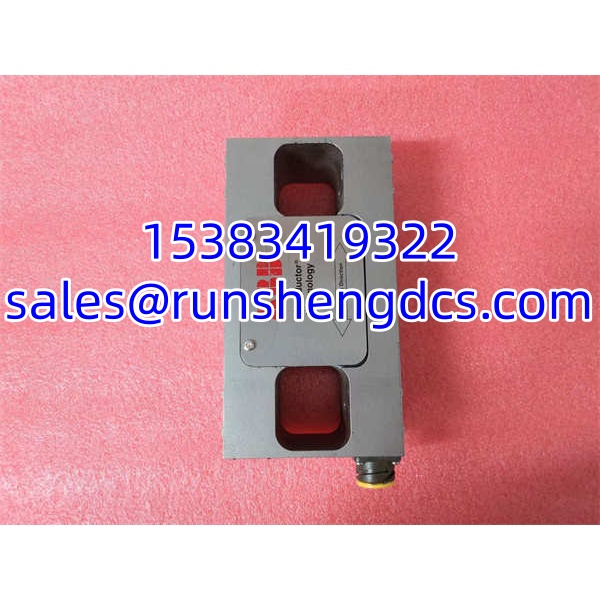
The ABB PFTL101A-0.5 (3BSE004160R1) is a Pressductor PillowBlock horizontal load cell built for low-tension web measurement where accuracy, overload tolerance, and long-term stability matter more than raw capacity. With a 0.5 kN rating, it targets narrow webs, light rollers, and sensitive converting stations — places where a strain-gauge cell can drift, fatigue, or trip on transient tension spikes.
Its magnetoelastic measuring principle avoids mechanical wear and elastic fatigue. The sensor body deforms only about 0.015 mm at rated load, and it can absorb short overloads up to 500% without permanent damage. Because it is a passive dual-coil element, it does not produce a usable 4–20 mA or 0–10 V signal by itself; it must be connected to ABB PFEA tension electronics such as PFEA111, PFEA112, or PFEA113. The standard PFTL101A is an IP20 unit, so it belongs in clean, dry machine areas. For dryer sections or wet-end paper machines, the AE or AER variants are the correct choice.
For field replacement, confirm the order code 3BSE004160R1, the 0.5 kN rating, the measuring direction, and the PFEA electronics configuration before swapping. A higher-capacity PFTL101A such as 1.0 kN or 2.0 kN will physically fit but will reduce signal resolution and may require re-commissioning.
QA/QC Transparency SOP
- Nameplate Verification: Confirm -0.5, 3BSE004160R1, serial number, rated capacity, and measuring direction marking. Reject any unit where the order code or capacity is unclear.
- Visual & Mechanical Inspection: Check the pillow-block body, mounting surfaces, cable/connector, and strain relief. Look for impact damage, corrosion, cracked connectors, or oil ingress.
- Coil Resistance Check: Measure excitation and signal coil resistance per ABB service guidance. Open or shorted coils indicate internal damage.
- Signal Linearity Test: Mount the cell in a test fixture with known horizontal load. Verify monotonic output through the PFEA electronics and check for hysteresis or dead zones.
- Zero Stability Check: Remove load and confirm stable zero return. Excessive zero shift suggests mechanical overload or internal stress.
- Electronics Pairing Check: Verify compatibility with the customer’s PFEA module, nominal load setting, wrap gain, and zero calibration.
- Final Packaging: Protect the measuring surface and connector. Ship in anti-static and moisture-resistant packaging with a test record.
Field Engineer Gotchas
- It does not output 4–20 mA by itself. The is a passive magnetoelastic sensor. Without PFEA electronics, there is no usable process signal.
- Horizontal force direction is mandatory. PFTL101 measures horizontal web force components. Installing it for vertical load or misaligning the roller bearing load will produce incorrect readings.
- IP20 is not washdown-ready. The standard is not suitable for wet, steamy, or chemically aggressive zones. Use PFTL101AE or PFTL101AER for those environments.
- Do not uprate capacity casually. Replacing a 0.5 kN cell with a 2.0 kN cell reduces signal resolution at low tension and requires recommissioning the PFEA nominal load parameter.
- Shielded cable and single-point grounding matter. Long unshielded runs near VFDs and servo drives can introduce noise into the low-level sensor signal.
- Mounting flatness affects accuracy. Uneven mounting surfaces or uneven bolt torque can preload the sensor and shift the zero point.
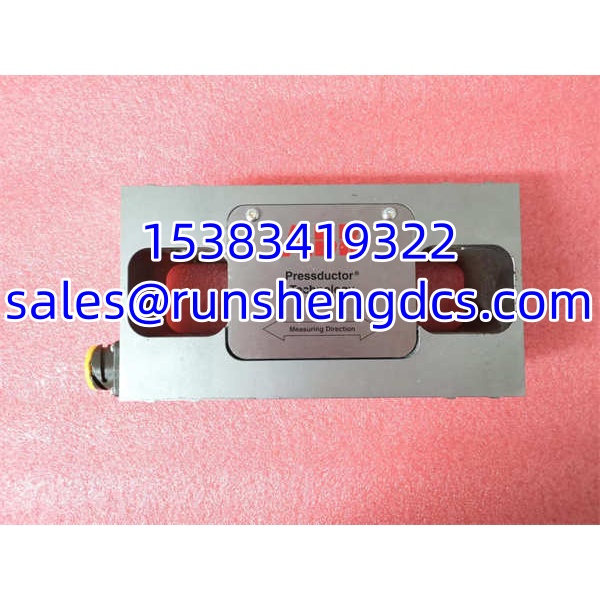
ABB PFTL101A 0.5KN 3BSE004160R1
Application Scenarios
- Paper machine winders and coaters: Provides stable low-tension feedback for lightweight paper grades and thin coatings.
- Film and foil converting lines: Maintains consistent tension during unwinding, slitting, and laminating of sensitive materials.
- Label and narrow-web printing: Prevents web stretch, registration drift, and breakage on low-tension stations.
- Metal foil handling: Handles light but critical tension zones where overload spikes from splice tables or dancer rolls are common.
FAQ
Is PFTL101A-0.5 the same as PFTL101B-0.5?
No. and PFTL101B are different capacity families within the PFTL101 series. covers lower capacities such as 0.5, 1.0, and 2.0 kN, while PFTL101B starts at higher ratings.
Can it connect directly to a PLC analog input?
Not recommended. The sensor is a passive magnetoelastic element and should be connected through ABB PFEA tension electronics for proper excitation, filtering, and signal conditioning.
is the standard IP20 version. PFTL101AE is a mill-duty version with IP66 protection and a fixed cable. PFTL101AER is an acid-resistant version with IP66/67 protection for wet-end paper machines.
Can I replace a 0.5 kN cell with a 1.0 kN cell?
Mechanically it may fit, but the measurement resolution will change and the PFEA nominal load parameter must be updated. For best accuracy, match the original rated capacity.
Why is the tension reading unstable after replacement?
Common causes include incorrect zero calibration, wrong wrap gain, damaged cable shielding, misaligned roller load, or a sensor that has experienced prior overload.
Do you provide OEM calibration certificates?
No. Surplus units are supplied with nameplate verification, visual inspection, and functional testing. For OEM calibration, source through ABB or an authorized service partner.