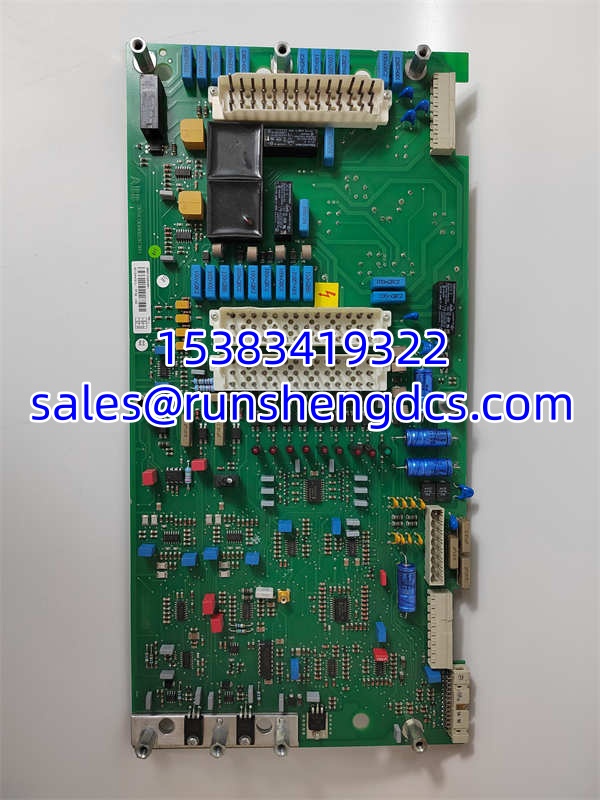

Description
Key Technical Specifications
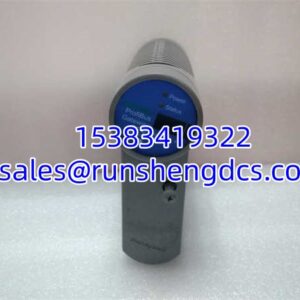
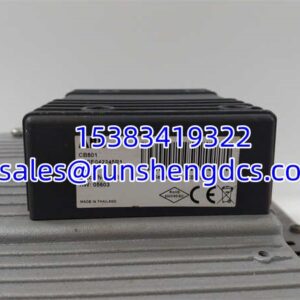
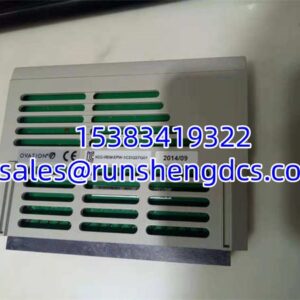
- Product Model: ABB PFSK142 3BSE006505R1
- Manufacturer: ABB
- Product Type: DSP Signal Processing Board
- Operating Voltage: 24V DC
- Network Interface: Embedded Ethernet (10Base-T / 100Base-TX)
- I/O Capacity: 6 I/O Points
- Program Capacity: 64K
- Output Frequency: 60 Hz
- Operating Temperature: 0°C to 65°C
- Environmental Humidity: 0-85%
- Product Weight: 0.4 kg (Net) / 1.2 kg (Gross)
- Product Certification: UL
Product Introduction
Web tension control in paper mills and steel rolling lines is unforgiving. A miscalculated tension signal means snapped webs, ruined product, or mechanical damage. The ABB PFSK142 3BSE006505R1 serves as the digital brain in these environments. It acts as a DSP signal processing board specifically designed to interpret data from strain gauges and force measurement sensors. This module translates raw analog tension data into actionable control signals, ensuring the web maintains consistent tension across guide rolls and winding stations.
Engineers specify the ABB PFSK142 3BSE006505R1 because it bridges legacy mechanical tension systems with modern plant networks. The embedded Ethernet interface allows for remote monitoring via web browsers and integration into broader DCS architectures without needing external protocol converters. With a 64K program capacity and an operating temperature range up to 65°C, it handles the thermal and computational demands of industrial control rooms. Bottom line — it keeps the tension loop closed when uptime is non-negotiable.
QA/QC Transparency SOP
- Intake & Origin Verification: We verify the ABB PFSK142 3BSE006505R1 against original ABB manufacturing records to confirm the 3BSE006505R1 part number matches the DSP signal processing board specifications, ensuring no cross-contamination with unrelated tension electronics.
- Live Functional Testing: Each unit is mounted on a dedicated test rack to validate the embedded Ethernet ports. We confirm auto-sensing of 10Base-T/100Base-TX speeds and verify that the ON/OFF switch and Ethernet restart button function mechanically and electrically.
- Electrical Parameter Tests: Using calibrated Fluke multimeters, we verify the 24V DC power draw and check continuity across all 6 I/O points. Insulation resistance is tested to ensure no internal shorts exist from previous high-humidity deployments.
- Firmware/Config Verification: We read out the onboard firmware version and verify it matches the expected revision for the PFSK142 series. Configuration parameters are backed up and cleared to factory defaults to prevent legacy settings from causing commissioning headaches.
- Final QC & Anti-Static Packaging: After passing all tests, the ABB PFSK142 3BSE006505R1 is sealed in anti-static shielding with desiccant packs. A QC sticker with test date and technician ID is applied before shipping.
Field Engineer Gotchas
- Ethernet Port Auto-Sensing Failures: The features auto-sensing 10/100Base-TX ports, but I’ve seen them lock up when connected to modern gigabit switches. Solution: Always connect through a dedicated 10/100 Mbps industrial switch or use a crossover cable if linking directly to older PLCs. Don’t assume auto-negotiation will save you.
- DIP Switch Misconfiguration: The front panel has an ON/OFF switch and status LEDs, but internal jumpers often dictate signal scaling. I once spent four hours troubleshooting a tension drift only to find the previous tech left jumpers set for a different sensor range. Always photograph jumper settings before pulling the old board.
- ESD Damage on Ethernet Ports: The RJ-45 connectors on this DSP board are sensitive to static. I’ve seen technicians plug in Ethernet cables in dry control rooms without grounding themselves, frying the PHY chip. Always wear an ESD strap when handling the .
- Power Supply Ripple: While rated for 24V DC, this board hates noisy power. If your 24V supply has >5% ripple, expect erratic LED behavior or communication dropouts. Measure with an oscilloscope before blaming the module.
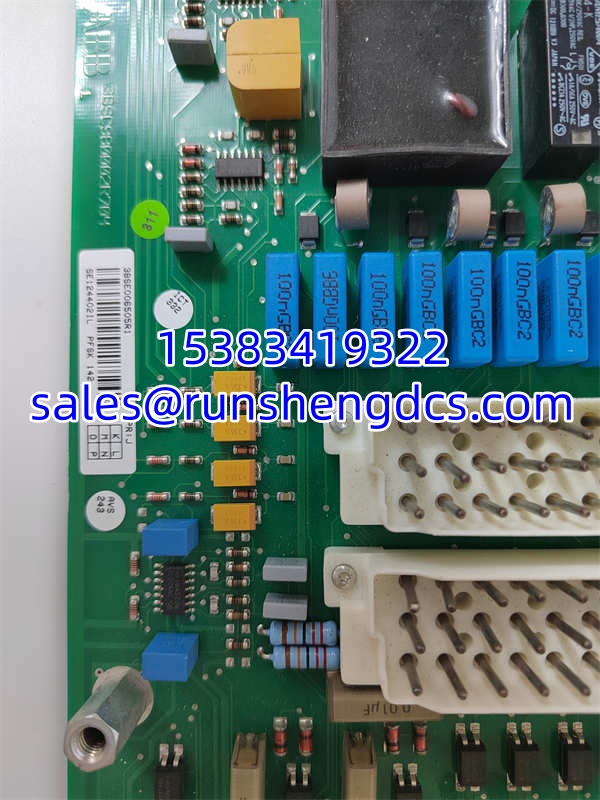
ABB PFSK142 3BSE006505R1
Application Scenarios
- Paper Machine Dryer Sections: Maintaining precise web tension across multiple dryer cans to prevent wrinkling or breaks in high-speed paper production.
- Steel Rolling Mill Tension Control: Regulating strip tension between rolling stands to ensure uniform thickness and prevent edge tearing in cold rolling operations.
- Plastic Film Winding Stations: Controlling rewind tension to achieve uniform roll hardness and prevent telescoping in flexible packaging lines.
FAQ
Technically yes, if the sensor output matches the expected analog range (typically 4-20mA or mV/V). But verify the signal conditioning specs in the OEM manual first. Mismatched scaling will give you garbage data.
Does this board support hot-swapping?
No. Power down the control panel before replacing the . Hot-swapping risks damaging the backplane and corrupting the tension control loop.
What firmware version is compatible with my existing PFSK system?
Check your current board’s firmware revision before ordering. The must match the system’s configured version, or you’ll face communication errors. Contact us with your existing board’s label photo for verification.
Is the embedded Ethernet port isolated?
Yes, the RJ-45 ports provide galvanic isolation to prevent ground loops. But don’t assume isolation means you can ignore proper grounding practices. Shielded cable still matters.
Can I monitor this board remotely without a separate PLC?
Yes. The includes a built-in web server. Connect a browser directly to the module’s IP address for basic monitoring and diagnostics. No external HMI required for simple status checks.
What’s the typical MTBF for this DSP board?
ABB doesn’t publish a specific MTBF for the , but field experience suggests 10-15 years in climate-controlled environments. Heat and humidity are the real killers. Keep it cool and dry.
Will this work with my old PFEA111 tension electronics?
Verify compatibility before purchasing. The is designed for newer PFSK systems. Older PFEA111 systems may require different signal processing boards. Send us your system model number for confirmation.