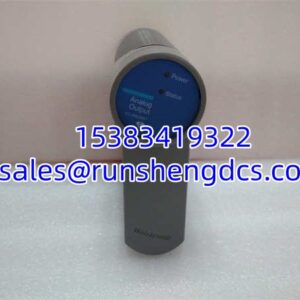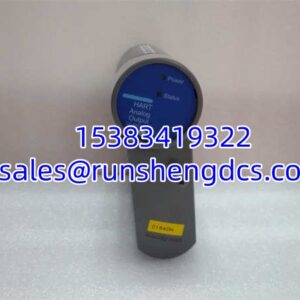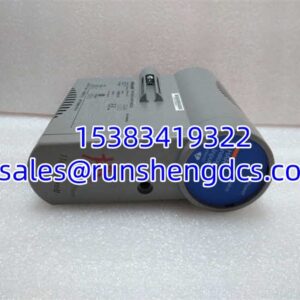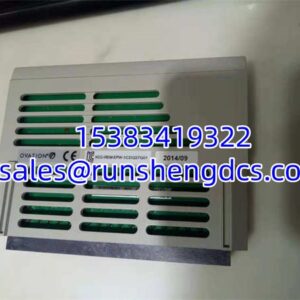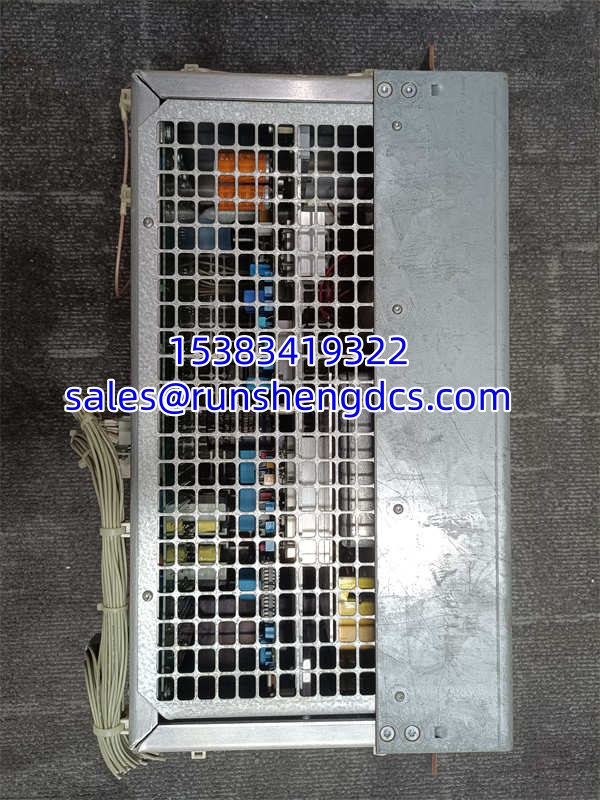

Description
Key Technical Specifications
| Spec | Details |
|---|---|
| Product Model | PFSA140 |
| Part Number | 3BSE006503R1 |
| Manufacturer | ABB Ltd., Switzerland |
| Product Type | Roll Supply Unit / Web Tension Controller |
| Core Function | Precision tension measurement and closed-loop control for web handling processes |
| Input Voltage | 24V DC (typical operating range 18–32V DC) |
| Phase Voltage Range | 380V to 690V AC (for driven roll applications) |
| Phase Current Range | 10A to 63A (depending on load configuration) |
| Analog Output | 0–10V DC or 0–20mA; accuracy ±0.1%; linearity error ±0.01%/°C |
| Zero Adjustment Range | ±2 mA |
| Gain Adjustment Range | ±20% |
| Tension Measurement Range | 0N to 10kN |
| Tension Control Accuracy | ±0.1% |
| Response Time | <1 ms |
| Communication Interfaces | RS-485 (Modbus RTU); PROFIBUS PA (configuration-dependent) |
| Electrical Protection | Overvoltage, overcurrent, short-circuit protection; electrical isolation (2500V AC) |
| Safety Rating | SIL 3 capable (for safety-related control loops) |
| Operating Temperature | -40°C to +70°C |
| Protection Class | IP54 (dust and water splash resistant) |
| Mounting | DIN rail or modular backplane mount |
| Status Indicators | LED indicators for power, fault, tension error, supply error |
| Dimensions | Approximately 220mm × 160mm × 80mm (verify against physical unit) |
| Weight | Approximately 3 kg (module only); system-level weight varies |
| Origin | Switzerland (ABB Zurich) |
Product Introduction
The PFSA140 (3BSE006503R1) is ABB’s dedicated Roll Supply Unit for web handling — it’s the brain that keeps material tension constant as paper, film, foil, textile, or metal strip moves through a production line at speed. If you’ve ever seen a printing press, a coating line, or a slitting machine where the web has to stay taut without stretching or snapping, there’s a tension controller like this sitting in the cabinet making it happen.
It works by reading tension feedback from load cells or dancer rollers, comparing that to the setpoint, and then adjusting the torque or speed of the driven roll in real-time. The <1 ms response time matters because web tension disturbances propagate down the line fast — if a nip roller slips or a splice passes through, the controller has to react before the web goes slack or breaks. The ±0.1% control accuracy is what separates a dedicated tension controller from a general-purpose PID loop in a PLC.
The module runs on 24V DC control power but interfaces with drives operating at 380–690V AC and up to 63A phase current, meaning it’s designed to command serious industrial drives, not just small servo amplifiers. It supports RS-485 and PROFIBUS PA for integration into the plant control network, and it’s SIL 3 rated — so it can sit in safety-critical loops where a tension failure could cause equipment damage or personnel risk.
This is legacy ABB hardware. ABB’s current web handling portfolio has moved on to newer platforms, so the PFSA140 now lives in the surplus market. If you’re running one in a live system, treat it like a critical spare.
Troubleshooting Quick Reference
| Fault | Likely Cause | Probability | Quick Check | Fix |
|---|---|---|---|---|
| Supply error LED lit — module not running | 24V DC supply failure or module not fully seated | ~30% | Measure 24V DC at module power terminals; verify module fully engaged in DIN rail/backplane | Reseat module. Verify external 24V DC supply output. |
| Tension reading erratic or drifting | Load cell wiring fault, sensor calibration drift, or EMI interference | ~25% | Check load cell cable shielding and grounding; compare raw sensor mV signal with DMM | Re-terminate shielded cable. Recalibrate tension sensor. Add ferrite choke if EMI suspected. |
| Roll A unbalance / Roll B unbalance alarm | Roll diameter mismatch or mechanical imbalance on driven roll | ~20% | Verify roll diameter settings in configuration; inspect roll bearings for wear | Update roll diameter parameter. Replace worn bearings. |
| Mains error LED lit | AC supply voltage out of range or phase loss on 380–690V input | ~15% | Measure incoming AC voltage at drive terminals; check for phase loss | Verify upstream breaker and contactor. Check phase balance. |
| Module not responding to setpoint changes | Communication fault (RS-485/PROFIBUS) or configuration mismatch | ~10% | Check communication cable continuity; verify node address and baud rate match network settings | Replace communication cable. Reconfigure node address. |
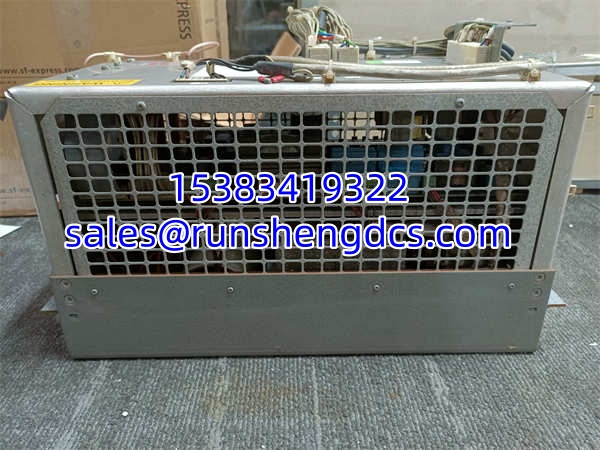
ABB PFSA140 3BSE006503R1
Application Scenarios & Pain Points
Printing press web tension control
In a multi-color offset or flexographic press, the PFSA140 maintains constant web tension between print stations. If tension varies, registration drifts and colors misalign — scrap rates spike immediately. Pain point: tension setpoints need to change as the roll diameter decreases during unwind. If the diameter tracking parameter isn’t configured correctly, the controller fights itself as the roll gets smaller, causing periodic tension spikes that show up as print defects.
Film extrusion and coating lines
In plastic film production, the PFSA140 controls tension through the chill roll, coating station, and rewind sections. Film is unforgiving — too much tension and it stretches or tears; too little and it wrinkles. Pain point: the module’s analog output drives the torque reference on an AC drive. If the analog signal path picks up noise from nearby VFD cables, the torque reference jitters and the film develops periodic thickness variations. Proper cable segregation and shield grounding are non-negotiable.
Metal strip processing (slitting, annealing, galvanizing)
Steel or aluminum strip runs through these lines at high tension and high speed. A tension loss can cause a cobble — the strip piles up inside the line and requires hours of manual clearing. Pain point: the PFSA140’s <1 ms response time is critical here, but the load cells measuring strip tension are exposed to extreme heat in annealing furnaces. Sensor drift from thermal cycling causes the controller to chase a moving target. Regular sensor recalibration against a known reference weight is essential.
Real-world case: A maintenance engineer at a paper mill had a on a rewinder start triggering intermittent “Roll A unbalance” alarms. The paper web kept breaking at the same point in the rewind cycle. The load cell readings were jumping ±5% around setpoint. Investigation revealed the load cell cable shield had corroded at a junction box exposed to mill humidity — classic ground loop injecting noise into the tension feedback signal. Re-terminated the shielded cable with proper single-point grounding, recalibrated the tension sensor, and the alarms stopped. The mill added quarterly load cell cable inspection to their PM schedule after that incident.