
Description
Key Technical Specifications
| Parameter | Specification |
|---|---|
| Model | PFEA111-65 |
| Order Number | 3BSE050090R65 |
| Brand | ABB |
| Country of Origin | Switzerland |
| Series | Pressductor® Tension Electronics |
| Product Type | Dual-channel web tension controller/amplifier |
| Power Supply (IP20 DIN-rail version) | DC 24V (18–36V) |
| Power Supply (IP65 wall-mount version) | DC 24V (18–36V) or 100–240V AC, 45–65 Hz |
| Power Consumption | 7.5W (IP20); varies for IP65 AC version |
| Number of Load Cell Inputs | 2 (channels A and B) |
| Compatible Sensors | ABB Pressductor PFTL series (piezomagnetic/piezoresistive web tension sensors) |
| Load Cell Excitation | 0.5 A RMS, 330 Hz AC |
| Max. Load | 2 load cells + 5Ω cable resistance |
| Signal Input Range | 0–65 mV/V (the “-65” suffix denotes compatibility with sensors up to 65 mV/V output) |
| Sampling Rate | 1 kHz |
| Measurement Accuracy | ±0.1% FS (full scale) |
| Linearity Error | <0.05% FS |
| System Response Time | <10 ms |
| Digital Filtering | 6 selectable time constants: 15, 30, 75, 250, 750, 1500 ms |
| Analog Outputs | 1× voltage output (-5 to +11V, max. load 5mA); 1× current output (0–21mA, max. load 550Ω) |
| Communication | RS485 with Modbus RTU (PFEA111 base model); PFEA112 adds Profibus-DP; PFEA122 adds PROFINET RT and EtherNet/IP |
| Display | 2×16 character multi-language LCD |
| Display Modes | Channel A, Channel B, A+B (sum), A-B (difference) |
| Control Algorithm | PID closed-loop tension control |
| Control Modes | Closed-loop tension control, open-loop tension control, indirect tension control |
| Digital Outputs | Status OK LED (green/red); alarm output via communication bus |
| Operating Temperature (IP20) | 0°C to +60°C |
| Operating Temperature (IP65 wide-temp) | -25°C to +70°C |
| Storage Temperature | -40°C to +85°C |
| Protection Rating | IP20 (DIN-rail, cabinet mounting) or IP65/NEMA 4 (wall-mount, sealed enclosure) |
| MTBF | >50,000 hours |
| Dimensions | Approximately 180 × 120 × 100 mm |
| Weight | Approximately 1.9–2.0 kg |
| Safety Features | Overcurrent, overtemperature, and short-circuit protection; 2A/250V slow-blow fuse |
Product Introduction
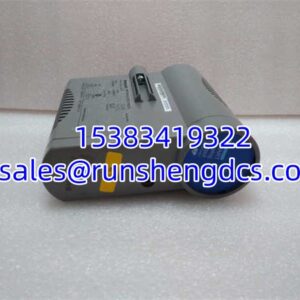
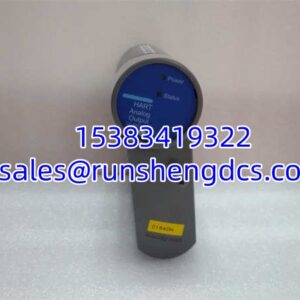
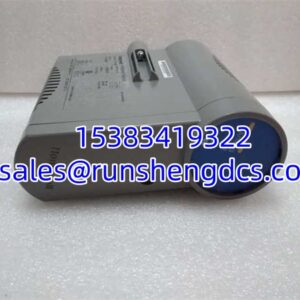
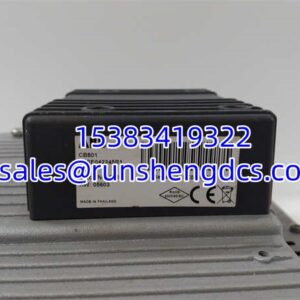
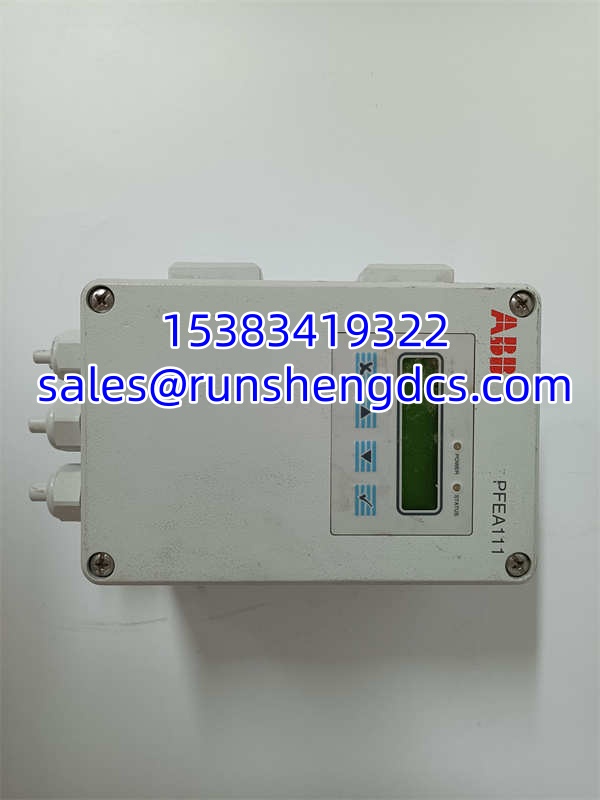
The ABB PFEA111-65 (order number 3BSE050090R65) is a dual-channel web tension controller from ABB’s Pressductor® product family, manufactured in Switzerland. It is purpose-built for roll-to-roll processing applications where maintaining consistent material tension is critical to product quality — paper manufacturing, plastic film production, metal strip processing, textile winding, printing, and coating lines.
The model designation breaks down as follows: “PFEA” stands for Pressductor Force Electronic Amplifier; “111” denotes the base dual-channel controller without built-in fieldbus (the PFEA112 variant adds Profibus-DP); and “-65” indicates compatibility with Pressductor sensors having up to 65 mV/V output sensitivity — a wider signal range than the PFEA111-20 (20 mV/V), making the -65 variant better suited for long cable runs and high-temperature environments where signal attenuation is a concern.
At the hardware level, the PFEA111-65 accepts inputs from two ABB Pressductor tension sensors simultaneously (channels A and B), with a built-in 330 Hz AC excitation source specifically matched to ABB’s piezomagnetic sensor technology. The module samples at 1 kHz with ±0.1% FS accuracy and a system response time under 10 ms — fast enough for high-speed production lines. Six selectable digital filter time constants (15 ms to 1500 ms) allow operators to suppress mechanical vibration and line resonance without sacrificing control responsiveness.
The built-in PID controller supports three operating modes: closed-loop tension control (direct feedback from sensors to actuator), open-loop tension control (feedforward based on line speed and material properties), and indirect tension control (using dancer roll position as a proxy for tension). The controller can drive actuators directly via its analog outputs — a -5 to +11V voltage output and a 0–21mA current output, each independently scalable and filterable — or it can feed tension data upstream to a PLC or DCS system via RS485/Modbus RTU.
The front panel features a 2×16 character multi-language LCD display and configuration keys, allowing operators to view individual channel readings, the A+B sum (total web tension), or the A-B difference (tension imbalance across the web width) — and to perform zero calibration, full-scale calibration, and parameter adjustment without a laptop or engineering workstation.
Two enclosure options are available: the IP20 DIN-rail version for standard control cabinet mounting, and the IP65/NEMA 4 sealed wall-mount version for harsh environments like paper machine dryer sections, rolling mills, and coating lines where dust, moisture, and spray are present.
Troubleshooting Quick Reference
| Fault | Likely Cause | Probability | Quick Check | Fix |
|---|---|---|---|---|
| Display blank / no power | 24VDC supply out of range (must be 18–36VDC) or fuse blown | 55% | Measure DC voltage at power terminals; inspect 2A/250V slow-blow fuse | Restore supply voltage within range; replace fuse if blown |
| Sensor fault alarm (Err-05 / SENSOR FAULT) | Sensor wiring fault, shield grounding issue, or sensor damage | 50% | Check sensor cable continuity; verify shield is single-point grounded; measure sensor output with multimeter (0V no-load, ~10V full-load) | Repair wiring; use twisted-pair shielded cable (ABB 3HAC029817-001 recommended); replace damaged sensor |
| Tension output fluctuating / unstable | Filter time constant mismatched to mechanical vibration frequency | 45% | Observe tension waveform; compare line speed and roller resonance frequency | Adjust digital filter time constant (try 75ms or 250ms first); verify roller bearing condition |
| Output signal drift | Power supply instability or temperature drift | 40% | Measure 24VDC ripple; check ambient temperature against operating range | Ensure 24VDC ripple <±5%; verify operating temperature within spec (0–60°C IP20, -25–70°C IP65) |
| Communication lost (RS485/Modbus) | Baud rate mismatch, address conflict, or cable termination issue | 35% | Verify baud rate and node address match PLC/DCS settings; check RS485 A/B wiring polarity | Reconfigure communication parameters; add 120Ω termination resistor at bus ends |
| Overload protection trip (Err-12) | Actuator current exceeding controller rating or PID gain too aggressive | 30% | Measure actuator current with clamp meter; review PID parameters (P30.03–P30.05) | Reduce PID gain; verify actuator rating matches controller output capacity; consider upgrading to PFEA113 for higher current applications |
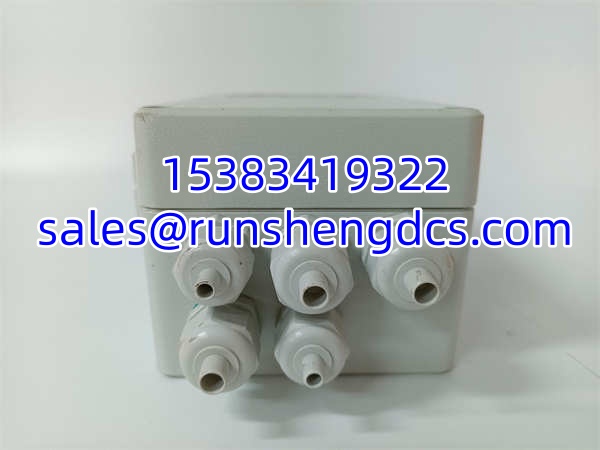
ABB PFEA111-65 3BSE050090R65
Application Scenarios & Pain Points
Paper machine tension control. PFEA111-65 units deployed on paper machine reel sections and winder stations, monitoring web tension via PFTL-series Pressductor load cells mounted under nip rollers. Pain: paper machines operate in high-humidity, high-temperature environments. The DIN-rail version installed in a poorly ventilated cabinet can overheat, causing output drift. Plants in these environments should specify the wall-mount version, which has a wider operating temperature range (-25°C to +70°C) and a sealed enclosure that resists moisture ingress.
Plastic film and foil converting. Coating, laminating, and slitting lines processing thin polymer films and metal foils, where tension variations of even a few percent cause wrinkling, telescoping, or breakage. Pain: the “-65” suffix means this unit is calibrated for sensors with up to 65 mV/V output. If a plant replaces a PFTL sensor with a different model or a third-party load cell that has a different mV/V rating, the PFEA111-65’s scaling will be incorrect, producing inaccurate tension readings. Sensor compatibility verification is essential during any sensor replacement.
Metal strip processing (rolling mills, pickling lines). Heavy-gauge steel and aluminum strip lines where tension forces are high and mechanical vibration is significant. Pain: the six fixed filter time constants (15–1500 ms) may not perfectly match the resonant frequency of a specific roller stand. If the filter is too slow, tension control lags; if too fast, vibration passes through. Operators often need to experiment with multiple filter settings during commissioning to find the optimal balance — and the chosen setting may need to change when line speed changes.
Printing press register control. Multi-color printing presses where web tension directly affects print registration accuracy. Pain: the PFEA111-65’s RS485/Modbus interface is adequate for basic tension data upload, but it lacks the deterministic real-time performance of fieldbus protocols like Profibus-DP or PROFINET. For printing applications requiring tight synchronization between tension control and print cylinder positioning, the PFEA112 (Profibus-DP) or PFEA122 (PROFINET/EtherNet/IP) variants are better suited. The base is best for standalone or loosely coupled applications.