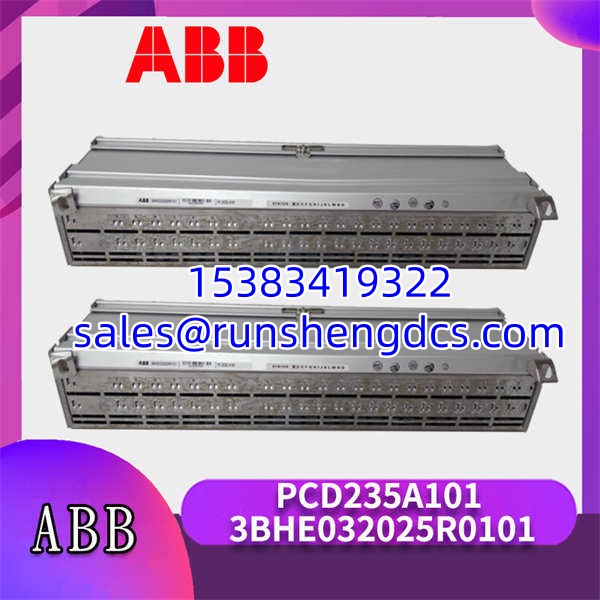

Description
Key Technical Specifications
| Parameter Name | Parameter Value |
|---|---|
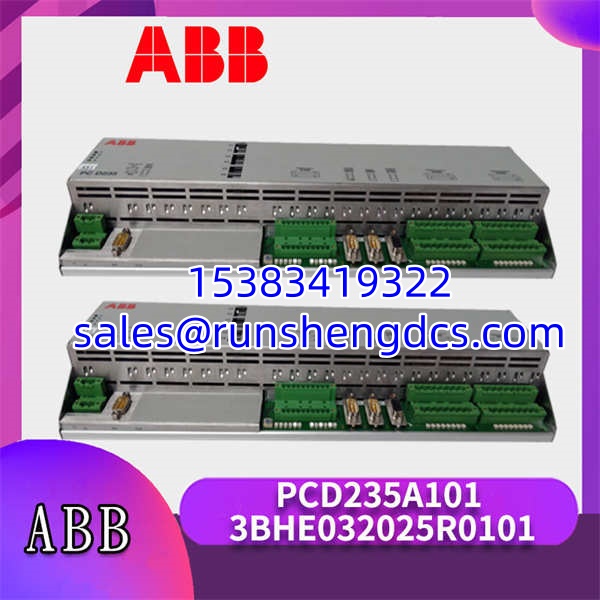
| Product Model | PCD235A101 / 3BHE032025R0101 |
| Manufacturer | ABB (Switzerland) |
| Product Type | Main Controller Module |
| Processor | High-Performance Industrial RISC |
| Redundancy | 1:1 Hot Standby (Redundant Pair) |
| Sync Link | Dedicated High-Speed Fiber Optic |
| I/O Interface | S800 I/O via Backplane Bus |
| Communication | Integrated Ethernet, Profibus, Modbus |
| Operating Temp | 0°C to +60°C |
| Installation | Standard DIN Rail / Controller Rack |
| Dimensions | 250mm x 80mm x 180mm |
| Weight | Approx. 1.2 kg |
Product Introduction
When a power plant trips because a controller failed to switch over fast enough, you realize that “redundancy” isn’t just a marketing term; it’s a safety requirement. The ABB PCD235A101 is the brain of the AC 800F and Symphony Plus systems, designed specifically to handle thousands of control loops without choking. It doesn’t just process data; it manages the entire heartbeat of the plant, from PID regulation to critical interlock protection, ensuring that when one unit fails, the backup takes over in milliseconds without a single process bump.
Engineers trust the ABB PCD235A101 because it’s built for the worst-case scenario. With its dedicated high-speed fiber optic link for synchronization, the standby controller knows exactly what the primary is doing, down to the microsecond. This isn’t a generic PLC; it’s a specialized industrial computer capable of handling massive memory loads and complex logic scans while maintaining SIL-rated safety integrity. Bottom line: it’s the difference between a minor alarm and a catastrophic shutdown.
QA/QC Transparency SOP
We don’t just wipe the dust off and ship these. Every ABB PCD235A101 goes through a rigorous validation process to ensure it won’t fail when you need it most:
- Intake & Visual Inspection: We check for physical damage, corrosion on the fiber optic ports, and verify the 3BHE032025R0101 revision matches our database.
- Live Redundancy Test: The module is installed in a test rack. We force a primary failure and measure the switchover time to ensure it stays within the millisecond tolerance.
- Logic Execution Check: We load a standard stress-test program to verify the RISC processor handles high CPU load without thermal throttling or scan time overruns.
- Firmware & Memory Verification: We read the flash memory to confirm no corruption and verify the firmware version is compatible with current Symphony Plus releases.
- Final QC & Packaging: After passing, the unit is cleared, labeled with a test report, and sealed in anti-static shielding with corner protection for the fiber connectors.
Field Engineer Gotchas
- Fiber Link Integrity: The ABB PCD235A101 relies on a dedicated fiber optic cable (often GFD233A) for redundancy sync. Risk: A dirty or bent fiber connector will cause constant “Redundancy Loss” alarms even if the CPU is fine. Fix: Clean the fiber ends with proper industrial wipes before insertion. I’ve seen techs replace two good CPUs because they didn’t clean the cable first.
- Hot-Swap Procedure: Never pull a primary controller without verifying the standby is “Active/Hot.” Risk: Pulling the wrong card kills the process. Fix: Check the LED status: Primary should be solid green, Standby should be blinking green. If both are solid or both blinking, stop and troubleshoot.
- Backplane Power: These modules draw significant current during boot. Risk: Voltage sag on the backplane can cause the new module to fail initialization. Fix: Ensure your power supply module (PSU) is rated for the full rack load plus 20% headroom. Don’t mix old and new PSU generations if possible.
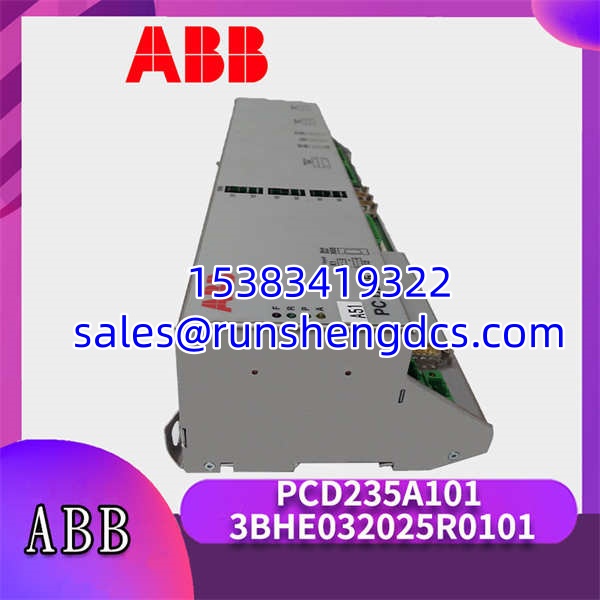
ABB PCD235A101
Application Scenarios
- Thermal Power Generation: Managing boiler-turbine coordination where a millisecond delay in fuel valve control can cause a flameout. The ABB PCD235A101 handles the complex cross-limiting logic required for safe combustion.
- Petrochemical Cracking Units: Controlling high-pressure reactors with strict safety interlocks. The module’s ability to process safety logic alongside control logic in a single, redundant platform reduces hardware footprint and wiring complexity.
- District Heating Networks: Balancing load across dozens of substations. The processes real-time weather compensation and flow balancing algorithms to maintain efficiency during peak winter demand.
FAQ
Yes, but only if configured in a redundant pair and the standby is fully synchronized. Never hot-swap a single, non-redundant controller.
Yes. 3BHE032025R0101 is the base ordering code; is the functional designation. Always verify the full suffix for firmware compatibility.
My standby controller keeps going to “Cold Standby.” What’s wrong?
Check the fiber optic link first. Then verify the backplane voltage. If those are good, the module’s internal sync circuitry may have failed, and it needs replacement.
Does this module support IEC 61131-3 programming?
Yes, it is fully compatible with ABB Control Builder F and supports all standard IEC 61131-3 languages (LD, FBD, ST).
It features high-capacity RAM for runtime and Flash for storage, sufficient for tens of thousands of I/O points and complex sequence logic. Verify exact specs against your project’s memory map.
Can I mix different revisions in a redundant pair?
Generally, no. ABB requires matching firmware and hardware revisions for redundancy to function correctly. Mixing them often results in “Version Mismatch” faults.