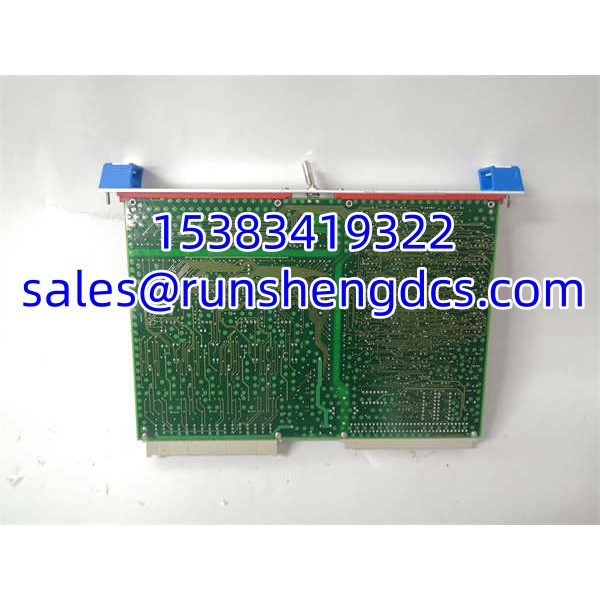

Description
Key Technical Specifications
| Parameter | Value |
|---|---|
| Product Model | OCAHG 492838402 |
| Manufacturer | ABB |
| Product Type | Analog Output Voltage Module |
| Primary Function | Digital-to-analog signal conversion for process control |
| Output Type | Analog voltage signal |
| Protection Features | Overcurrent, overvoltage, undervoltage protection |
| Design | Modular, rack-mountable |
| Typical Application | Actuator control, process monitoring, industrial automation |
| Product Status | Legacy / surplus-dependent supply |
Product Introduction
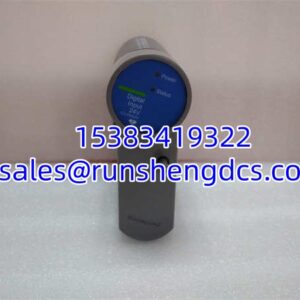
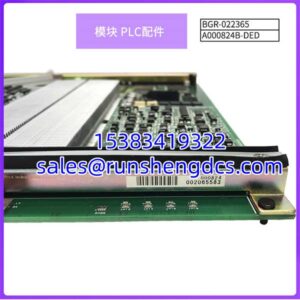
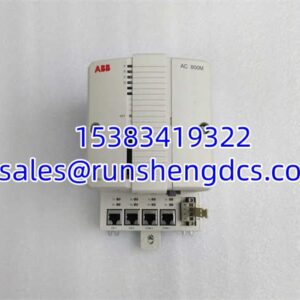
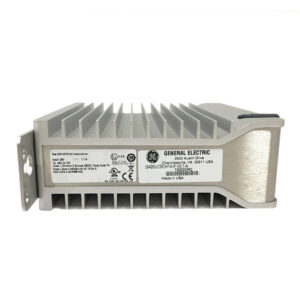
The OCAHG 492838402 is one of those ABB part numbers where distributor descriptions vary wildly — you will find it listed as a controller, a power supply, and an analog output board. The most consistent and technically coherent reference identifies it as an analog output voltage module, used to convert digital control signals into analog voltage outputs for driving actuators, control valves, and other field devices.
This is not a PLC CPU, not a DCS controller, and not a power supply unit. It sits at the I/O layer of an industrial control system, translating setpoints from the controller into precise analog voltage signals that field instruments can act on. In process control environments — refineries, chemical plants, power generation — analog output modules like this are critical for maintaining loop integrity. A failed analog output can cause a valve to drift, a damper to misposition, or a process variable to go uncontrolled. Bottom line — confirm the module type on the label, verify the output specification, and match it to the existing I/O configuration before installation.
QA/QC Transparency SOP
- Intake & Origin Verification
Confirm model OCAHG 492838402, ABB labeling, serial number, revision, and physical condition. Cross-check against photos of the installed rack and I/O configuration. - Live Functional Testing
Where a compatible test setup is available, verify power-up, output channel response, and analog signal accuracy against a reference meter. Do not assume output health from LED indication alone. - Electrical Parameter Tests
Perform output voltage range verification, channel-to-channel consistency checks, and insulation tests where appropriate. No speculative accuracy or resolution claims are applied without OEM data. - Configuration & Compatibility Verification
Confirm the module matches the existing rack type, backplane interface, and controller communication protocol. Record all silkscreen and label data. - Final QC & Anti-Static Packaging
Document all observations, photograph labels and connectors, then pack in anti-static shielding with moisture protection. Surplus units are shipped with clear condition notes.
Field Engineer Gotchas
- Distributor descriptions conflict.
Risk: Ordering what you think is a controller but receiving an I/O module, or vice versa.
Fix: Trust the label on the physical unit, not the listing title. The most consistent reference identifies this as an analog output voltage board.
War story: A plant ordered a “controller module” based on a surplus listing. What arrived was an analog output card — wasted a maintenance window and a truck roll. - Output specification must be verified.
Risk: Installing a module with the wrong voltage range or channel count.
Fix: Confirm the output range (e.g., 0–10 V, ±10 V) and number of channels against the existing module.
Blunt take: If the label is missing or unreadable, do not install it. - Channel calibration drift.
Risk: An aging module may output inaccurate voltages even if it powers up.
Fix: Test each channel under load with a calibrated meter before commissioning.
Field note: A “working” analog output is not necessarily an accurate one. - Backplane and connector integrity.
Risk: Bent pins or oxidized contacts cause intermittent signal loss.
Fix: Inspect the backplane connector and reseat the module carefully.
Simple rule: Half of “bad I/O modules” are bad connections. - ESD and handling.
Risk: Static discharge damages analog circuitry.
Fix: Use grounded wrist straps and anti-static packaging.
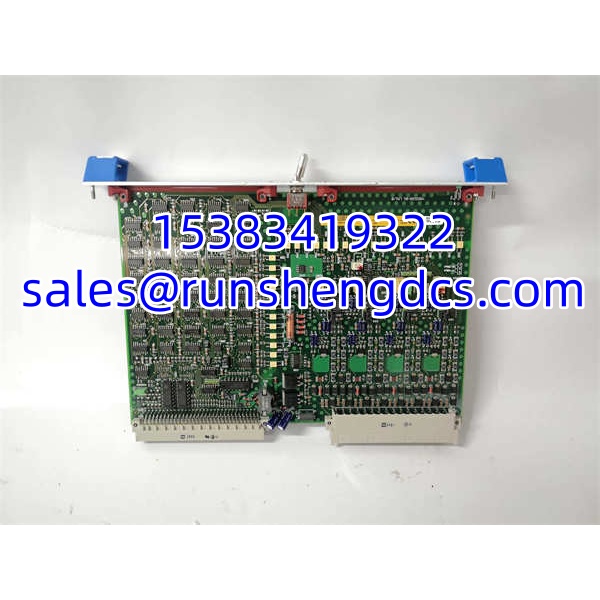
ABB OCAHG 492838402
Application Scenarios
- Process control systems requiring replacement of an aging analog output module for valve or damper positioning.
- Power plant auxiliary control where analog outputs drive actuators in balance-of-plant systems.
- Chemical and refining facilities maintaining legacy ABB I/O during phased control system upgrades.
- Temporary test benches used to validate analog output accuracy before field deployment.
FAQ
- Is OCAHG 492838402 a controller or an I/O module?
The most consistent reference identifies it as an analog output voltage module, not a controller. Some listings describe it differently, so verify against the physical label. - Can I use any analog output module as a replacement?
No. The output range, channel count, backplane interface, and controller compatibility must all match. - What systems is it compatible with?
It is associated with ABB industrial control systems. Confirm the rack type and controller interface before procurement. - Does it support Modbus or Profibus?
Communication capability depends on the host system and rack architecture. Do not assume protocol support without verifying the installed configuration. - Is surplus stock safe to use?
It can be, if the label, output specification, channel accuracy, and physical condition are verified. Do not install untested surplus in a live control loop. - What is the lead time?
Availability varies with surplus inventory. Confirm label data, revision, and test documentation before committing to a maintenance window.