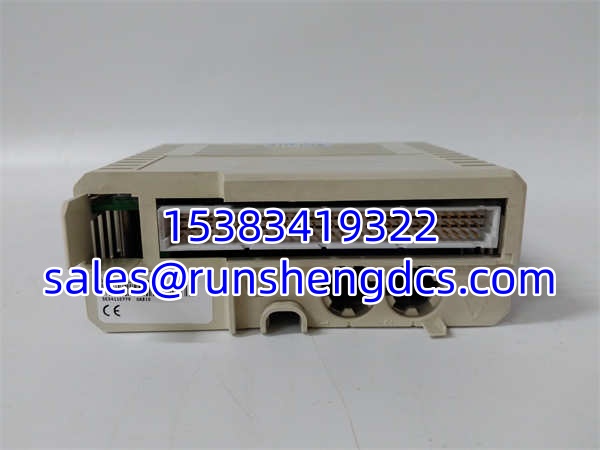

Description
Key Technical Specifications
| Parameter | Specification |
|---|---|
| Manufacturer | ABB Automation Products |
| Product Type | Signal Conditioning & Interface Module |
| Accuracy | ±0.1% Full Scale (Typical) |
| Isolation Voltage | 1500V DC (Channel-to-Channel & Bus) |
| Input Signals | 4-20mA, 0-10V, TC, RTD |
| Output Signals | 4-20mA, 0-10V (Configurable) |
| Communication | HART Protocol (Optional) |
| Operating Temp | -25°C to +70°C |
| Protection Rating | IP20 (Panel Mount) |
| Bus Interface | Backplane (800xA / Symphony Plus) |
Product Introduction
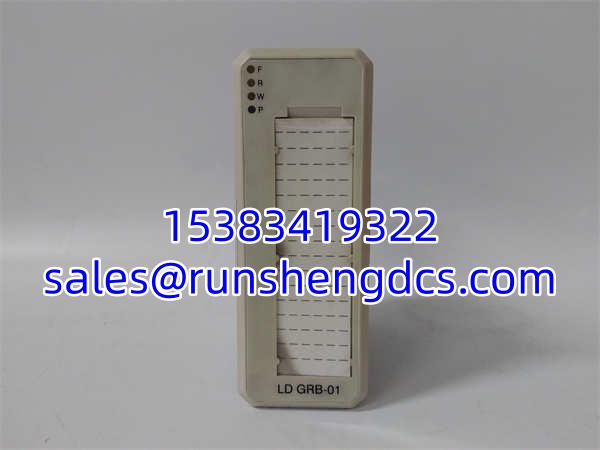
Signal noise in a process plant doesn’t just cause bad data; it causes bad decisions. The ABB LDGRB-01 exists to kill that noise before it reaches the controller. Sitting between the field sensor and the 800xA backplane, this module provides galvanic isolation and precision signal conditioning that generic I/O cards simply can’t match. It’s the filter that turns a noisy 4-20mA loop into a stable, accurate process variable.
Bottom line — this board is about signal integrity. With ±0.1% accuracy and 1500V DC isolation, the ABB LDGRB-01 protects sensitive control electronics from ground loops and voltage spikes common in petrochemical environments. It supports HART communication, allowing you to extract diagnostic data from smart transmitters without additional hardware. In a Symphony Plus system, this module is the difference between a stable control loop and a tuning nightmare.
QA/QC Transparency SOP
Signal conditioning modules are only as good as their calibration. We don’t ship unverified boards. Every ABB LDGRB-01 undergoes a strict validation process to ensure it meets original factory tolerances.
- Intake & Origin Verification: We inspect the PCB for electrolytic capacitor leakage, check the backplane connector pins for corrosion, and verify the HART modem components are original.
- Live Functional Testing: The module is installed in a live 800xA test rack. We inject precision 4-20mA and RTD signals, then verify the output matches within ±0.1% FS across the full range.
- Electrical Parameter Tests: Using a calibrated Fluke 754, we verify the 1500V isolation barrier and check for leakage current. We also test the HART communication handshake at 1200 baud.
- Firmware/Config Verification: We read the module configuration to ensure it matches the expected signal type (e.g., TC vs. RTD) and verify no hidden faults are logged in the diagnostic register.
- Final QC & Anti-Static Packaging: After passing, the ABB LDGRB-01 is sealed in a static-shielding bag with desiccant and packed with ESD-safe foam to prevent transit damage.
Field Engineer Gotchas
- Signal Type Mismatch: The ABB LDGRB-01 is configurable, but it doesn’t auto-detect. If you replace a TC module with an RTU-configured board, you’ll get garbage data. Always verify the DIP switch or software configuration matches the field sensor before powering up. I’ve seen a reactor trip because someone assumed “same model number = same config.”
- HART Communication Failure: If HART isn’t working, check the loop resistance. The ABB requires a minimum 250Ω load for HART to communicate. If your loop is too low impedance, add a resistor. Don’t blame the module until you’ve verified the loop physics.
- Ground Loop Hum: The 1500V isolation is great, but it doesn’t fix bad grounding. If you’re seeing 60Hz hum on the output, check the field cable shield. Ground it at the terminal, not at the sensor. Double-grounding creates the very loop this module is trying to break.
- Backplane Seating: These modules can be finicky about backplane contact. If the module isn’t recognized, don’t force it. Pull it, inspect the gold fingers for oxidation, clean with contact cleaner, and reseat firmly. A 0.5mm gap can cause intermittent faults that take days to diagnose.
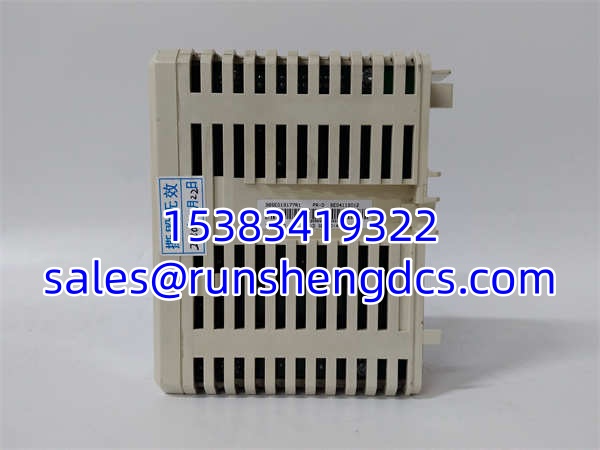
ABB LDGRB-01 3BSE013177R1
Application Scenarios
- Refinery Temperature Control: The isolates thermocouple signals from electrically noisy heater zones, ensuring accurate temperature control for distillation columns without ground loop interference.
- Power Plant Vibration Monitoring: Used to condition 4-20mA signals from Bently Nevada transducers, providing clean data to the 800xA system for turbine protection logic.
- Chemical Batch Processing: Provides HART-enabled signal conditioning for smart pressure transmitters in batch reactors, allowing remote diagnostics without pulling the transmitter offline.
FAQ
Can I use this module with a standard PLC?
No. The is designed for the 800xA or Symphony Plus backplane. It won’t work in a generic PLC rack without a specialized adapter (which typically doesn’t exist for this module).
Does it support 0-5V signals?
The typically supports 0-10V. For 0-5V, you may need to configure a scaling factor in the controller or use a different variant. Check the specific 3BSE013177R1 datasheet for exact input ranges.
How do I configure the HART protocol?
HART is enabled via software in the 800xA Control Builder or Symphony Plus configuration tool. There are no physical HART switches on the . Ensure the loop resistance is >250Ω and the module is configured as a “HART AI” in the project.
Is this module hot-swappable?
Generally, no. While the backplane supports hot-swap, signal conditioning modules often require a power cycle to re-initialize the analog front end. Always schedule a brief maintenance window for replacement to avoid process upsets.
What’s the replacement for this discontinued module?
ABB has migrated to newer signal conditioning platforms. However, the is still widely supported as a spare. For new installations, consult ABB for the current 800xA signal conditioning equivalent. We can provide cross-reference data if you send your existing configuration.
Can I repair a failed channel?
No. The is a sealed, calibrated unit. Field repair will void the calibration and likely damage other channels. Replace the entire module. Keep spares for critical loops.