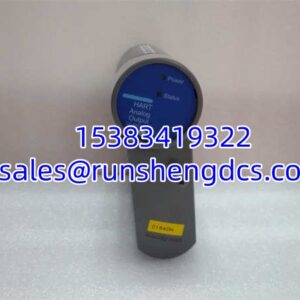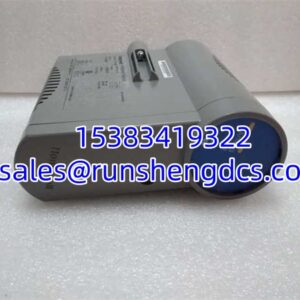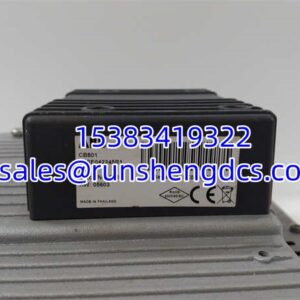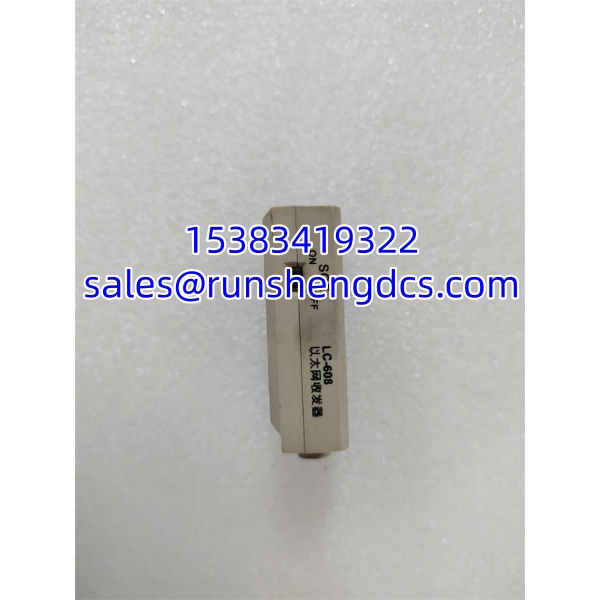

Description
Key Technical Specifications
| Parameter | Value |
|---|---|
| Product Model | LC-608 |
| Manufacturer | ABB |
| Product Type | Programmable Logic Controller (PLC) |
| System Family | AC31 / 50-series PLC |
| Primary Function | Discrete/sequential control, I/O management |
| Programming | IEC 61131-3 languages (ladder, structured text, instruction list) |
| Architecture | Modular CPU with expandable I/O and communication modules |
| Typical Application | Manufacturing lines, power auxiliary control, material handling |
| Product Status | Legacy / obsolete — surplus-dependent supply |
Product Introduction
The LC-608 belongs to ABB’s older AC31 50-series PLC family — a modular controller platform that was commonly deployed in manufacturing, power auxiliary systems, and process automation before ABB migrated to the AC500 series. It is not a DCS controller, not a robot I/O module, and not interchangeable with modern AC500 or S800 I/O hardware.
In the field, LC-608 units surface during legacy machine rebuilds, spare-part replenishment for aging production lines, or when a plant needs to maintain an existing control cabinet without rewriting the entire program. Because the AC31 family is discontinued, replacement units come from surplus channels, and the biggest risk is mismatched firmware, I/O configuration, or communication module compatibility. Bottom line — treat LC-608 as a legacy PLC that requires label verification, program backup, and I/O confirmation before installation.
QA/QC Transparency SOP
- Intake & Origin Verification
Confirm model LC-608, ABB labeling, serial number, revision, and physical condition. Cross-check against photos of the installed cabinet and I/O configuration. - Live Functional Testing
Where a compatible AC31 test setup is available, verify power-up, CPU run/stop status, LED indicators, and basic I/O response. Do not assume functionality from power-on alone. - Electrical Parameter Tests
Perform power supply verification, connector inspection, and backplane/module continuity checks. No speculative voltage or current ratings are applied without OEM data. - Firmware/Program Verification
Read CPU identification, firmware level, and existing program if accessible. Back up the program before any field replacement. Confirm communication module compatibility with the target network. - Final QC & Anti-Static Packaging
Document all observations, photograph labels and connectors, then pack in anti-static shielding with moisture protection. Surplus units are shipped with clear condition notes.
Field Engineer Gotchas
- It is discontinued, not current stock.
Risk: Assuming LC-608 is an active ABB product.
Fix: Treat it as legacy AC31/50-series hardware. Verify availability and condition before committing to a maintenance window.
War story: A plant ordered an “ABB PLC” based on a surplus listing, only to find the replacement had different communication options and could not talk to the existing HMI. - Program backup is mandatory.
Risk: Replacing the CPU without extracting the existing program.
Fix: Download and archive the program before removing the old unit.
Blunt take: A blank CPU is useless if you cannot reload the logic. - I/O and communication modules must match.
Risk: Mixing incompatible expansion modules.
Fix: Photograph the existing rack layout and confirm module types before ordering.
Field note: Half of “PLC replacement failures” are actually I/O or comm module mismatches. - Firmware revision matters.
Risk: Newer or older firmware may not load the existing program cleanly.
Fix: Match firmware level where possible, or test program compatibility before field installation.
Simple rule: Never swap a legacy PLC without verifying program compatibility. - ESD and power sequencing.
Risk: Static discharge or incorrect power-up can damage the CPU.
Fix: Use grounded wrist straps and follow proper power-on sequencing.
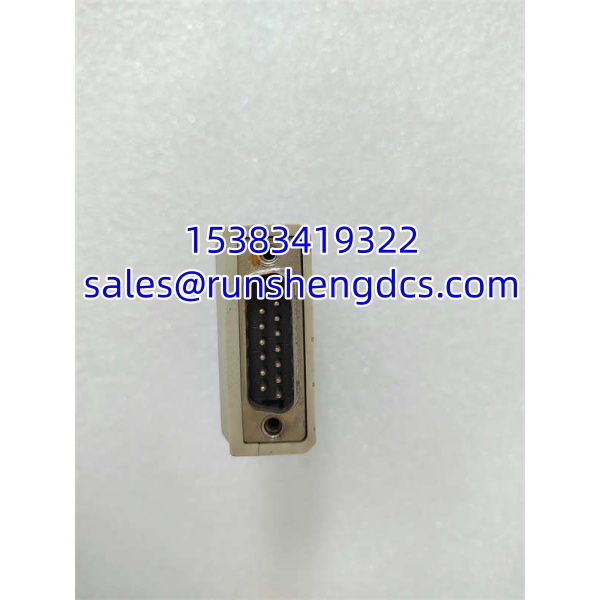
ABB LC-608
Application Scenarios
- Legacy manufacturing lines running -based control cabinets that need a verified PLC replacement.
- Power plant auxiliary systems where older ABB PLCs manage pump, fan, or valve sequencing.
- Material handling and conveyor systems maintaining existing logic without a full control migration.
- Temporary test benches used to validate program downloads before field deployment.
FAQ
- Is LC-608 a DCS or PLC?
It is a PLC, part of the ABB 50-series family. - Is it still in production?
No. The /50-series family is discontinued. Replacement units are surplus-dependent. - Can I replace it with an AC500 PLC?
Not as a direct drop-in. AC500 is a different platform. Program migration and I/O reconfiguration would be required. - Does it support IEC 61131-3 programming?
Yes, the family supports IEC 61131-3 languages including ladder diagram, structured text, and instruction list. - What communication protocols does it support?
Communication capability depends on the installed communication modules. Do not assume Ethernet, Profibus, or Modbus without verifying the specific module configuration. - Is surplus stock safe to use?
It can be, if the label, firmware, program compatibility, and I/O configuration are verified. Do not install untested surplus in a live production system. - What is the lead time?
Availability varies with surplus inventory. Confirm label data, firmware level, and test documentation before committing to a maintenance window.