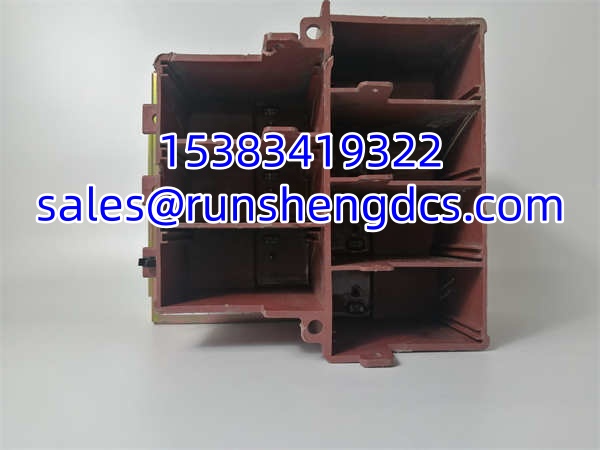

Description
Key Technical Specifications
| Parameter | Specification |
|---|---|
| Product Model | KUC711AE101 3BHB004661R0101 |
| Manufacturer | ABB |
| Product Type | Excitation Control / Redundant Communication Module |
| Input Voltage | AC 100V – 240V |
| Output Voltage | 24V DC |
| Max Output Current | 5A (up to 10A peak depending on variant) |
| Communication Bandwidth | Dual 100Mbps Independent Channels |
| Network Protocols | Modbus TCP, LACP (Link Aggregation Control Protocol) |
| Control Modes | Automatic (AUTO) / Manual (MAN) |
| Voltage Regulation Accuracy | ±0.5% (AUTO mode) |
| Operating Temperature | -10°C to +50°C (Storage: -40°C to +85°C) |
| Environmental Rating | IP67 (Verify specific enclosure rating) |
Product Introduction
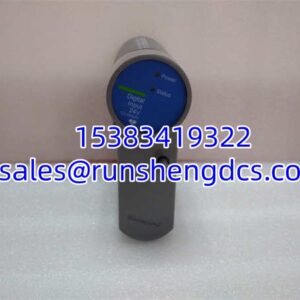
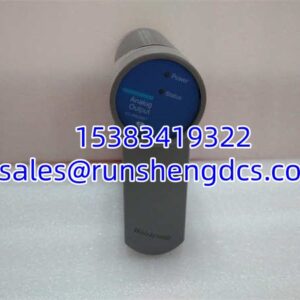
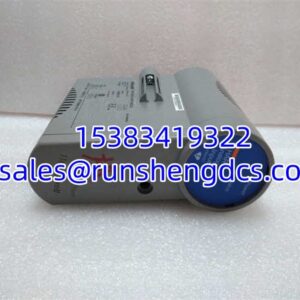
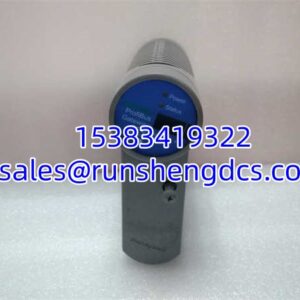
Replacing a failed excitation controller on a live turbine usually means scrambling for obsolete parts while grid frequency drifts. The KUC711AE101 3BHB004661R0101 sits at this exact intersection of critical infrastructure and legacy hardware. Functioning as the central brain for ABB excitation systems, it directly manages the magnetic field current of synchronous generators. Simultaneously, it acts as a redundant communication node within the Symphony Plus DCS, ensuring that high-speed data packets bypass localized network faults without dropping a single frame.
Engineers specify this module because its dual-channel architecture provides genuine hardware-level redundancy. Each channel handles 100Mbps of traffic, and the built-in Link Aggregation Control Protocol (LACP) guarantees that if one physical link fails, the other takes over instantly. The automatic voltage regulation maintains an accuracy of ±0.5%, which is tight enough to keep grid interconnection stable during severe load transients. Bottom line — it keeps the generator synchronized when the rest of the plant is experiencing electrical chaos.
QA/QC Transparency SOP
We do not trust factory seals on 20-year-old boards. Every KUC711AE101 3BHB004661R0101 undergoes a strict five-step validation process before it leaves our facility:
- Intake & Origin Verification: We trace the lot code and cross-reference the 3BHB004661R0101 suffix against ABB’s manufacturing records to rule out counterfeit clones.
- Live Functional Testing: The module is seated in a live Symphony Plus test rack. We inject simulated PT (voltage transformer) feedback and verify the AUTO/MAN mode switching without dropping the 24V DC rail.
- Electrical Parameter Tests: Using a Fluke 1770 analyzer, we measure the 24V output ripple and verify that the 1500V isolation barrier between the logic side and the power side holds firm under load.
- Firmware/Config Verification: We connect via Modbus TCP to read the internal EPROM checksum. If the firmware is corrupted or mismatched, the board fails.
- Final QC & Anti-Static Packaging: The unit is cleaned with IPA, sealed in a static-shielding bag with desiccant, and shipped with a printed test report detailing the exact voltage regulation measured at the bench.
Field Engineer Gotchas
- Firmware Rev Mismatch: Do not blindly swap this into a Symphony Plus rack without checking the firmware revision. War story: Swapped a board, got a solid red comm fault, and spent four hours realizing the host CPU needed a patch to recognize the newer silicon. Always match the exact revision.
- DIP Switch/Jumper Configuration: This module often requires physical jumper settings to define its Node ID or primary/secondary comm role. Warning: If you pull the old board without photographing the jumpers, you will install the new one incorrectly and isolate yourself from the DCS.
- Wiring/Terminal Block Incompatibilities: The 24V DC output pins can vary slightly between early and late revisions of the 3BHB004661R0101 series. Verify pinouts with a multimeter before applying field power. Reversed polarity on the auxiliary supply will instantly fry the internal MOSFETs.
- Power Draw/ESD Risks: The internal ARM-based processors are highly sensitive to electrostatic discharge. Always use a grounded wrist strap. I’ve seen technicians ruin perfectly good boards just by sliding them across a nylon bag.
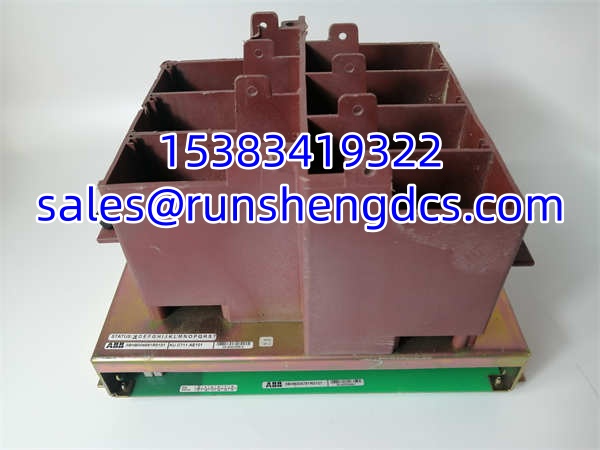
ABB KUC711AE101 3BHB004661R0101
Application Scenarios
- Hydroelectric Generator Excitation: Regulating field current to maintain terminal voltage during sudden load drops, utilizing the ±0.5% accuracy to prevent over-excitation.
- Symphony Plus DCS Backbone: Serving as a redundant 100Mbps Ethernet link between controller cabinets in a power plant, leveraging LACP to eliminate single points of network failure.
- Synchronous Motor Power Factor Correction: Managing the magnetic field of large industrial compressors to ensure the motor operates at unity power factor, reducing utility penalties.
- Real-World Case Study: A regional cogeneration plant experienced intermittent DCS communication dropouts during summer thunderstorms. The existing non-redundant comm module was failing due to induced ground loops. We replaced it with the KUC711AE101 3BHB004661R0101, utilizing its dual isolated Ethernet ports and 1500V isolation barrier. The redundant link successfully masked the transient faults, and the plant has had zero communication-related trips since installation.
FAQ
Can I hot-swap the KUC711AE101 3BHB004661R0101 while the DCS is running?
Yes, but only if it is configured as a redundant communication module and the system supports hot-swapping. If it is acting as the primary excitation controller, do not pull it without a maintenance window. You will lose generator voltage control.
My system is running an older Symphony Plus firmware. Will this drop in?
Hardware-wise, yes. Software-wise, maybe. The KUC711AE101 3BHB004661R0101 requires a minimum DCS firmware version to negotiate the 100Mbps link. Check your CPU release notes before ordering.
Is this the same as the KDV711 trip device?
No. Do not confuse the (excitation/comm) with the used in KDV711 breaker trip units. They share a similar alphanumeric prefix but serve completely different electrical functions. Verify your application.
What happens if the AUTO mode fails?
The module automatically transitions to MAN (Manual) mode. In MAN mode, it regulates based on direct field current feedback rather than terminal voltage. This is a deliberate safety feature to prevent the generator from losing excitation entirely if the PT signal fails.
Does it support standard Modbus TCP?
Yes. The natively supports Modbus TCP over its Ethernet ports. You can poll it directly from a SCADA system or a third-party gateway without needing a protocol converter.
Why is the 24V output limited to 5A?
The 5A rating is the continuous thermal limit. The module can handle up to 10A peak for short durations (like relay coil energization), but sustained loads above 5A will trigger internal thermal derating. Size your auxiliary loads accordingly.