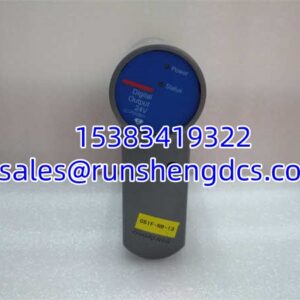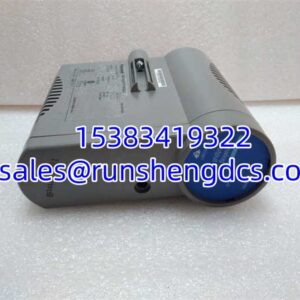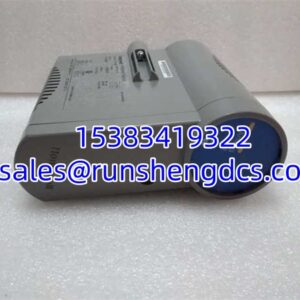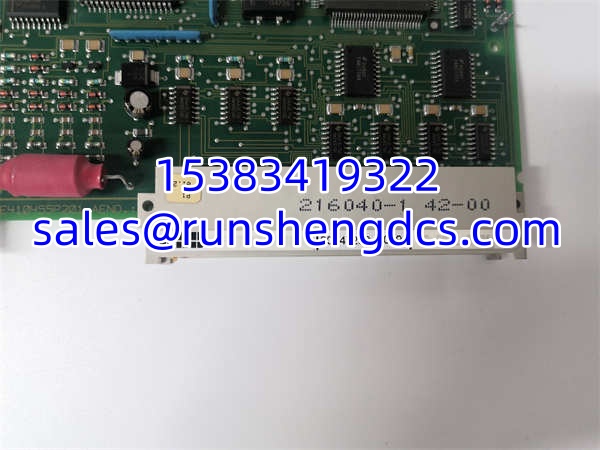

Description
Key Technical Specifications
- Function: Analog Current Source & Signal Processor
- Voltage Class: High Voltage (HV) Insulation Rating
- Signal Type: Analog Current Loop (Source)
- Control Precision: Precise Voltage/Current Regulation
- Design: Ruggedized for Industrial Environments
- Installation: Modular Board / Plug-in Card
- Application: Power, Petrochemical, Metallurgy
- Maintenance: Designed for Easy Field Replacement
- Origin: Sweden / Global ABB Manufacturing
- Warranty: Typically 12 Months (Surplus Dependent)
Product Introduction
High-voltage control loops often fail not because of logic errors, but due to signal drift or insulation breakdown in the analog interface layer. The GDB021BE05 was designed specifically to isolate and stabilize these critical current signals in harsh HV environments where standard I/O cards would arc or drift.
This board acts as the precision analog front-end for ABB high-voltage distribution and control systems. It generates stable current references and processes incoming analog signals with high insulation integrity, ensuring the controller sees clean data despite electrical noise. Engineers rely on this module for its ability to maintain signal fidelity in power generation and heavy metallurgy applications, where a 4mA drift can trip a turbine or stall a mill.
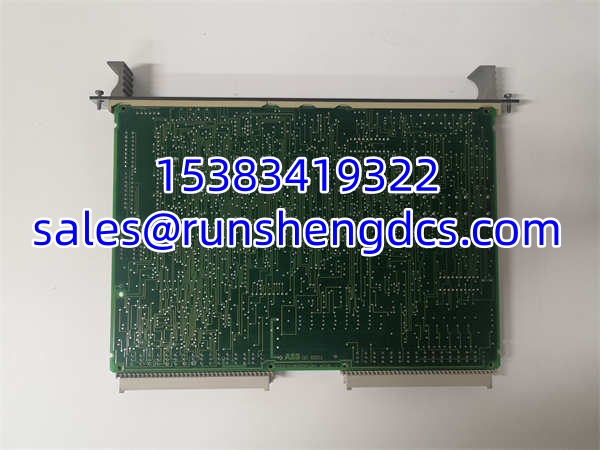
ABB GDB021BE05 HIEE300766R0005
QA/QC Transparency SOP
- Intake & Origin Verification: Cross-reference HIEE300766R0005 serial numbers against ABB manufacturing logs to confirm it’s not a field-repaired frankenstein board.
- Live Functional Testing: Bench test analog output accuracy across the full 4-20mA (or 0-20mA) range using a precision Fluke 754 calibrator to verify linearity.
- Electrical Parameter Tests: Perform Megger insulation resistance testing (typically 500V DC) between HV terminals and signal ground to ensure no internal tracking.
- Firmware/Config Verification: Read onboard EEPROM/PLD via JTAG or service port to confirm firmware revision matches the target DCS/PLC chassis.
- Final QC & Anti-Static Packaging: Visual inspection for capacitor bulge or burn marks, then vacuum-seal in ESD-safe shielding with desiccant and QC pass tag.
Field Engineer Gotchas
- Insulation Resistance Trap: Never use a standard multimeter to check HV isolation. You must use a Megger. I’ve seen techs pass a board with 2MΩ isolation that arced internally at 3kV during the next storm. Bottom line — if it’s under 100MΩ at rated test voltage, scrap it.
- Analog Ground Loops: This board sources current. If your signal ground isn’t star-pointed to the same HV ground as the board, you’ll inject noise directly into the control loop. Verify grounding topology before powering up.
- Firmware Revision Mismatch: HIEE300766R0005 has multiple sub-revisions. A “05” suffix board might not talk to a “03” chassis backplane. Always check the silkscreen revision code next to the serial number.
- ESD Sensitivity on HV Pins: The HV input stage uses sensitive MOSFETs. Touching the HV terminals with an ungrounded wrist strap can punch the gate oxide. Treat this board like a CMOS chip, not a power relay.
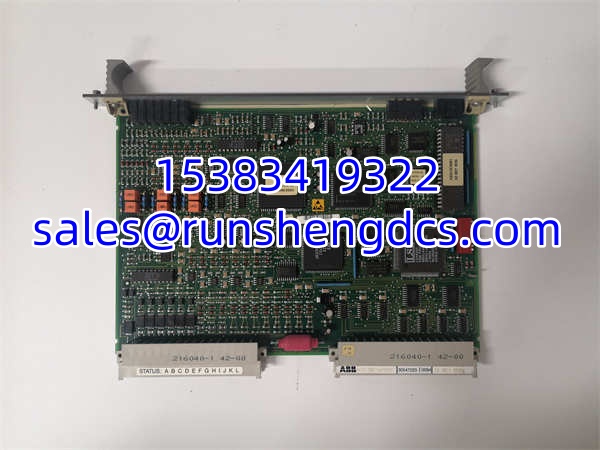
ABB GDB021BE05 HIEE300766R0005
Application Scenarios
- Power Generation Turbine Control: Steam turbine governing systems require microsecond-accurate current feedback from position transducers; signal noise here causes valve hunting and efficiency loss.
- Metallurgy Rolling Mill Drives: High-current DC drives generate massive EMI; the GDB021BE05’s HV insulation prevents common-mode noise from corrupting speed feedback loops.
- Petrochemical High-Voltage Switchgear: Circuit breaker trip coil monitoring needs isolated analog signals to prevent ground faults from triggering false trips during switching transients.
FAQ
- Is HIEE300766R0005 the same as HIEE300766R0001?
No. The suffix indicates revision and potentially firmware or component changes. R0005 may have updated isolation barriers or different analog scaling. Always match the exact suffix unless OEM documentation explicitly states backward compatibility. - Can I use this in a low-voltage 24VDC system?
Technically yes, but it’s overkill and potentially risky. HV boards often have different common-mode voltage tolerances. Verify the signal ground reference point — some HV boards float the signal ground relative to chassis, which can cause issues in LV systems. - What’s the typical MTBF for this board?
ABB doesn’t publish public MTBF for this legacy board. Field data suggests 10-15 years in clean environments, but HV stress accelerates capacitor aging. Plan for 8-10 year replacement cycles in harsh power applications. - Does it support hot-swapping?
No. This is a high-voltage analog interface. Always de-energize the HV bus and wait for capacitor discharge (verify with meter) before removal. Hot-swapping will arc the backplane connectors. - Where can I get the wiring diagram?
ABB doesn’t publish public schematics for this board. Request the “GDB021BE05 Installation & Wiring Manual” (Document ID typically starts with 3BDS or HIEE) from your ABB service rep or authorized distributor. - Is this board RoHS compliant?
Likely not. HIEE300766R0005 predates widespread RoHS enforcement in industrial HV gear. Verify with supplier if lead-free solder is required for your facility’s environmental compliance. - What’s the lead time for new surplus?
Typically 3-5 business days from verified distributors. Avoid “in stock” claims from unverified sellers — HV boards are prime targets for counterfeit relabeling. Demand photos of the actual unit with serial number visible.