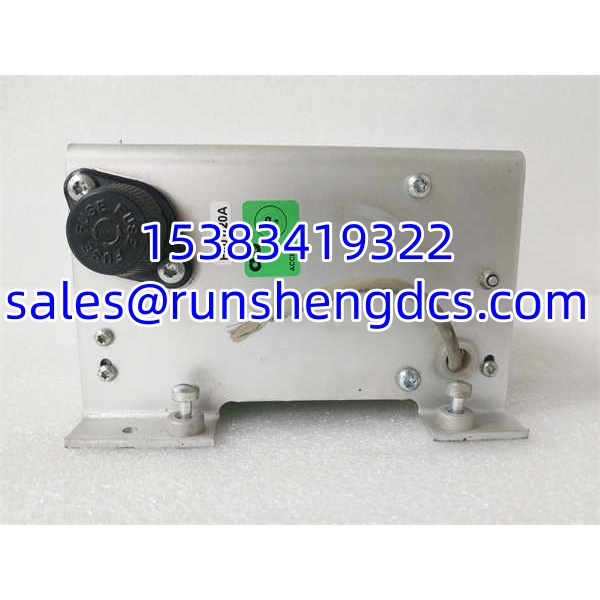

Description
Key Technical Specifications
| Parameter | Specification |
|---|---|
| Manufacturer | ABB |
| Model Number | DSSR122 |
| Order Number | 48990001-NK (Superseded by EXC48990001-NK) |
| Input Voltage | 24 VDC (Range: 18–30 VDC) |
| Output Voltage | 5 VDC (Regulated) |
| Output Current | 40 A (Max) |
| Rated Power | 200 W |
| Protection | Over-voltage, Over-current, Short-circuit, Over-temperature |
| Internal Fuse | 20 A (Spare Part No. 5672827-20) |
| Mounting | S100 I/O Rack Slot |
| Operating Temp. | 0 to +55 °C (Typical) |
Product Introduction
Legacy DCS cabinets have a specific way of failing: the 5 V rail collapses, the CPU resets, and the whole rack goes dark. Usually, the culprit is the DSSR122. It is the workhorse power supply for ABB’s Advant Master (AC410/AC450) and S100 I/O systems, taking a noisy 24 VDC plant supply and regulating it down to a clean 5 VDC for the backplane logic.
Why keep it? Because it handles 40 A on a single rail. That is enough to drive a high-density I/O rack without breaking a sweat. It also supports N+1 redundancy in the S100 chassis, meaning you can hot-swap a failed unit while the parallel module carries the load. It is also found in DCS800 DC drive cabinets, proving it can handle the electrical noise of a mill environment.
QA/QC Transparency SOP
- Intake & Origin Verification: We verify the order number (48990001-NK) and check for the “EXC” prefix on newer replacements. Visual inspection focuses on the backplane connector pins for bending and the casing for heat discoloration.
- Live Functional Testing: The unit is loaded on a DC electronic load bank. We ramp the input from 18 V to 30 V to ensure the 5 V output remains stable (±5%) under full 40 A load.
- Electrical Parameter Tests: We check the internal 20 A fuse (5672827-20) for continuity. Insulation resistance is tested between input and output terminals to ensure isolation integrity.
- Firmware/Config Verification: As an analog/digital power module, there is no firmware to flash. We verify the hardware revision matches the target rack requirements.
- Final QC & Anti-Static Packaging: The unit is tagged with test data (Input V, Output V, Load A). It is packed in anti-static shielding bags with corner protectors for the backplane connector.
Field Engineer Gotchas
- The “132” Trap: Do not confuse the DSSR122 (5 V output) with the DSSR132 (24 V output). They look identical and fit the same slot. Installing a 132 in a 122 slot will fry your 5 V logic boards instantly.
- Robot Power Confusion: This is not a DSQC robot power supply. DSQC units are typically AC-DC (220 V AC in). The DSSR122 is strictly DC-DC (24 V DC in). Check your incoming wiring before energizing.
- Redundancy Diodes: If running N+1, ensure the redundancy diodes (often external or in the rack backplane) are functional. A shorted diode can take out both power supplies.
- Fuse Availability: The internal fuse is a specific 20 A type (5672827-20). Standard automotive fuses will not fit or may not trip correctly. Keep spares.
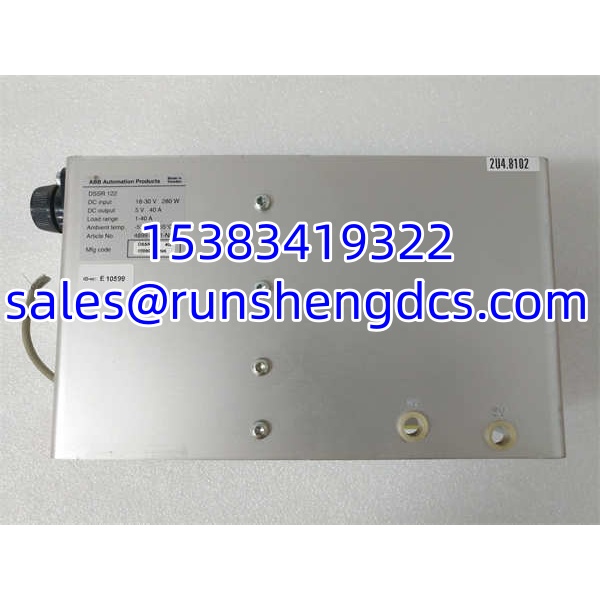
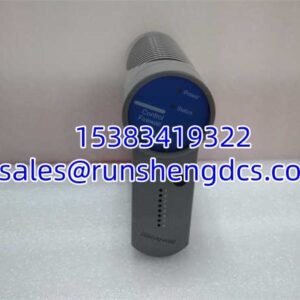
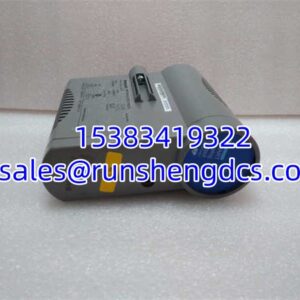
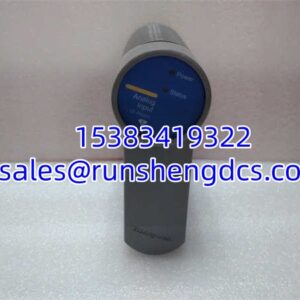
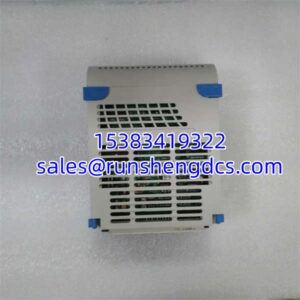
ABB DSSR122 4899001-NK
Application Scenarios
- Power Plant Auxiliaries: Providing stable 5 V logic power for turbine control I/O racks where 24 VDC battery backups are standard.
- Steel Mill DCS800 Drives: Powering the control electronics inside DC drive cabinets subject to high vibration and electrical noise.
- Petrochemical ESD Systems: Used in redundant configurations to ensure safety logic remains powered during single-module failures.
FAQ
Q: Can I use this in a standard DIN rail cabinet?
No. It is designed to plug directly into the S100 rack backplane. It does not have standard DIN rail clips or screw terminals for standalone use.
Q: Is 48990001-NK the same as EXC48990001-NK?
Yes. The “EXC” prefix typically denotes a newer revision or replacement batch from ABB. They are functionally equivalent.
Q: What happens if I exceed 40 A?
The unit has over-current and short-circuit protection. It will shut down to protect itself. You need to check your rack load calculation; you might be overloading the slot.
Q: Can I repair the internal fuse myself?
Technically yes, but it requires opening the sealed casing. If the fuse blew, there was likely a downstream short or a component failure inside the PSU. Replacing the fuse without finding the root cause is risky.
Q: Does it support hot-swapping?
Yes, specifically when configured in an N+1 redundant setup within the S100 rack. Do not pull a single unit if it is the only one powering the rack.