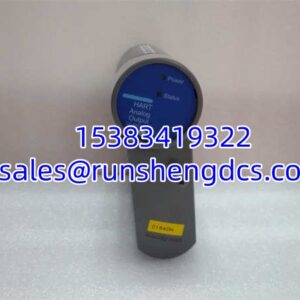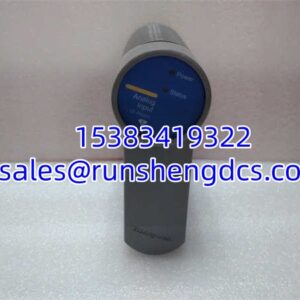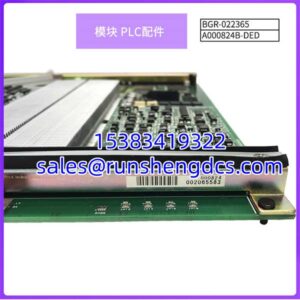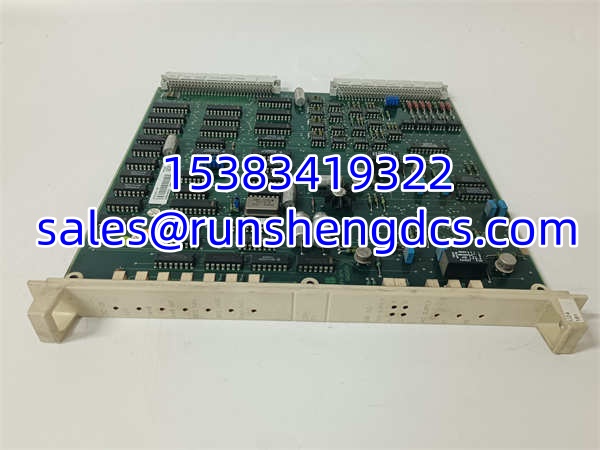

Description
Key Technical Specifications
| Parameter | Specification |
|---|---|
| Model Number | DSBC172 |
| Order Code | 57310001-KD |
| Brand | ABB |
| Product Type | Bus Repeater Module |
| Function | Bus signal repeating, extension, and isolation |
| Signal Processing | Built-in signal shaping and galvanic isolation |
| Protection | Overvoltage and short-circuit protection |
| Status Indication | LED status indicators for monitoring and troubleshooting |
| Mounting | Modular rack/card mount (ABB DCS frames) |
| Design | Compact, low-power, EMC-compliant |
| Origin | Switzerland / Sweden (varies by production batch) |
| Reference Price | ~CNY 888 – 45,585 (surplus channel; varies significantly by supplier, condition, and availability) |
Product Introduction
In a large DCS installation, the bus cable run between controller racks can stretch hundreds of meters through noisy plant environments. Over those distances, bus signals degrade — edges round off, noise couples in, and eventually the controller starts dropping messages or throwing communication faults. The DSBC172 is the fix for that problem.
This module sits inline on the bus segment and acts as a repeater: it receives the degraded signal, reshapes it back to clean digital edges, isolates it from the upstream segment, and retransmits a fresh, full-strength signal downstream. The result is extended bus reach without sacrificing data integrity.
The DSBC172 belongs to ABB’s legacy DCS product family, commonly found in Advant OCS, MOD 30/MODCELL, and related ABB process control systems. It is a workhorse component in plants where bus infrastructure has been in service for decades and signal quality becomes a growing concern as cable runs age and plant expansions push communication distances to their limits.
QA/QC Transparency SOP
- Intake & Origin Verification
Photograph the module label. Capture the DSBC172 designation, the 57310001-KD order code, serial number, and any ABB manufacturing markings or date codes. Cross-reference against the target DCS system’s bus configuration documentation to confirm this is the correct repeater for the bus type in use. - Visual & Mechanical Inspection
Inspect the PCB for cracked solder joints, corrosion, burnt components, or signs of moisture ingress. Check all bus connector pins for bending, oxidation, or contamination. Verify the module slides into the target rack slot or bus junction without forcing. - Electrical Parameter Tests
Measure insulation resistance on bus interface terminals. Verify continuity on signal input and output paths. Check for short circuits between signal lines and ground. Confirm isolation resistance between the input and output bus segments meets specification. - Functional Verification
If test infrastructure permits, connect the module inline on a test bus segment. Inject a known bus signal and verify the module repeats it with clean edges and correct timing. Confirm LED status indicators respond correctly to signal presence and fault conditions. - Final QC & Anti-Static Packaging
Label with QC pass status, test date, and any revision markings. Pack in an anti-static shielding bag with foam protection on all connectors. Include a note that bus termination and addressing must be verified against the DCS configuration before commissioning.
Field Engineer Gotchas
- Bus Termination Is Critical
A bus repeater does not eliminate the need for proper bus termination. The upstream and downstream bus segments each still require correct termination resistors. Missing or incorrect termination will cause signal reflections that no repeater can fix. Check the bus termination scheme before and after installing the DSBC172. - Signal Isolation Means Segment Separation
The DSBC172 provides galvanic isolation between bus segments. This is a feature, not a suggestion — it prevents ground loops and fault propagation from one segment affecting the other. However, it also means the two segments are electrically separate. Do not assume a fault on one side will be visible from the other side. - Not a Controller or Processor
The is a bus infrastructure component. It has no processing capability, no user-programmable logic, and no configuration software. It receives bus signals and retransmits them. If your application requires a communication protocol converter or a controller, this is not the right module. - Bus Protocol Compatibility
While the supports multiple fieldbus protocols in general, the specific bus type (electrical characteristics, signaling speed, frame format) must match the DCS system it is installed in. A repeater designed for one bus speed may not correctly repeat signals at a different speed. Verify the bus protocol and baud rate against the module’s specifications. - Surplus Pricing Varies Wildly
Different surplus suppliers list the at prices ranging from under CNY 1,000 to over CNY 45,000. This variation reflects differences in condition, testing, documentation, and availability — not necessarily different hardware. Verify what is included (test reports, documentation, warranty) before making a purchasing decision based on price alone.
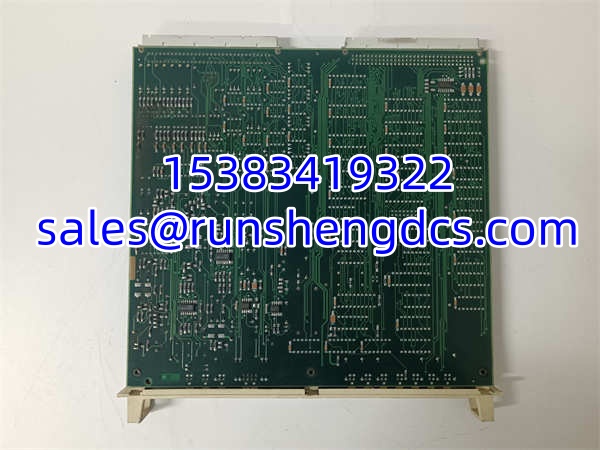
ABB DSBC172 57310001-KD
Application Scenarios
- Bus extension in large DCS installations — When controller racks are spread across a wide area, the extends the bus reach beyond the maximum cable length for a single segment, maintaining signal integrity over long runs.
- Legacy Advant OCS / MOD 30 systems — Plants running ABB’s older DCS platforms use the to maintain reliable bus communication as the original cable infrastructure ages and signal degradation becomes a concern.
- Bus segment isolation — When a bus segment experiences intermittent faults (cable damage, moisture ingress, ground loops), a repeater isolates the fault to one segment while keeping the rest of the bus operational.
- Plant expansion projects — Adding new I/O racks or controller stations beyond the original bus design distance requires a repeater to maintain communication quality on the extended segment.
FAQ
No. It is a bus repeater module. It has no processing capability, no user-programmable logic, and no configuration software. Its sole function is to receive, reshape, isolate, and retransmit bus signals.
The is designed for use within ABB DCS bus systems, commonly found in Advant OCS and related platforms. The specific protocol compatibility depends on the bus type and signaling characteristics of the target system. Verify against the DCS system documentation before installation.
No. It is a hardware-level signal repeater with no user-configurable parameters. Install it, verify the bus termination on both sides, and confirm signal transmission through the status LEDs.
The module has LED status indicators. Typically, a lit indicator confirms signal presence on the bus. If the LED is off or flickering abnormally, check the bus cable connections, termination, and signal quality on both the input and output sides.
Not recommended. The is designed with specific electrical characteristics, connector pinouts, and signal timing matched to ABB DCS bus systems. A generic repeater may not match the bus impedance, signaling levels, or protocol timing, leading to communication failures.
Is this module still supported by ABB?
Verify directly with ABB. The belongs to ABB’s legacy DCS product family. Some bus components may have been superseded by newer variants. Confirm current support status and any recommended replacement before specifying it for a new installation.