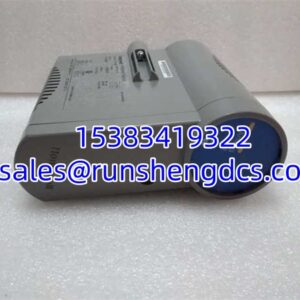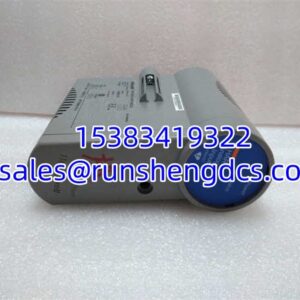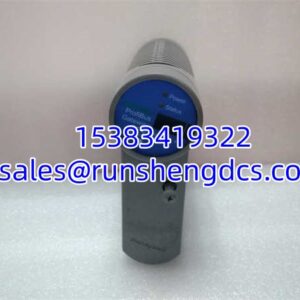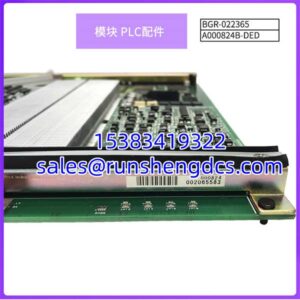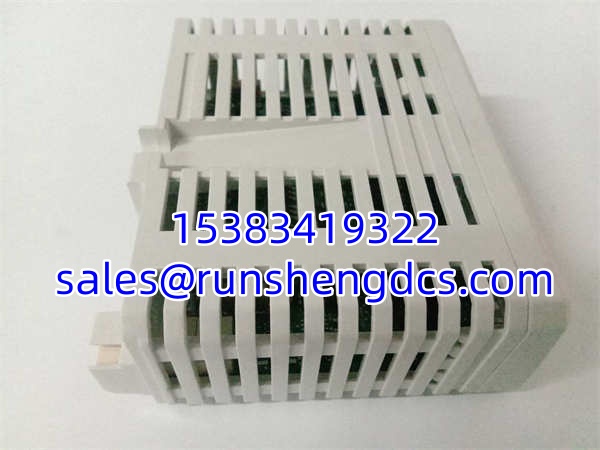
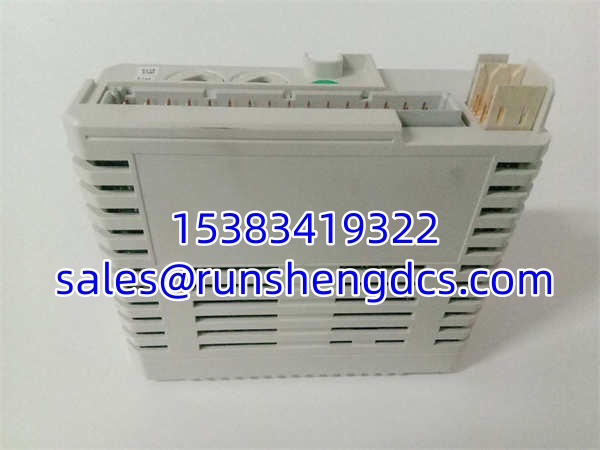
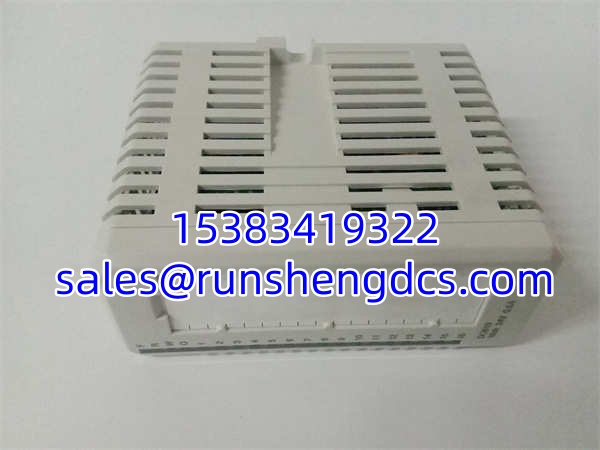

Description
Key Technical Specifications
- Product Type: Digital Output Module
- Manufacturer: ABB
- Series: Advant S800 I/O
- Channel Configuration: 16 Channels (2 groups of 8)
- Output Current: 0.5 A per channel
- Output Voltage: 24 VDC (Nominal)
- Isolation: 50 V (Group-to-Bus)
- Protection: Short-circuit protection, Over-temperature shutdown
- Termination Unit: TU810, TU812, TU814, TU830
- Dimensions: 45 x 119 x 102 mm
- Weight: 0.2 kg
- Diagnostics: Channel status LEDs, Module fault LED
Product Introduction
Field wiring shorts are the number one killer of digital output cards, and standard PLC DO modules often fry the entire bank when a solenoid coil welds. The ABB DO810 3BSE008510R1 is engineered to survive this reality with per-channel short-circuit protection and group isolation. As a core component of the Advant S800 platform, this module delivers 16 channels of 24VDC switching at 0.5A, making it the standard workhorse for controlling pneumatic valves, motor starters, and status lamps in process industries.
From a maintenance perspective, the ABB DO810 3BSE008510R1 is designed for fast fault isolation. The dual-group architecture (2×8 channels) means a short on channel 1 won’t kill channels 9-16, keeping half your process running while you troubleshoot. With 50V group isolation and built-in diagnostics via LED indicators, this card tells you exactly which output is faulted. Bottom line: if you’re running S800 I/O and need reliable 24VDC switching that can take a beating, the ABB DO810 3BSE008510R1 is the part to keep on your shelf.
QA/QC Transparency SOP
- Intake & Visual Inspection: We verify the 3BSE008510R1 part number and check for physical damage, corroded pins, or signs of overheating on the output drivers.
- Live Functional Testing: The ABB DO810 3BSE008510R1 is mounted on a live S800 test rack. All 16 channels are forced ON/OFF to verify switching response and LED indication.
- Short-Circuit Protection Test: We intentionally short individual channels to ground to verify the protection circuit trips and resets correctly without damaging the module.
- Isolation & Continuity Check: Using a Fluke 115, we verify 50V isolation between groups and check for continuity on all output terminals to the termination interface.
- Final QC & Packaging: Module is cleaned, ESD-shielded, and packaged with terminal covers to prevent pin damage during shipping.
Field Engineer Gotchas
- Termination Unit Mismatch: The ABB DO810 3BSE008510R1 requires a specific TU81x termination unit (TU810, TU812, TU814, or TU830). Using the wrong TU or a damaged TU will cause intermittent faults or channel failures. Always verify the TU part number matches your wiring needs. I’ve seen a tech spend 4 hours chasing a “bad DO810” that was actually a cracked TU810 terminal block.
- Inductive Load Kickback: While the has short-circuit protection, it doesn’t have built-in flyback diodes for inductive loads. If you’re driving solenoids or relays without external suppression, you’ll eventually kill the output transistors. Always use snubbers or freewheeling diodes on inductive loads.
- Group Common Wiring: The is 2×8 grouped, not 16 individual commons. If your field wiring assumes individual commons, you’ll create ground loops or blow fuses. Verify the wiring diagram against the 2-group layout before energizing.
- ESD During Hot-Swap: The S800 supports hot-swap, but the ‘s CMOS logic is ESD-sensitive. Always ground yourself before inserting or removing the . I’ve seen technicians kill a perfectly good card just by sliding it across a painted rack rail without a wrist strap.
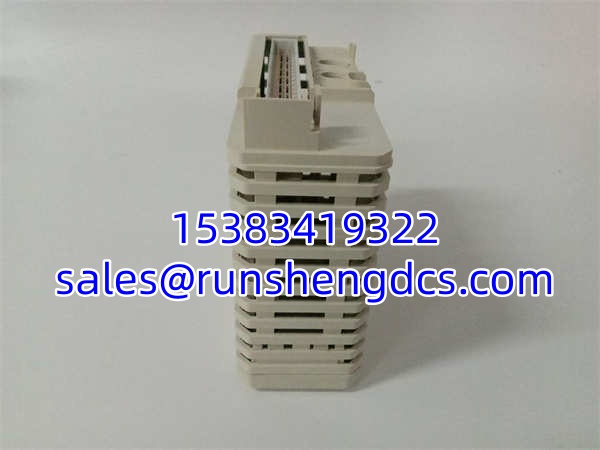
ABB 3BSE008510R1 DO810
Application Scenarios
- Petrochemical Valve Control: Refineries use hundreds of 24VDC solenoid valves for ESD and process control. The provides the reliable switching and fault isolation needed to keep safety-critical valves operational even when adjacent channels fault.
- Power Plant Auxiliary Systems: Coal conveyors, ash handling, and cooling water pumps require robust digital control. The ‘s 0.5A output drives motor starter coils directly, and its short-circuit protection survives the harsh electrical environment of power generation.
- Water/Wastewater Pump Stations: Lift stations and treatment plants need reliable pump control. The handles alternating duty pump logic and alarm outputs, with diagnostics that help operators quickly identify failed pumps or stuck valves.
FAQ
Can I hot-swap the DO810 in a live S800 rack?
Yes, the platform supports hot-swap for I/O modules. The system will temporarily fault the affected channel group during insertion, but the rest of the system remains operational. Just make sure you’ve configured the slot correctly in Control Builder before pulling the old card.
No. The is strictly for the platform. S900 uses a different bus and termination system. Don’t try to force it; it won’t fit or communicate.
My channel LED is on, but the field device isn’t energized. Is the card bad?
Not necessarily. Check the voltage at the termination unit terminal first. If you have 24V at the output pin but not at the field device, you have a wiring break or a bad TU terminal. If you have 0V at the pin with the LED on, then yeah, the output driver is likely failed.
What’s the max cable length for 24VDC outputs?
Depends on wire gauge and load current. For 0.5A loads with 1.5mm² wire, keep it under 300m to avoid excessive voltage drop. If you’re running longer distances, consider using a relay interposer or increasing wire size.
Do you test these with actual field loads or just bench voltage?
Both. Bench testing verifies electrical specs, but we also run functional tests on a live rack with simulated field loads to confirm switching behavior under load. A module that passes bench tests but fails under load is still a no-ship.
Can I repair this card in-house?
No. The uses surface-mount components with no public schematics. Board-level repair requires OEM-level tools and knowledge. Send it to ABB or an authorized repair facility if it’s out of warranty.
What’s the MTBF on these modules?
ABB doesn’t publish a specific MTBF for I/O, but field data suggests 15-20+ years is typical for modules in normal environments. Failures are usually caused by electrical overstress (shorts, surges) rather than inherent design flaws. Proper fusing and suppression are your best preventive maintenance.