
Description
Key Technical Specifications
| Parameter | Value |
|---|---|
| Product Model | 3BHL000986P0006 |
| Manufacturer | ABB |
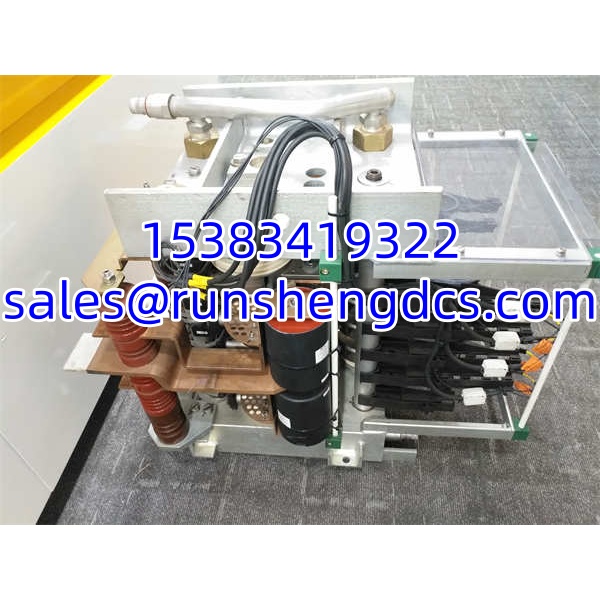
| Component Type | High-Voltage Diode / IGCT Freewheeling Diode Module |
| Rated Reverse Voltage (VRRM) | Up to 4,500 V |
| Voltage Rating | 2,800 VDC |
| Peak Surge Current (IFSM) | Up to 23,000 A |
| Forward Voltage Drop (VF) | 4.2 V at 2.5 kA (at max junction temperature) |
| Auxiliary Power Supply | 24 VDC |
| Approximate Dimensions | 150 mm × 100 mm × 50 mm |
| Typical Application | Industrial drives, power converters, high-voltage rectifier/inverter stages |
Product Introduction
Replacing a failed power semiconductor in a medium-voltage drive is not a “drop-in and pray” job. The diode sees reverse voltage spikes, commutation stress, and thermal cycling every time the converter switches. The 3BHL000986P0006 sits in that high-stress corner of the power stack — typically as a freewheeling or snubber diode associated with IGCT/IGBT switching stages.
Its value is straightforward: it blocks high reverse voltage, carries large transient currents, and prevents destructive voltage overshoot during turn-off. With a rated reverse voltage up to 4,500 V and a surge current capability around 23,000 A, it is built for heavy industrial power electronics rather than light-duty control panels. That said, the 3BHL000986P family covers multiple variants, so cross-check the exact suffix before issuing a PO.
QA/QC Transparency SOP
- Intake & Origin Verification: Record full part number, serial/lot code, and physical condition. Inspect for cracked housing, burnt terminals, corroded mounting surfaces, or damaged gate/auxiliary pins.
- Visual & Mechanical Inspection: Check mounting holes, thermal interface flatness, and terminal integrity. Reject units with warped bases, missing fasteners, or evidence of overheating.
- Electrical Parameter Tests: Perform diode forward/reverse leakage checks, insulation resistance testing, and terminal continuity verification. Measure forward voltage drop at a safe test current and compare against typical 4.2 V @ 2.5 kA reference data.
- Functional Verification: Where test equipment allows, verify blocking capability and auxiliary circuit behavior. Confirm no shorted junctions or abnormal leakage under rated test conditions.
- Final QC & Packaging: Document measured values, photograph nameplate and terminals, apply anti-static and moisture-barrier packaging, and include a test report with part identification.
Field Engineer Gotchas
- Suffix confusion across the 3BHL000986P family. Variants such as P3004, P3105, P7000, and P7001 have appeared as diodes, thyristors, IGBT modules, or converter sub-assemblies. Do not assume interchangeability based on the prefix alone. Verify the full part number against the OEM drawing.
- Diode vs. full module mismatch. Some listings call this a diode; others treat it as part of a larger power converter assembly. Ordering the wrong variant can leave you with an incompatible mechanical footprint or missing auxiliary connections.
- Thermal interface matters. A replacement diode with uneven mounting surfaces or degraded thermal paste will run hot even if electrical tests pass. Always inspect the baseplate and re-torque per OEM specs.
- Gate/auxiliary wiring risk. If the module includes a 24 VDC auxiliary circuit, reversed or floating auxiliary supply can prevent proper firing or protection behavior. Check wiring polarity before energizing the converter.
- Surplus-market data drift. Public listings sometimes mix voltage ratings, current ratings, or application descriptions. Treat third-party specs as indicative until the physical nameplate and OEM documentation agree.
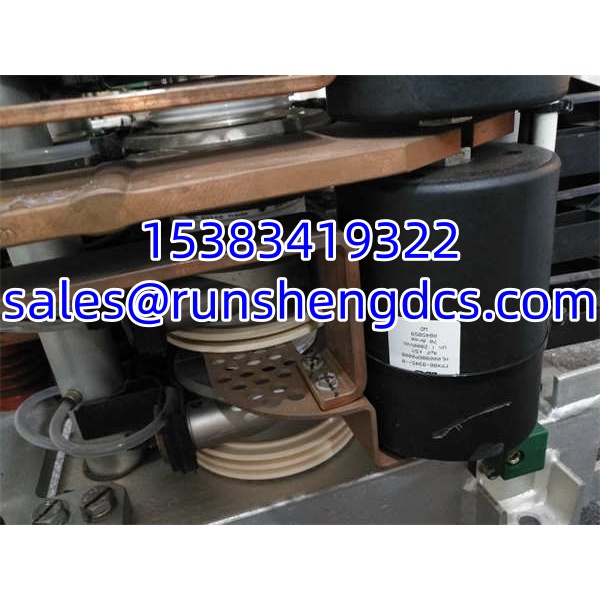
ABB 3BHL000986P0006
Application Scenarios
- Medium-voltage VFDs using IGCT or high-voltage IGBT stacks, where freewheeling diodes handle commutation energy during switching transitions.
- Industrial rectifier/inverter stages in steel rolling mills, mining hoists, or large compressor drives.
- Power converter rebuilds where a failed diode module must be matched by voltage class, current rating, and mechanical footprint.
- Legacy drive maintenance where OEM spares are discontinued and tested surplus becomes the practical option.
FAQ
- Is 3BHL000986P0006 a diode or a full power module?
It is most commonly listed as a high-voltage diode / IGCT freewheeling diode module. However, the 3BHL000986P family includes multiple device types, so confirm the exact variant before procurement. - Can I substitute another 3BHL000986P part number?
Not without verification. Suffix differences can change voltage rating, current rating, mechanical dimensions, terminal layout, or device type. Treat each suffix as a separate part until the OEM documentation confirms compatibility. - What voltage class does it support?
Listed values show up to 4,500 V reverse voltage and a 2,800 VDC rating. Use the lower of the nameplate rating or OEM datasheet for design margin. - Does it require a 24 VDC supply?
Some listings specify a 24 VDC auxiliary supply. Whether this applies to your unit depends on the exact module configuration. Check the nameplate and OEM wiring diagram. - Is new stock available?
New OEM stock is uncertain for this legacy part number. Most availability comes from surplus, refurbished, or unused old-stock channels. Require test reports and nameplate photos. - What should I check before installing a surplus unit?
Verify the full part number, measure forward/reverse characteristics, inspect the thermal interface, confirm terminal layout, and cross-check against the drive or converter manual. Do not install based on listing photos alone.