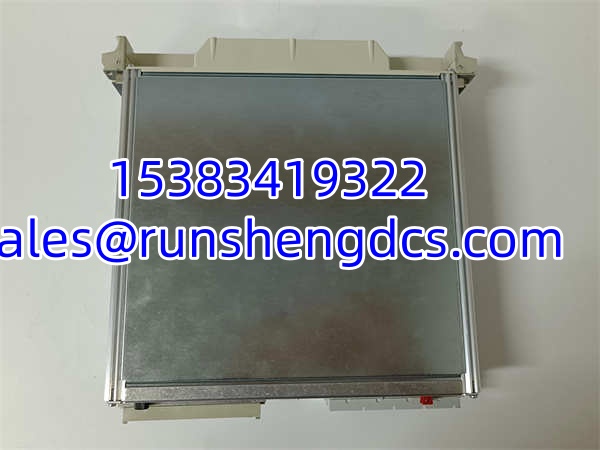

Description
Key Technical Specifications
| Parameter | Value / Notes |
|---|---|
| Product Type | Digital Control Trigger/Regulation Board |
| Model Number | 216NG62A |
| Order Code | HESG441634R1K / HESG441634R1/K |
| Type Designation | HESG216876 |
| Series | 216NG |
| Control Type | Digital |
| Function | Precision triggering and regulation |
| Application | Power electronics control, industrial drives, inverters |
| Origin | ABB (Swiss heritage) |
Product Introduction
The 216NG62A is a digital control trigger and regulation board from ABB’s 216NG series. It sits inside power electronics equipment — typically medium-voltage drives, excitation systems, or industrial inverters — and performs the critical job of generating precise firing pulses to control power semiconductor devices (thyristors, IGCTs, or IGBTs).
Why does this board matter? In any power conversion system, the timing accuracy of the trigger pulses directly determines output waveform quality, efficiency, and system stability. A degraded or failed trigger board means misfired semiconductors, which can cascade into overcurrent faults, DC bus instability, or complete drive failure. The 216NG62A uses digital control architecture, which provides tighter timing precision and better repeatability compared to older analog trigger circuits.
The three part numbers — 216NG62A, HESG441634R1K, and HESG216876 — are cross-referenced identifiers for this same board. The 216NG62A is the model designation, HESG441634R1K is the ABB order code, and HESG216876 is the type designation. They should all appear on the same physical board’s label.
QA/QC Transparency SOP
- Intake & Origin Verification — Confirm the board markings read 216NG62A with order code HESG441634R1K (or HESG441634R1/K) and type designation HESG216876. Inspect the PCB for cracked solder joints, burnt traces near the pulse transformer outputs, corroded connector pins, or damaged ICs.
- Visual & Mechanical Inspection — Check all connectors and headers for bent or missing pins. Verify that any DIP switches or jumpers are in their expected positions. Look for signs of previous repair attempts — rework solder, jumper wires, or replaced components.
- Functional Testing — Mount the board in a compatible ABB drive or test fixture. Apply the specified auxiliary supply voltage. Verify that the board initializes correctly, status LEDs illuminate as expected, and the board communicates with the parent controller without fault codes.
- Trigger Output Verification — Using an oscilloscope, capture the trigger pulse outputs. Verify pulse amplitude, width, timing accuracy, and isolation between channels. Compare against the ABB specification for the 216NG62A. Any deviation in pulse shape or timing indicates a degraded board.
- Final QC & Anti-Static Packaging — Clear any test configurations. Package the board in anti-static shielding with connector protectors installed. Include a test report documenting trigger waveform captures and pass/fail status.
Field Engineer Gotchas
- Part Number Confusion — The three identifiers (216NG62A, HESG441634R1K, HESG216876) are often listed separately by surplus dealers as if they are different products. They are the same board. However, do not confuse the 216NG62A with the closely related 216NG61A (HESG441633R1 / HESG216875/K) — these are different boards with different trigger characteristics and are not interchangeable.
- Firmware/Configuration Mismatch — Digital trigger boards often carry firmware or configuration parameters specific to the drive system they were originally installed in. A board pulled from one drive may not work correctly in another without reconfiguration. Check whether the board requires parameter loading or firmware flashing before installation.
- Trigger Pulse Isolation — The trigger outputs must be galvanically isolated from the control logic side. If the board has been subjected to a semiconductor short-circuit event, the isolation barriers may be compromised even if the board appears to power up. Always perform an insulation resistance test between trigger outputs and control-side circuits before putting the board into service.
- Connector Pin Damage — The board’s edge connectors or pin headers are fragile. Forcing the board into the backplane at an angle will bend pins, causing intermittent trigger pulse loss. Intermittent firing is one of the hardest faults to diagnose because it only appears under load.
- Operating Environment — These boards are typically mounted inside drive cabinets where ambient temperatures can be significant. Ensure adequate ventilation around the board. A board running at elevated temperature will experience accelerated capacitor aging, which degrades trigger timing stability over time.
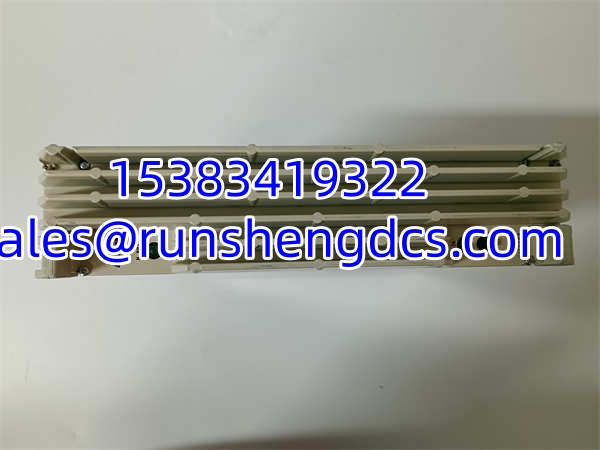
ABB 216NG62A HESG441634R1K HESG216876
Application Scenarios
- Medium-Voltage Drive Systems — The 216NG62A serves as the trigger and regulation board inside ABB medium-voltage drives, generating the precise firing sequences for the power semiconductor stack. Failure of this board typically results in immediate drive trip or inability to start.
- Excitation Systems — Used in generator excitation control where thyristor bridges require accurate firing angle control to regulate field current. The digital trigger architecture provides the precision needed for stable voltage regulation.
- Industrial Inverters and Power Converters — Deployed in custom power conversion equipment where digital control of semiconductor switching is required for process-critical applications.
Field Case (Anonymized): A steel mill’s rolling mill drive experienced intermittent overcurrent trips during high-speed operation. The drive fault logs showed random misfire patterns on one phase leg. The maintenance team replaced the power semiconductors twice with no improvement. Finally, a senior engineer pulled the 216NG62A trigger board and found that one channel’s pulse transformer had a hairline crack in its insulation — visible only under magnification. The crack caused intermittent loss of trigger pulses under vibration, leading to unbalanced phase currents. Replacing the trigger board eliminated the nuisance trips permanently.
FAQ
Are 216NG62A, HESG441634R1K, and HESG216876 the same part?
Yes. 216NG62A is the model number, (or HESG441634R1/K) is the ABB order code, and HESG216876 is the type designation. All three refer to the same digital control trigger/regulation board.
Is the 216NG62A interchangeable with the 216NG61A?
No. The 216NG61A (HESG441633R1 / HESG216875/K) is a different board in the same series. While they may look physically similar, their trigger characteristics, firmware, and configuration parameters differ. Do not substitute one for the other without confirming compatibility with ABB documentation.
What happens if this board fails?
The drive or power converter will typically trip immediately or fail to start. The trigger board controls the firing of power semiconductors — without correct trigger pulses, the power stage cannot operate. In some cases, a partially failed board may cause intermittent misfires that are difficult to diagnose.
Can I test this board on the bench without the full drive system?
Limited testing is possible — you can verify power-up, LED status, and basic communication. However, full functional verification of the trigger pulse outputs typically requires the compatible drive controller or a specialized test fixture that simulates the parent system’s interface.
What is the typical lead time for a replacement?
Availability varies. Some surplus distributors stock this board with shipment within a few days. Others may quote several weeks depending on the specific revision. Confirm stock status, condition (new, surplus, or refurbished), and exact revision markings with your supplier before planning a drive outage.
Is this board ESD-sensitive?
Yes. Like all digital control boards with sensitive ICs, it must be handled with proper ESD precautions — grounded wrist strap, anti-static mat, and anti-static packaging during storage and transport.