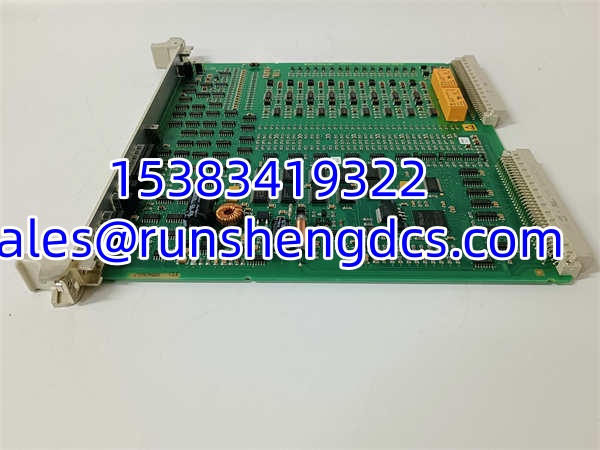

Description
Key Technical Specifications
| Parameter | Detail |
|---|---|
| Part Number | 216DB61 |
| Order Code | HESG324063R100J / HESG324063R100/J |
| Manufacturer | ABB (Sweden) |
| Product Type | Binary (Digital) Input Module |
| Operating Voltage | 24 V DC |
| Input Voltage Range | 20–30 V DC |
| Product Weight | 0.351 kg |
| Operating Temperature | -40 °C to +85 °C |
| Humidity | 5%–95% (non-condensing) |
| Application | ABB controller systems, industrial automation, process control |
Product Introduction
The ABB 216DB61 (order code HESG324063R100J) is a binary/digital input module manufactured by ABB in Sweden. It is designed to accept discrete on/off signals from field devices — such as limit switches, proximity sensors, pushbuttons, relay contacts, and status indicators — and convert them into electrical signals that an ABB controller can process.
In a typical industrial control system, binary input modules serve as the “eyes” of the controller, providing real-time status information about the physical process. Whether it’s confirming a valve is open, a motor has stopped, or a safety interlock is engaged, these modules translate physical states into digital logic that the control program can act upon.
The module operates on a 24 V DC supply (within a 20–30 V DC range), making it compatible with standard industrial control power supplies. Its compact form factor and lightweight design (0.351 kg) allow for dense mounting in control cabinets alongside other I/O modules.
QA/QC Transparency SOP
Here is what a responsible surplus supplier should verify before this module ships:
- Intake & Origin Verification — Confirm the full model number “216DB61” and order code “HESG324063R100J” are clearly legible on the module label. Check for physical damage: cracked housing, bent pins, corroded connectors, or missing terminal blocks.
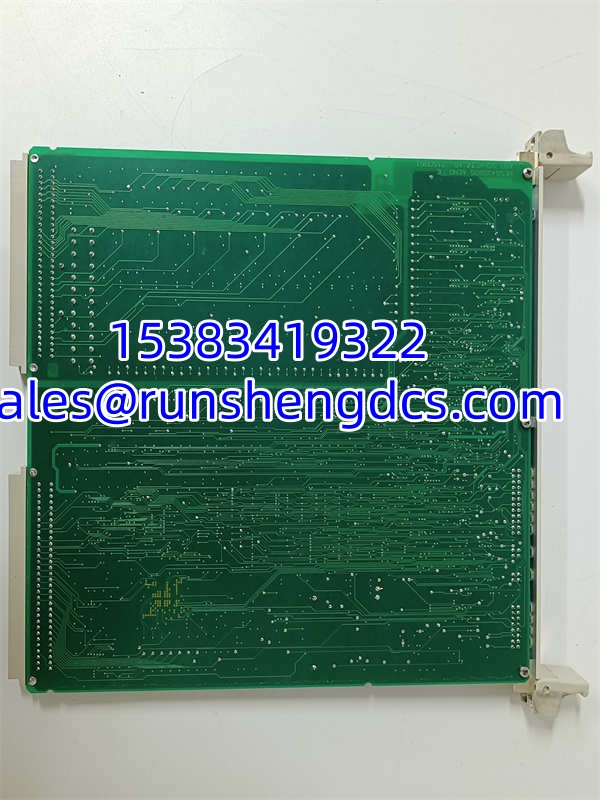
- Visual Inspection — Examine the PCB for burnt components, cold solder joints, or signs of moisture damage. Verify connector integrity and that all terminal screws are present and undamaged.
- Live Functional Testing — Seat the module in a compatible ABB controller rack or test backplane. Apply 24 V DC and verify the module powers up without fault indicators. Toggle each input channel and confirm the controller registers the state change correctly.
- Electrical Parameter Tests — Measure input voltage thresholds to confirm proper logic-level detection. Verify isolation between channels if the module design includes channel-to-channel isolation.
- Final QC & Anti-Static Packaging — Photograph the module label and connector condition. Log test results with date and technician ID. Seal in anti-static bag with foam support to prevent connector damage during transit.
Field Engineer Gotchas
- Binary vs. Analog Confusion — At least one supplier source lists this part number as an “analog input module” with analog output specifications. The model designation “216DB61” (where “DB” likely stands for Digital Binary) and the primary listing both indicate this is a binary/digital input module. Do not rely on the analog specs from that source — they may be misattributed.
- Input Voltage Thresholds — While the module operates on 24 V DC, the actual logic-high and logic-low thresholds may differ from standard TTL or CMOS levels. Verify the input threshold specifications against your field device output levels to ensure reliable signal detection.
- Channel Count — The available listings do not specify the exact number of input channels on this module. Confirm the channel count against your system requirements and the physical module before ordering.
- Controller Compatibility — This module is designed for ABB controller systems, but not all ABB controllers accept all I/O modules. Verify compatibility with your specific controller model and firmware version.
- Wiring Polarity — Binary input modules are typically polarity-sensitive. Reversing the wiring can damage the input circuits. Always verify the wiring diagram before connecting field devices.
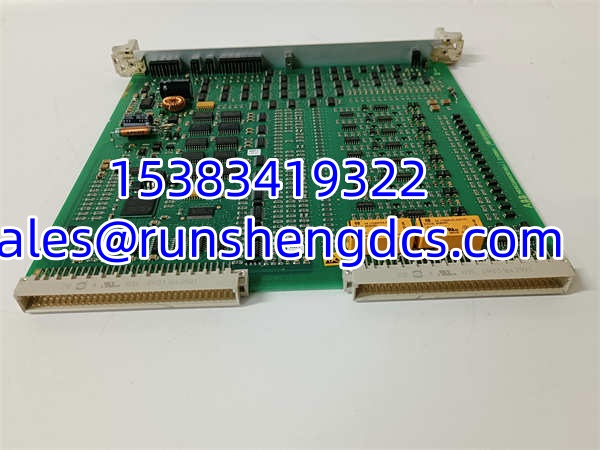
ABB 216DB61 HESG324063R100J
Application Scenarios
- Process Status Monitoring — Binary input modules like the 216DB61 are used to monitor the on/off status of field devices such as limit switches, pressure switches, flow switches, and level sensors in process control applications.
- Safety Interlock Systems — In safety-critical applications, binary inputs provide the controller with real-time information about safety device states (e.g., emergency stop buttons, guard door switches, fire detection signals).
- Machine Control — In manufacturing and automation systems, binary inputs track machine states such as motor run/stop, conveyor position, part presence/absence, and tool engagement.
- ABB Controller I/O Expansion — When an ABB controller needs additional discrete input capacity, modules like the 216DB61 are added to the I/O rack to expand the system’s ability to monitor field conditions.
Note: No verified real-world case study is available for this specific part number. The scenarios above reflect typical deployment contexts for ABB binary input modules.
FAQ
What type of module is the 216DB61?
It is a binary (digital) input module. It accepts discrete on/off signals from field devices and feeds them into an ABB controller.
What does “HESG324063R100J” mean?
It is the ABB order code for this module. “HESG” is ABB’s product group prefix, and the full code uniquely identifies this specific module variant.
What voltage does it operate on?
24 V DC, with an acceptable input range of 20–30 V DC.
Is this an analog or digital module?
Based on the model designation “216DB61” and the primary product listing, this is a binary/digital input module. One supplier source incorrectly classifies it as an analog input module — treat those analog specifications with caution.
How many input channels does it have?
The available listings do not specify the exact channel count. Confirm against the physical module or your system documentation.
What is the operating temperature range?
-40 °C to +85 °C, with humidity tolerance of 5%–95% non-condensing.
Where can I buy this module?
Available through surplus industrial automation suppliers. Not a retail product. Verify the supplier’s testing documentation and return policy before purchasing. One listing showed a price of approximately 6,999 RMB, but pricing varies significantly by supplier and condition.