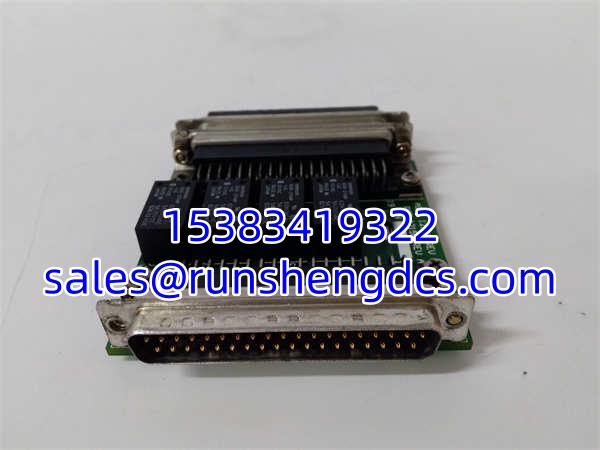

Description
Key Technical Specifications
| Parameter | Value |
|---|---|
| Product Model | VMIC ASSY 12149 |
| Manufacturer | VMIC / GE Fanuc |
| Product Type | VMEbus I/O Module |
| Assembly Number | 12149 |
| Module Designation | VMIVME-2510B |
| Bus Interface | VME64 (A32/D32) |
| Function | Discrete/Analog Signal Interface |
| Form Factor | 6U VME |
| Operating Temp | 0°C to +60°C (typical for era) |
| Diagnostic Indicators | Status LEDs (verify pinout) |
| Compatibility | Legacy GE Fanuc / Emerson VME Chassis |
Product Introduction
Your VME rack is throwing an I/O fault, and the OEM stopped making this board years ago. You can’t rewrite the control logic just because a single interface module died.
The VMIC ASSY 12149 is a VMEbus I/O module, typically configured as the VMIVME-2510B. It sits in the VME chassis bridging the gap between the backplane and the field wiring, handling signal conditioning, isolation, and data transfer for legacy GE Fanuc and Emerson ICS platforms. The ASSY 12149 designation specifically identifies the hardware revision and component population, which is critical because even minor rev changes can alter VMEbus addressing or I/O mapping.
Why not just migrate to a new PAC? Because migration is a multi-year, multi-million dollar project. The ASSY 12149 buys you time. It’s a direct drop-in for existing VMIVME-2510B slots. These boards were built with discrete components and thick PCBs designed for decades of thermal cycling in power plants and refineries. Bottom line — it’s an obsolete part, but as long as it passes I/O checks and talks to the backplane, it’s worth its weight in gold.
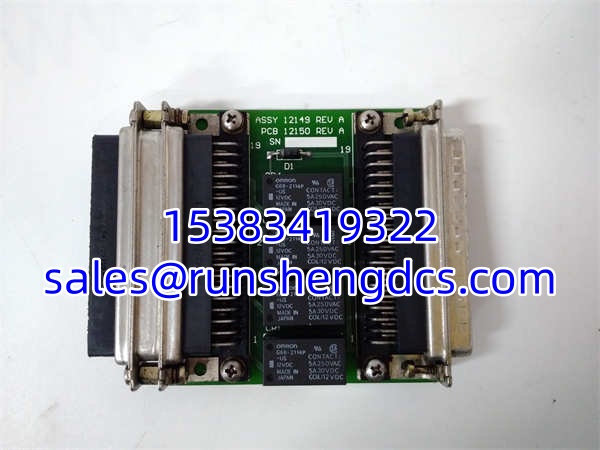
VMIC ASSY 12149
QA/QC Transparency SOP
Sourcing legacy VME boards like the ASSY 12149 requires strict validation since OEM testing equipment is often long gone. Here is our process:
- Intake & Origin Verification: We verify the ASSY 12149 assembly number, revision suffix, and VMIC/GE Fanuc date codes. We inspect the PCB for signs of rework, flux residue, or counterfeit silkscreen printing.
- Live Functional Testing (Comms, I/O, Load): The module is seated in a calibrated VME64 test chassis. We verify POST completion, VMEbus arbitration, and exercise available I/O channels to confirm active signal conditioning.
- Electrical Parameter Tests (Megger, Continuity): Using a Fluke 87V multimeter, we verify continuity on all VMEbus P1/P2 pins and check for degraded electrolytic capacitors. We test isolation between field I/O and the backplane to ensure no internal shorts.
- Firmware/Config Verification (Readout & Backup): If the board has onboard EPROM/Flash, we read the firmware checksum and compare it against known-good ASSY 12149 signatures. We verify the VMEbus address map matches the expected configuration.
- Final QC & Anti-Static Packaging: Visual inspection under magnification checks for cold solder joints or trace corrosion. The ASSY 12149 is then sealed in an anti-static bag with desiccant, labeled with our test date and verification results.
Field Engineer Gotchas
Revision Suffix Mismatch: The exact revision of ASSY 12149 matters. An R1, R2, or R3 might look identical but have different resistor networks or firmware maps. Installing the wrong revision can cause backplane bus errors or silent I/O mapping failures. Always match the exact alphanumeric string. We’ve seen plants buy three boards only to find out the specific rev was the only one compatible with their VMEbus address map.
Capacitor Plague / ESR Drift: These boards are old. The electrolytic capacitors dry out over 15-20 years, causing intermittent I/O faults or RAM errors that disappear when the board warms up. If you get a refurbished ASSY 12149, ask if the caps were replaced. If not, budget for a recap kit. Don’t trust a 20-year-old cap to hold a charge.
VMEbus Connector Oxidation: The edge connector on the ASSY 12149 can develop oxidation, leading to phantom I/O faults. Before blaming the board, pull it and clean the gold fingers with 99% isopropyl alcohol and a fiberglass pen. We saved a $4,000 replacement cost at a water treatment plant just by cleaning the contacts.
ESD Sensitivity on Legacy CMOS: Older VMIC boards use early-generation CMOS logic that is highly susceptible to ESD. Unlike modern boards with built-in protection, one ungrounded touch can fry the bus transceivers. Wear a strap. Handle by the edges. Treat it like a vintage tube amp.
VMEbus Address Conflicts: The ASSY 12149 must be configured with a unique VMEbus base address. If you’re replacing a failed board, verify the DIP switches or jumper settings match the original. Wrong address = bus hang. Pro tip: photograph the jumper settings before pulling the old board.
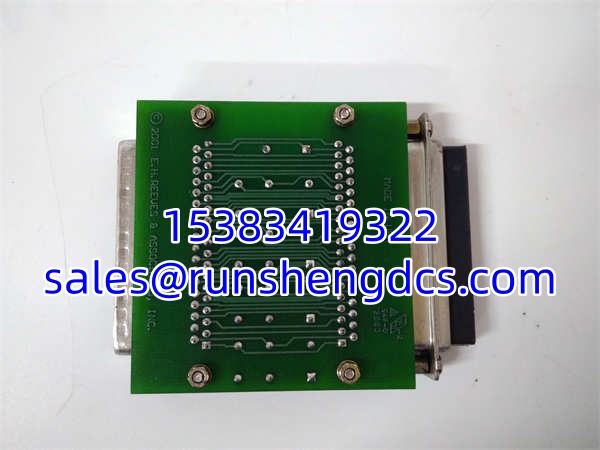
VMIC ASSY 12149
Application Scenarios
Legacy Power Plant Turbine Control: Older steam turbines rely on GE Fanuc VME racks where the ASSY 12149 handles critical I/O signal conditioning. When these boards fail, the turbine protection logic is compromised. Replacing with a verified ASSY 12149 restores protection without a full control system migration.
Chemical Batch Processing: Continuous process lines in chemical plants use these modules for interlock logic and field device interfacing. A failed ASSY 12149 halts production. Sourcing a tested replacement minimizes downtime compared to a 6-month OEM lead time.
Water Treatment SCADA Nodes: Municipal water systems often run 20+ year old VME-based DCS networks. The ASSY 12149 acts as a remote terminal interface. Finding these boards is critical for maintaining regulatory compliance and uninterrupted utility service.
Automotive Assembly Line Retrofits: Older manufacturing cells use VMIC modules for conveyor tracking and robot interfacing. The ASSY 12149 keeps legacy automation running while the plant plans a phased upgrade to modern PLCs.
Case Study — Intermittent I/O Fault: A refinery in Texas was getting random “Channel Fault” alarms on their GE Fanuc VME system. They replaced the ASSY 12149 twice. Both times, the fault returned after 48 hours. Root cause: the backplane slot itself had a cracked solder joint on the 5VDC rail. The board was fine; the rack was failing under thermal load. Repaired the backplane. Lesson: always check the rack before blaming the card.
FAQ
- What does “ASSY 12149” mean?
“ASSY” stands for Assembly. 12149 is the base part number for the VMIVME-2510B module family. The revision level (if present) matters in legacy systems because component layouts and firmware maps change between revisions. Always match the exact alphanumeric string. - Is the ASSY 12149 compatible with modern GE PLCs?
No. The ASSY 12149 is a legacy VMIC/GE Fanuc VME module. It uses proprietary VMEbus signaling that is not compatible with modern PACSystems or RX3i platforms. It is strictly for maintaining existing legacy VME racks. - Can I repair a faulty ASSY 12149 in-house?
Technically yes, but it requires vintage schematics and specialized test equipment. Most maintenance teams lack the component-level repair capability for 20-year-old VME boards. Sourcing a pre-tested replacement is usually more cost-effective than paying an engineer to diagnose a failing capacitor. - How do I verify an ASSY 12149 is genuine?
Check the silkscreen for the VMIC or GE Fanuc logo, the exact 12149 designation, and a date code. Verify the PCB color and component layout match known-good units. Counterfeit legacy boards exist — they often use incorrect revision suffixes or reprinted labels. Buy from a supplier with a documented VMEbus testing SOP. - What is the typical lead time for this module?
Since the ASSY 12149 is obsolete, lead times depend entirely on surplus inventory. Reputable suppliers with tested stock can ship within days. OEM lead times are effectively infinite. Plan your spare parts strategy accordingly. - Does the ASSY 12149 support hot-swapping?
Most legacy VMIC VME modules do NOT support hot-swapping. Removing the ASSY 12149 while the rack is powered can cause backplane voltage spikes or data corruption. Always schedule a controlled shutdown for replacement. Verify with your specific system manual. - Can I substitute a different VMIC board?
Only if the OEM cross-reference documentation explicitly allows it. VMIC had dozens of similar-looking VME boards with different functions. Substituting an ASSY 12149 with an unverified equivalent risks backplane damage. Stick to the exact part number unless you have written OEM approval.