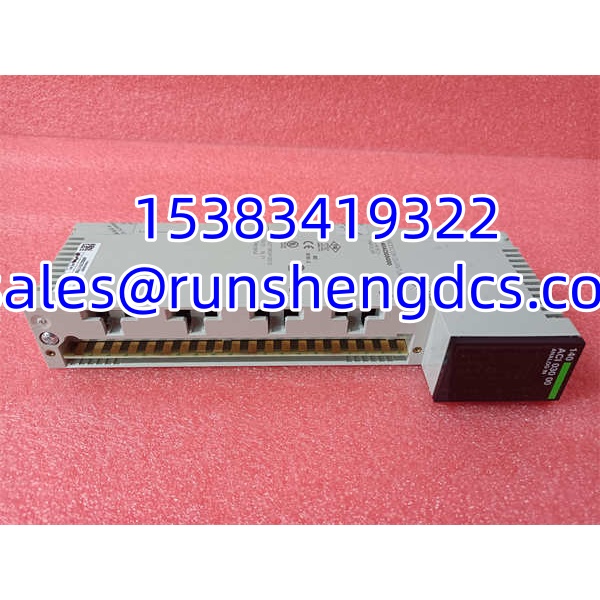

Description
Key Technical Specifications
| Parameter | Specification |
|---|---|
| Manufacturer | Schneider Electric |
| Part Number | 140ACI03000 |
| Product Type | Analog Input Module, 8-channel, unipolar |
| Platform | Modicon Quantum |
| Input Type | Differential |
| Signal Ranges | 4–20 mA or 1–5 V DC, per channel |
| Resolution | 12 bits |
| Input Impedance | 250 Ω ±0.03% (current); >20 MΩ (voltage) |
| Absolute Max Input | 25 mA / 50 V DC |
| Accuracy | ±0.05% FS typical; ±0.1% FS maximum |
| Linearity | ±0.04% |
| Temperature Drift | ≤ ±0.005% FS/°C max |
| Update Time | 5 ms for all channels |
| Filter | Single-pole low-pass, −3 dB at 15 Hz ±20% |
| Isolation | Channel-to-bus: 1000 V DC (3000 V DC for 60 s); channel-to-channel: 30 V DC |
| Bus Current | 240 mA |
| Power Dissipation | 2 W |
| Diagnostics | Broken-wire detection (4–20 mA); undervoltage detection (1–5 V) |
| LEDs | 1 green Active, 1 red External Fault, 8 green Channel OK, 8 red Channel Fault |
| Addressing | 9 input words |
| Operating Temperature | 0–60 °C |
| Storage Temperature | −40–85 °C |
| Humidity | 95% RH, non-condensing |
| Approvals | UL 508, CSA C22.2 No. 142, FM Class I Div. 2, CE |
Product Introduction
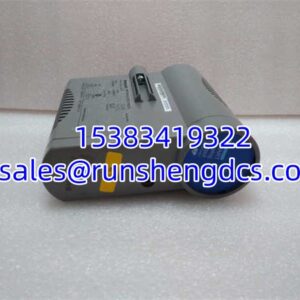
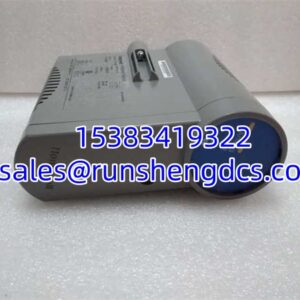
The 140ACI03000 is one of the most common analog input cards on a Modicon Quantum rack. It handles eight unipolar process signals — typically pressure, level, flow, or temperature transmitters — and maps them into nine contiguous input words. Each channel can be configured for 4–20 mA or 1–5 V DC, which makes it useful in brownfield plants where old 1–5 V loops still coexist with modern 4–20 mA instrumentation.
What matters most in the field is not the part number but the wiring and addressing. It is differential, so floating transmitters and grounded shields must be handled carefully. The module does not need external power; it draws 240 mA from the Quantum backplane. Its 5 ms update time and 15 Hz low-pass filter make it suitable for typical process loops, but not for high-speed vibration or motion signals.
QA/QC Transparency SOP
- Intake & Origin Verification — Confirm 140ACI03000 marking, check connector pins, terminal block latches, and PCB for corrosion or burnt components.
- Live Functional Testing — Install in a known-good Quantum rack; verify Active LED and backplane communication.
- Electrical Parameter Tests — Inject 4 mA, 12 mA, 20 mA and 1 V, 3 V, 5 V signals; compare raw counts against expected 12-bit values. Check input impedance in current mode (~250 Ω).
- Diagnostic Tests — Open a 4–20 mA loop to confirm broken-wire fault; drop voltage below 1 V to confirm undervoltage fault.
- Final QC & Packaging — Record channel accuracy, LED status, and fault behavior; pack in anti-static bag with desiccant and test report.
Field Engineer Gotchas
- Nine input words, not eight: The module occupies 9 contiguous input words. Eight are channel values; the ninth is status/diagnostic data. Mis-mapping this word causes shifted readings across downstream tags.
- Differential wiring errors: Because inputs are differential, tying the negative terminal to ground incorrectly can create ground loops or read offsets. Follow the transmitter wiring diagram exactly.
- Broken-wire only in 4–20 mA mode: Undervoltage detection applies to 1–5 V. If a 4–20 mA loop is wired as voltage, the broken-wire alarm will not behave as expected.
- Not a high-speed module: The 15 Hz filter and 5 ms update make it a process card, not a motion or vibration card. Do not use it for fast transient capture.
- Channel-to-channel isolation is low: Only 30 V DC between channels. Do not assume full galvanic isolation per channel; use isolated transmitters where needed.
- Coated variant exists: 140ACI03000C is the conformal-coated version for harsher environments. If the original was -C, replace like-for-like in corrosive or high-humidity cabinets.
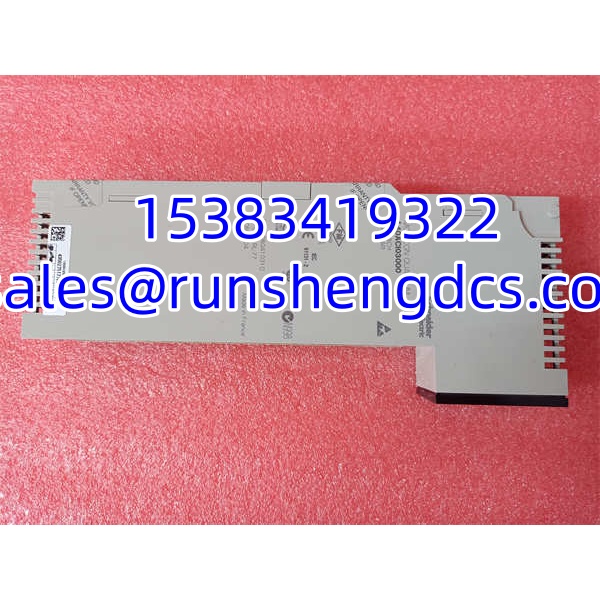
Schneider 140ACI03000
Application Scenarios
- Process plant analog loops: Flow, pressure, level, and temperature transmitters feeding a Quantum PLC.
- Water and wastewater systems: 4–20 mA instrumentation for pump stations, clarifiers, and chemical dosing.
- Power plant auxiliaries: Cooling water, lube oil pressure, and tank-level monitoring.
- Brownfield migration: Mixed 1–5 V and 4–20 mA signals on the same module during instrumentation upgrades.
FAQ
Is 140ACI03000 discontinued?
No. It remains listed on Schneider Electric’s official product site as a Modicon Quantum analog input module.
Can it accept 0–20 mA or 0–10 V?
No. The 140ACI03000 is unipolar with offset: 4–20 mA or 1–5 V DC. For bipolar or wider ranges, a different Quantum analog module is required.
How many registers does it consume?
Nine input words in the Quantum I/O map.
Does it support HART?
Some distributor documentation mentions HART compatibility, but the module is not a dedicated HART interface. Treat HART support as unconfirmed unless verified against the current Schneider manual.
What software configures it?
Unity Pro, Concept, or ProWORX 32, depending on the Quantum CPU and project legacy.
What replaces it if needed?
Stay within the Modicon Quantum analog input family; do not substitute M340 or X80 modules without redesigning the rack, addressing, and wiring.