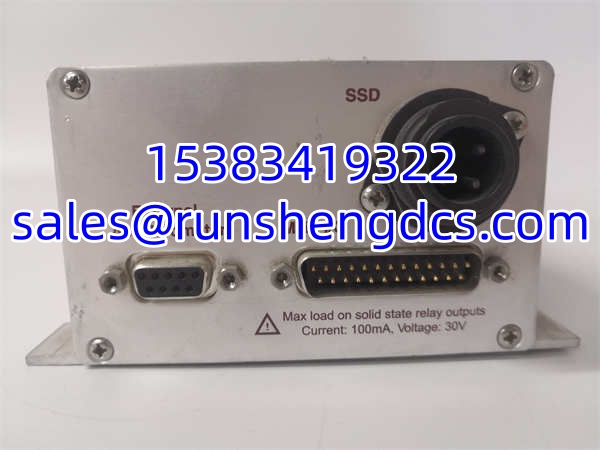

Description
Key Technical Specifications
- Sensor Configuration: 3 internal MEMS accelerometers measuring X, Y, and Z axes simultaneously, each with independent conditioning channels
- External Sensor Support: Accepts 1, 2, or 3 directional external sensors (CHB 1102/17, CHB 1101) for multi-point monitoring
- Analog Outputs: Up to 4 independent 4-20mA outputs (AC or DC selectable per output); AC from sensor/filter output, DC from detector output
- Relay Outputs: 4 independent alarm relays (software-configurable make/break); 1 system fault relay
- Relay Ratings: Max load current 100mA; max load voltage 30V; open-state resistance <4Ω; closed-state leakage ≤1μA
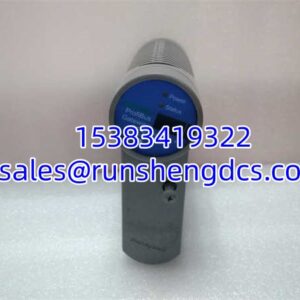
- Communication Interfaces: RS-232, RS-485, CANopen, Profibus, DeviceNet, Ethernet/TCP (fieldbus options)
- Power Supply: 18-30V DC (pins 10/11); power/digital GND on pins 12/13
- Certifications: Germanischer Lloyd GL 2010 (Pl = d safety component); ISO 4866 (building vibration monitoring)
- Filter Technology: Bandpass filters optimized from wind turbine application experience; 2-3 conditioning channels can be assigned to one sensor/direction if needed
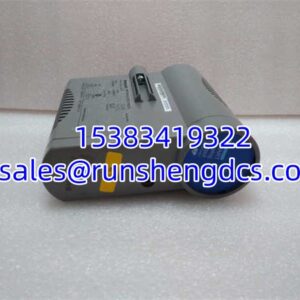
- Interface Connector: 25-pin D-sub male connector (front panel)
- Functional Inputs: Alarm inhibit/reset (pin 22); sensor reset (pin 23); self-test (pin 24); SSD reset (pin 25)
- Applications: Wind turbine tower/blade vibration; gearbox torsional vibration; nacelle differential monitoring; bridge/building/chimney structural monitoring
Product Introduction
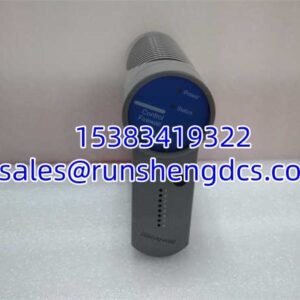
Wind turbine tower vibration doesn’t care about your maintenance schedule. The PCH 1026 sits permanently mounted on the structure — a full-digital monitor with three internal MEMS accelerometers measuring X, Y, and Z axes simultaneously, each channel independently conditioned through bandpass filters tuned specifically for low-frequency structural vibration. This isn’t a general-purpose vibration analyzer; it’s purpose-built for ultra-low-frequency applications where traditional piezo accelerometers fall short: tower sway, blade oscillation, gearbox torsional vibration, and seismic-level structural movement in bridges and buildings.
What separates the 1026 from generic vibration monitors: GL 2010 certification as a Pl = d safety component and ISO 4866 certification for building vibration monitoring — paperwork that matters when you’re signing off on a wind farm’s structural health monitoring system. The four independent 4-20mA outputs can be software-assigned to any of the 12 available bandpass-filtered channels, and the four alarm relays are fully configurable for make/break operation. External sensor inputs (CHB 1102/17, CHB 1101) let you extend monitoring to multiple pickup points — nacelle differential, gearbox output shaft, tower base — all processed by the same unit. The MK2 revision updated the internal architecture, but the 25-pin D-sub interface and pin assignments remained consistent for backward compatibility.
Troubleshooting Quick Reference
| Fault | Likely Cause | Probability | Quick Check | Fix |
|---|---|---|---|---|
| No 4-20mA output signal | Power supply out of range or pin wiring error | ~70% | Measure voltage between pins 10/11 and pins 12/13; should be 18-30V DC | Verify power supply; check pin 10/11 are internally disconnected (redundant feed); confirm pins 12/13 are internally shorted to GND |
| Relay won’t trip on alarm condition | Relay configured for wrong make/break mode or SSD holding relay #4 | ~65% | Check software configuration for relay action (make vs. break); verify SSD status | Reconfigure relay in software; if SSD is active, relay #4 is reserved — ground pin 25 to reset SSD |
| Alarm won’t clear | Alarm inhibit active or reset not triggered | ~60% | Check pin 22 status; momentary short to pin 12/13 clears alarms, continuous short inhibits | Momentarily short pin 22 to pin 12/13 for reset; remove continuous short if inhibit is unintentionally active |
| External sensor not reading | Wrong sensor type or conditioning channel not assigned | ~55% | Verify sensor model (CHB 1102/17 or CHB 1101); check channel assignment in software | Assign 2-3 conditioning channels to the external sensor direction if multiple frequencies present in same axis |
| Self-test fails | Internal sensor fault or firmware issue | ~50% | Short pin 24 to pin 12/13 to trigger self-test; observe response | If self-test fails consistently, internal MEMS accelerometer may be damaged — contact PCH Engineering for RMA |
| Communication interface not responding | Wrong fieldbus protocol configured or RS-232/485 wiring reversed | ~45% | Verify configured protocol matches physical connection (RS-232 vs. RS-485 vs. fieldbus) | Check wiring polarity for RS-485 (A/B); verify baud rate and protocol settings in configuration software |
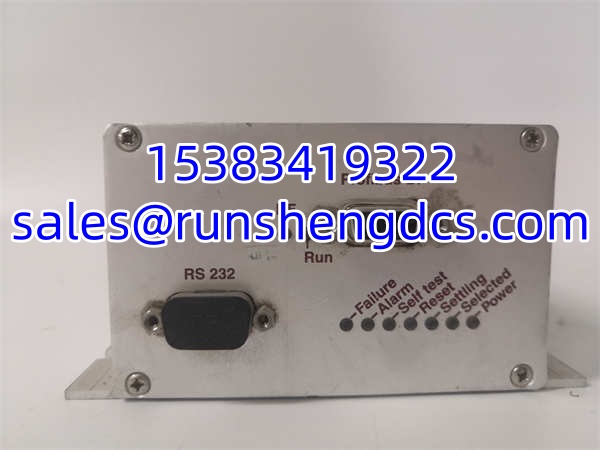
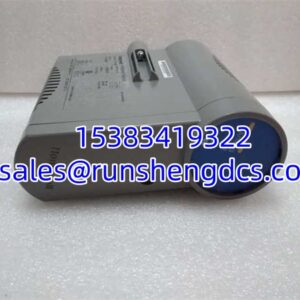
PCH1026
Application Scenarios & Pain Points
Wind turbine tower structural monitoring:
Permanently mounted on the tower structure, the PCH 1026 monitors low-frequency tower sway and blade oscillation across all three axes. GL 2010 certification is the key selling point here — turbine OEMs and certification bodies require Pl = d safety-rated components for structural protection systems. Pain point: the internal MEMS sensors have a finite lifespan. When one drifts out of calibration, the entire unit needs recalibration or replacement, and field recalibration isn’t a technician-level task.
Bridge and building seismic monitoring:
ISO 4866 certification makes the 1026 suitable for permanent structural health monitoring of bridges, high-rise buildings, and chimneys. The ultra-low-frequency response captures seismic-level movement that accelerometers tuned for machinery vibration would miss entirely. Pain point: communication interface selection matters. If you spec’d RS-485 but the integrator wired for Profibus, you’re re-terminating cable runs in a structure that may already be commissioned.
Gearbox torsional vibration monitoring:
External sensors (CHB 1102/17) connected to the gearbox output shaft capture torsional vibration that internal tower-mounted sensors can’t detect. The 1026’s ability to assign multiple conditioning channels to a single sensor direction handles the complex frequency content of gearbox vibration. Pain point: the 25-pin D-sub connector in a wind turbine nacelle environment is a potential failure point — vibration and thermal cycling can loosen connections over time. Regular torque checks on the connector screws are a maintenance item that often gets overlooked.