
Description
Key Technical Specifications
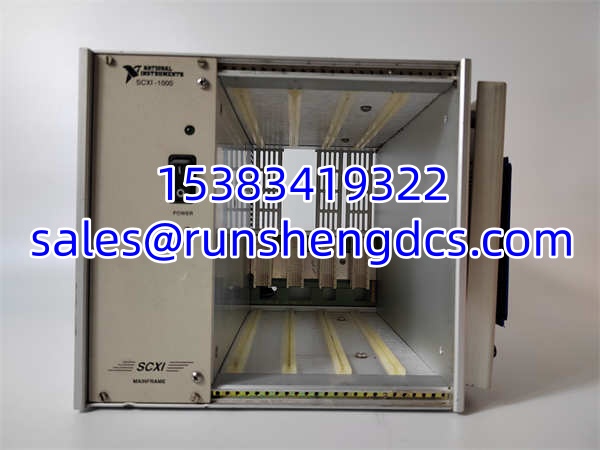
- Slot Capacity: 4 SCXI modules per chassis
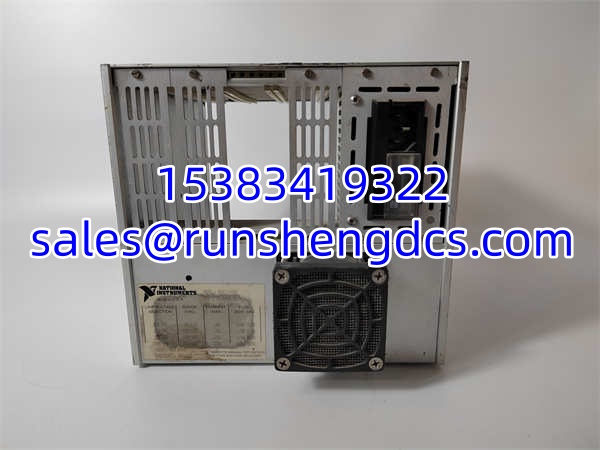
- Power Input: 100, 120, 220, or 240V AC ±10%, 47–63 Hz (selectable via voltage tumbler on rear panel)
- Max AC Current Draw: 0.6A at 100/120V; 0.25A at 220/240V
- Fuse Rating: 5 × 20 mm, current rating matched to operating voltage
- Internal Power Rails: +5V, +15V, -15V supplied to modules (170 mA / 170 mA / 50 mA typical draw per rail)
- Data Throughput: Up to 333 kS/s aggregate across daisy-chained chassis
- Expandability: Daisy-chain up to 8 chassis to a single multifunction DAQ device
- Chassis Addressing: 6-bit DIP switch (factory default address 0); unique address required per chassis in multi-chassis setups
- Operating Temperature: 0°C to 55°C (derated above 55°C; some field reports cite -20°C to 70°C in ruggedized deployments)
- Physical Dimensions: 8.5″ H × 17.3″ W × 19″ D; ~14.3 lbs (6U 19″ rack-mount compatible)
- Interface to DAQ: SCSI-128 cable assembly (rear-panel connection to NI DAQ device or SCXI-USB module)
- Isolation: Up to 250V RMS channel-to-earth (depends on installed SCXI module)
Product Introduction
You’re running a legacy test stand — maybe an engine dyno cell or a chemical reactor monitoring loop — and the SCXI-1000 is the box keeping your thermocouples, strain gauges, and 4-20mA loops from drowning in noise. This isn’t a DAQ card. It’s a powered, shielded enclosure that sits between your sensors and your DAQ device, giving fragile millivolt-level signals the protection they need before digitization. Four slots. AC power. That’s it. But it does that one job well.
The real value is in the low-noise environment and the daisy-chain architecture. You can string up to eight SCXI-1000 chassis off a single DAQ device, giving you 32 module slots without buying eight separate DAQ cards. For a water treatment plant monitoring turbidity across 120 analog channels, that’s a massive cost saver. The chassis handles all the timing, triggering, and backplane routing — your DAQ card just sees clean, conditioned signals. NI killed the SCXI line in 2018, so you’re buying surplus. But these things were overbuilt. I’ve seen them running in Arctic pipeline monitoring setups where standard benchtop gear froze solid.
Troubleshooting Quick Reference
| Fault | Cause | Probability | Quick Check | Fix |
|---|---|---|---|---|
| Chassis not recognized in NI MAX | Driver version too new (DAQmx 19.1+ dropped SCXI support) | 70% | Check installed DAQmx version; SCXI requires ≤19.0 | Install DAQmx 19.0 or earlier; verify chassis appears in MAX device tree |
| Power LED off | Wrong voltage tumbler setting or blown fuse | 50% | Check rear-panel voltage tumbler matches outlet voltage; inspect 5×20mm fuse | Set correct voltage (100/120/220/240V); replace fuse with same rating |
| “Slot is empty” error in MAX | Chassis address mismatch or module not seated | 45% | Verify front-panel DIP switch address matches MAX configuration; reseat modules | Match hardware address to software config; ensure modules click into backplane |
| Noisy/fluctuating readings | Ground loop or floating thermocouple without bias path | 40% | Check if thermocouple negative lead is grounded through a resistor; verify shield grounding | Ground floating thermocouple negative lead via resistor per terminal block manual |
| Channels float to positive rail | Signal reference mismatch between DAQ and SCXI module | 35% | Compare DAQ device signal reference (NRSE/RSE/DIFF) to SCXI module jumper setting | Match DAQ and module signal reference; adjust module jumpers if needed |
| Daisy-chain communication loss | SCSI-128 cable fault or duplicate chassis addresses | 30% | Inspect SCSI cable connections; verify each chassis has unique address | Replace cable; assign unique addresses via DIP switches |
NI SCXI-1000
Application Scenarios & Pain Points
Automotive Dyno Cell Testing: EMI from ignition systems and VFDs can corrupt millivolt-level strain gauge signals. The SCXI-1000’s shielded metal chassis and module-level isolation (up to 250V RMS) keep noise out. Pain point: the SCSI-128 cable between the chassis and DAQ card is a known failure point — a loose connector here looks like a module fault, wasting hours of diagnostics.
Chemical Plant Reactor Monitoring: 4-20mA loops running through 200 feet of conduit pick up induced voltage. The SCXI-1000 houses isolation modules that break ground loops before signals reach the DAQ. Pain point: NI-DAQmx driver support ended at version 19.0. If your IT department forces a Windows 11 upgrade with DAQmx 20+, the chassis becomes invisible to MAX. You’re stuck on Windows 10 / LabVIEW 2019 or earlier.
Wind Turbine Pitch Control Calibration: Cold-weather reliability is non-negotiable. The SCXI-1000’s ruggedized design handles -20°C startup (though NI’s official spec is 0°C). Pain point: sourcing replacement SCXI modules is getting harder. NI discontinued the entire line in 2018, and surplus inventory is shrinking. A failed SCXI-1102 module can take weeks to source.