Description
Key Technical Specifications
| Parameter | Specification |
|---|---|
| Manufacturer | Motorola (later Emerson/GE embedded computing) |
| Model | MVME162-213 |
| Form Factor | 6U VMEbus single-board computer |
| Processor | MC68040-family 32-bit CISC (25/32 MHz variants; -213 may use MC68LC040 or MC68040) |
| FPU/MMU | Integrated in MC68040; MC68LC040 has no FPU |
| DRAM | Typically 1/4/8 MB parity-protected; verify installed size |
| SRAM | 512 KB battery-backed SRAM |
| Non-volatile Memory | NVRAM + battery-backed TOD clock; Flash/EPROM variant-dependent |
| VMEbus Interface | A16/A24/A32; D8/D16/D32; optional A32/D64; system-controller capable |
| Serial Ports | 2× RS-232/EIA-232 (one typically console) |
| Ethernet | Optional 10/100Base-T with DMA (variant-dependent) |
| SCSI | Optional SCSI-2 with DMA (variant-dependent) |
| Expansion | IndustryPack® ports (number depends on board revision) |
| Timers/Watchdog | Multiple 32-bit timers with watchdog |
| Operating Temp | Typically 0 to 55/60 °C with forced air; wide-temp variants exist |
| OS Support | VxWorks, LynxOS, real-time Linux variants |
Product Introduction
The Motorola MVME162-213 is a legacy 6U VMEbus single-board computer built around the MC68040-family processor. In older DCS, SCADA, test systems, and aerospace racks, this board is not just a CPU — it is the system controller, boot loader host, and often the last remaining link keeping a 20-year-old control loop alive.
The MVME162 family was designed for deterministic real-time operation, rich VMEbus integration, and long-life industrial deployment. The -213 variant sits within a dense family tree: some boards carry MC68040 with FPU, others MC68LC040 without FPU; some include Ethernet and SCSI, others do not. That is why the full model code, board revision, and installed options matter more than the generic “MVME162” label.
This is not a PLC, not a DCS I/O card, and not a modern x86 industrial PC. It is a VME embedded controller. Replacement requires matching processor type, memory map, boot firmware, IndustryPack configuration, and VME system-controller settings.
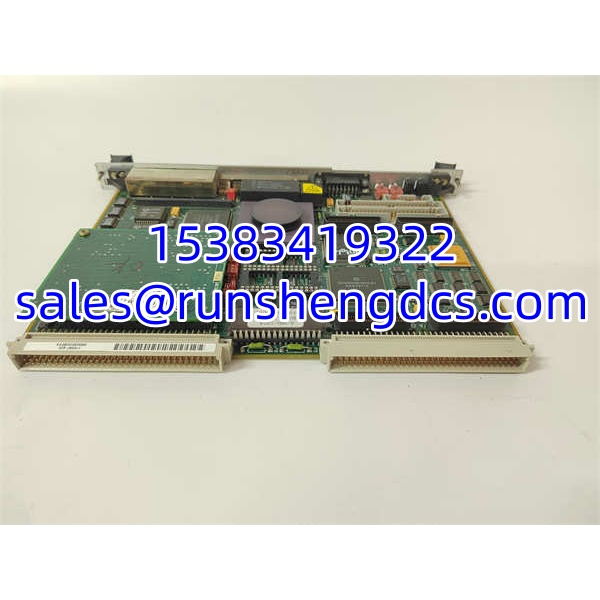
GE MVME162-213
QA/QC Transparency SOP
- Label & Revision Verification — Photograph the full model code MVME162-213, board revision, serial number, and any option stickers. Confirm whether the installed CPU is MC68040 or MC68LC040.
- Battery & NVRAM Check — Measure the backup battery voltage. Low battery can corrupt NVRAM, TOD clock, and stored boot parameters. Replace before full functional test if voltage is marginal.
- Power-Up & Diagnostics — Install in a compatible 6U VME chassis. Verify RUN/FAIL LEDs, console output, and monitor/firmware boot. Check for DRAM parity errors or VME timeout faults.
- Memory & I/O Validation — Run onboard diagnostics to verify DRAM, SRAM, Flash/EPROM, serial ports, Ethernet, SCSI, and IndustryPack slots. Confirm Ethernet MAC presence if the board is expected to support LAN.
- VME System-Controller Test — If used as the VME system controller, verify interrupt handling, DMA transfers, and slot arbitration. Confirm compatibility with adjacent VME modules.
- Final Documentation — Record CPU type, DRAM size, firmware revision, battery status, Ethernet/SCSI presence, and test results. Ship with battery disconnected or protected if required.
Field Engineer Gotchas
- GE vs Motorola vs Emerson Labeling — Many surplus listings call this “GE MVME162-213,” but the original design is Motorola. Emerson/GE later held parts of the embedded computing portfolio. Match the board, not just the brand label.
- — Processor type, DRAM size, Ethernet, SCSI, and IndustryPack options vary. Swapping a -213 with another variant can break boot, memory map, or I/O configuration.
- MC68040 vs MC68LC040 — If the application uses floating-point code, an MC68LC040 board may fail or run significantly slower. Verify the installed CPU before substitution.
- Battery-Backed SRAM Failure — A dead backup battery can erase NVRAM parameters, TOD clock settings, or boot configuration. Always check battery health during intake.
- Ethernet/SCSI May Be Missing — Some boards list Ethernet or SCSI as optional. Do not assume a -213 includes both. Confirm physically and via firmware diagnostics.
- VME Chassis Compatibility — The board requires a proper 6U VME backplane, correct keying, and adequate forced-air cooling. Insufficient airflow can cause intermittent faults under load.
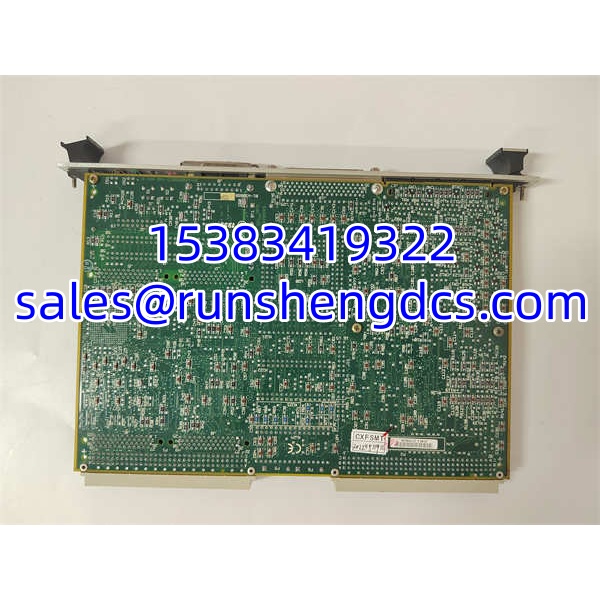
GE MVME162-213
Application Scenarios
- Legacy DCS controller — Serves as the VME system controller in older process control racks, running VxWorks or a proprietary real-time OS for sequence control and communications.
- Aerospace/defense test systems — Provides deterministic VMEbus control for avionics test benches, radar signal processing interfaces, or hardware-in-the-loop simulation.
- SCADA communications node — Handles serial, Ethernet, and VME I/O aggregation in substations or pipeline control systems where replacement with modern hardware is not yet feasible.
FAQ
Q: Is MVME162-213 the same as MVME162-212 or MVME162-216?
A: No. The suffix defines processor, memory, and I/O options. Do not substitute without verifying CPU type, DRAM size, and installed peripherals.
Q: Does it include Ethernet and SCSI?
A: Possibly, but not guaranteed. Ethernet and SCSI were optional on many variants. Confirm via the board label and firmware diagnostics.
Q: Can it run Linux?
A: Some boards support real-time Linux or VxWorks. OS support depends on CPU type, memory, and firmware. Verify compatibility before deployment.
Q: Is this still available new?
A: It is primarily available as surplus or refurbished stock. New-old-stock may exist through specialized distributors, but lead times and authenticity should be verified.
Q: Can I replace it with a modern VME CPU?
A: Only after confirming VME system-controller role, memory map, boot firmware, IndustryPack dependencies, and application software. A direct drop-in replacement is rarely risk-free.