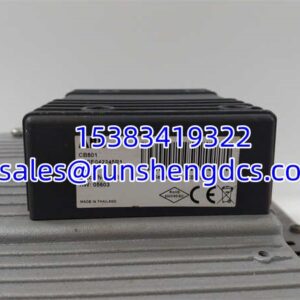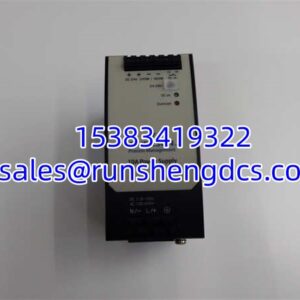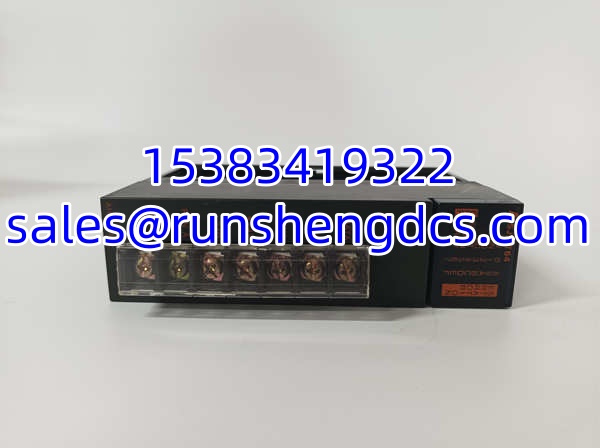

Description
Key Technical Specifications
- Product Model: MITSUBISHI A1SJ51T64
- Manufacturer: MITSUBISHI ELECTRIC
- Product Type: I/O Link Master Station Module
- Supported Protocol: I/O Link
- System Compatibility: MELSEC-A Series PLCs
- Primary Function: Centralized I/O device control and monitoring
- Data Transfer: High-speed communication algorithms
- Hardware Architecture: Advanced microprocessor with dedicated communication interfaces
- Environment Rating: Industrial-grade rugged design for harsh conditions
- Integration: Standard interfaces for Modbus, Profibus, and DeviceNet
Product Introduction
Integrating legacy I/O devices into an aging MELSEC-A PLC system often creates a bottleneck when proprietary network modules fail. The MITSUBISHI A1SJ51T64 was engineered specifically to solve this integration challenge. Operating as an I/O Link master station, this module acts as the critical bridge that allows the central PLC to poll, monitor, and command distributed field devices without requiring a complete system overhaul.
Engineers still source the MITSUBISHI A1SJ51T64 because it handles high-speed data transfer reliably in environments where newer Ethernet-based modules might struggle with legacy hardware. Built with advanced microprocessors, it supports multiple industrial standards (including Modbus and Profibus) to ensure broad compatibility. Bottom line — it is a dedicated, industrial-grade solution for keeping older Mitsubishi automation systems operational and fully integrated.
QA/QC Transparency SOP
- Intake & Origin Verification: We verify the MITSUBISHI A1SJ51T64 against original MELSEC-A manufacturing records to confirm the exact part number and hardware revision, ensuring no cross-contamination with incompatible A-series network boards.
- Live Functional Testing: Each module is installed on a genuine MELSEC-A test rack. We validate the I/O Link protocol handshake and confirm high-speed data polling across multiple channels without packet loss.
- Electrical Parameter Tests: Using calibrated multimeters, we verify power draw and check continuity across all I/O communication pins. Insulation resistance is tested to ensure no internal degradation from years of industrial heat.
- Firmware/Config Verification: We read out the onboard firmware version and verify it matches the expected revision for the A1SJ51T64. Configuration parameters are cleared to factory defaults to prevent legacy network settings from causing integration failures.
- Final QC & Anti-Static Packaging: After passing all tests, the MITSUBISHI A1SJ51T64 is sealed in anti-static shielding with desiccant packs. A QC sticker with test date and technician ID is applied before shipping.
Field Engineer Gotchas
- Protocol Mismatch on I/O Link: The strictly requires devices configured for the I/O Link protocol. I’ve seen technicians waste hours trying to get standard CC-Link or AS-i devices to talk to this master station. Verify your field device protocol before wiring.
- Firmware Revision Conflicts: This module is highly sensitive to the base PLC CPU firmware. If you drop a newer revision into an older A-series chassis, the CPU may throw a network initialization error. Always check the CPU manual for supported module revisions.
- Termination Resistor Omission: High-speed I/O Link networks require proper termination. I’ve seen intermittent communication drops on this module simply because the tech forgot to install the terminating resistor at the end of the physical bus.
- ESD Damage on Comm Pins: The communication interfaces on this board are highly sensitive to electrostatic discharge. Always wear a grounding strap when handling the . I’ve seen modules fail immediately upon power-up because someone touched the pins in a dry control room.
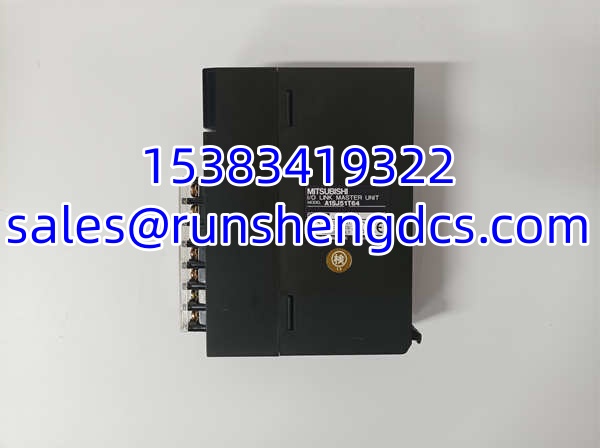
MITSUBISHI A1SJ51T64
Application Scenarios
- Legacy Manufacturing Lines: Maintaining continuous operation on 20-year-old automotive assembly lines where replacing the entire MELSEC-A PLC infrastructure is cost-prohibitive.
- Process Control Integration: Bridging distributed temperature and pressure sensors to a central Mitsubishi PLC in chemical processing plants using the I/O Link protocol.
- Packaging Machine Retrofits: Expanding I/O capacity on existing packaging equipment without upgrading the main controller, utilizing the module’s multi-channel support.
FAQ
No. The is strictly designed for the MELSEC-A series architecture. Q-series PLCs require different network modules (like the QJ51 series). The backplane connectors and communication protocols are incompatible.
Is this module hot-swappable?
No. Never attempt to hot-swap the . Removing it while powered will disrupt the I/O Link bus and can cause the PLC CPU to enter a fault state. Always schedule a maintenance window for replacement.
What programming software do I need to configure this?
You will need GX Developer (typically version 8.x or later) to configure the I/O Link parameters and assign network addresses. Ensure your software package includes the MELSEC-A network module support files.
Does this support standard Ethernet TCP/IP?
No, this is an I/O Link master station, not an Ethernet module. While it may support Modbus or Profibus for higher-level communication, it does not natively act as an Ethernet TCP/IP server. Verify your network topology requirements before purchasing.
How do I know if my I/O Link bus is properly terminated?
Check the physical end of the bus. The requires a terminating resistor at the final node. If you’re experiencing intermittent data errors, measure the bus resistance; it should read approximately 110 ohms between the data lines when properly terminated.
This module is officially discontinued. Mitsubishi no longer manufactures the . Your only options are refurbished surplus or migrating to a newer Q-series or iQ-R platform. Plan for eventual obsolescence.
Will this work with third-party I/O Link devices?
Yes, as long as the third-party devices are certified I/O Link compliant and you have the correct parameter files loaded in GX Developer. The acts as a standard master station, but always verify device compatibility in the I/O Link consortium database.