
Description
Key Technical Specifications
| Parameter | Value / Notes |
|---|---|
| Product Model | 60WKS-CE240/22PB |
| Brand | Kollmorgen (Seidel) |
| Product Family | 60WKS analog servo amplifier series |
| Module Type | Brushless servo drive / analog servo amplifier |
| Power Rating | 60W |
| Input Voltage | 240V class |
| Control Modes | Position, speed, torque |
| Dynamic Response | ≤250 µs (verify with OEM data) |
| Max Speed | 6000 RPM (motor-dependent) |
| Max Torque | 0.3 Nm (motor-dependent) |
| Operating Temp | 0°C to 60°C (verify with nameplate) |
| Storage Temp | -40°C to 85°C |
| Humidity | 5% to 95% non-condensing |
| Dimensions | 400 × 180 × 100 mm (verify — see note below) |
| Weight | 12 kg (verify — see note below) |
Product Introduction
Analog servo amplifiers from the Kollmorgen Seidel 60WKS era do not fail with a dramatic explosion. They fail quietly — a motor that hunts at low speed, a position loop that drifts under load, or a drive that powers up but refuses to enable because a feedback signal is out of range. The 60WKS-CE240/22PB is one of those workhorse amplifier modules: a 60W analog servo drive built to run brushless synchronous servo motors in position, speed, or torque mode.
Where it earns its keep is in machines that were designed around analog servo loops — CNC retrofits, indexing tables, packaging feed axes, and older robotic cells. Dynamic response in the ≤250 µs range is adequate for most point-to-point and contouring tasks at this power class. The 240V input and 60W output put it squarely in the light-duty servo category. Bottom line — if your machine was built around a 60WKS-CE240 family drive, this unit can drop in, provided the motor, feedback device, and “22PB” configuration all line up.
QA/QC Transparency SOP
- Intake & Origin Verification
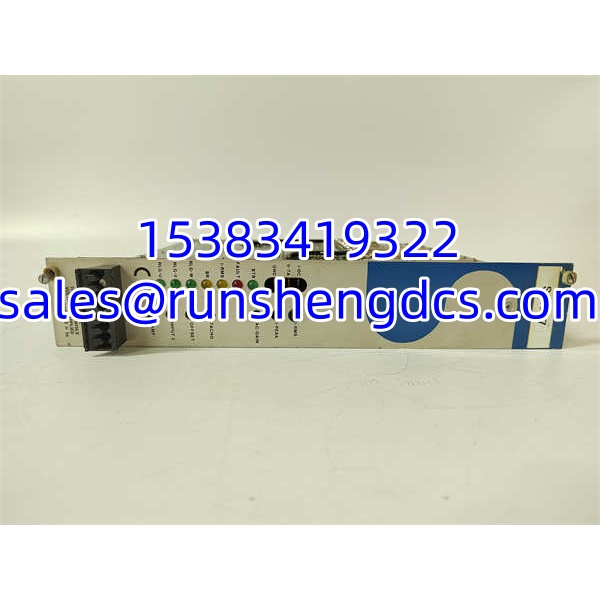
Confirm the full part number: 60WKS-CE240/22PB. Record the nameplate data — serial number, date code, revision markings, and any “PB” or “22” suffix details. Inspect the PCB for burnt traces, cracked solder joints, corroded connectors, or signs of overheating near the power stage. - Live Functional Testing
Power the drive from a current-limited bench supply at the rated 240V class input. Verify power-up sequence, enable logic, and fault-free status LEDs. Connect a known-good compatible servo motor and run a low-speed rotation test in speed mode, then verify position and torque modes if the test setup allows. - Electrical Parameter Tests
Measure input current draw at idle and under light load. Check continuity on motor output phases (U, V, W) and feedback connector pins. Verify DC bus voltage is within expected range. Do not megger motor output terminals — the power stage transistors will not appreciate it. - Configuration Verification
Read any DIP switch settings, potentiometer positions, or jumper configurations. Record them. Compare against the existing system’s settings. A physically identical 60WKS drive with different internal configuration will not behave the same in the machine. - Final QC & Anti-Static Packaging
Clean the board, cap exposed connectors, and pack in ESD-safe material. Include a test note with power-on status, motor rotation result, fault codes (if any), DIP/jumper settings, and photos of the nameplate and PCB.
Field Engineer Gotchas
Feedback device mismatch
Risk: The drive powers up, the motor phases look correct, but the axis hunts or faults immediately on enable.
Fix: Confirm the feedback type (resolver, incremental encoder, absolute encoder) and wiring pinout match what the 22PB configuration expects.
War story: Swapped a 60WKS drive onto a machine, everything looked right on paper — until the resolver wiring was 180° out on the feedback connector. The drive saw position going the wrong direction and tripped a following-error fault within seconds.
“22PB” suffix is not optional
Risk: Ordering a generic 60WKS-CE240 and assuming it will work.
Fix: The “22PB” likely encodes hardware options, feedback interface, or control signal configuration. Match the full part number.
Bottom line — in the analog servo world, the suffix is the difference between a drop-in replacement and a paperweight.
Potentiometer drift on old boards
Risk: Current limit or gain pots have drifted from their original settings after years of thermal cycling.
Fix: Record all pot positions before removal. If replacing, transfer settings and verify with a low-speed test before running production.
Power stage ESD and motor cable length
Risk: Long unshielded motor cables or improper grounding can cause voltage spikes that damage the output transistors.
Fix: Keep motor cables as short as practical, use shielded cables, and ensure the shield is grounded at the drive end. Use an ESD wrist strap during handling.
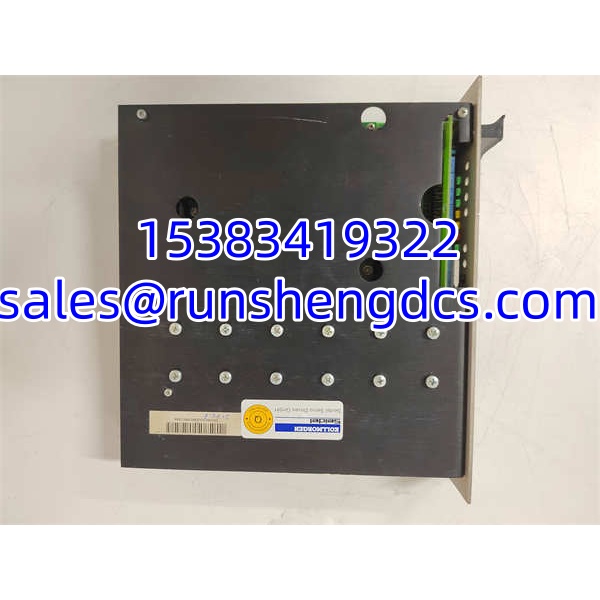
KOLLMORGEN 60WKS-CE240 22PB
Application Scenarios
- CNC retrofit axes
Small milling or turning machines using analog servo loops for X/Y/Z axis positioning, where the 60W power class matches the axis motor rating. - Packaging and labeling machines
Feed axes and cut-off mechanisms that need precise position control at moderate speeds — the ≤250 µs response handles typical indexing demands. - Robotic pick-and-place cells
Light-duty articulated or Cartesian robots where each axis uses a dedicated analog servo amplifier for position control. - Printing and converting equipment
Registration and tension-control axes that require torque-mode operation with stable low-speed performance. - Legacy machine tool maintenance
Keeping older machines running when the original servo amplifier is no longer available from the OEM, and a full servo system redesign is not justified.
Case study — anonymized
A packaging machine’s feed axis began tripping a following-error fault during high-speed indexing. The maintenance team replaced the servo motor first — no change. Then they swapped the encoder cable — still faulting. The third replacement was the 60WKS amplifier itself. The new drive worked, but only after the technician noticed the current-limit potentiometer on the old board had drifted to roughly 40% below its original setting, causing the drive to current-limit during acceleration. The old drive was not dead — it was just starving the motor. Lesson: on analog drives, always check the pots before condemning the board.
FAQ
Is 60WKS-CE240/22PB a servo drive or a power supply?
It is a servo amplifier (servo drive), not a standalone power supply. It takes a 240V class AC input and produces a controlled three-phase output to drive a brushless servo motor.
Not without checking. The “22PB” suffix likely defines feedback interface, control signal options, or hardware revision. A different suffix may have incompatible feedback wiring or gain settings.
What motor does this drive?
It is designed for brushless synchronous servo motors in the 60W power class. The exact motor must match in voltage, feedback type, and current rating. Check the motor nameplate and the drive’s current/torque limits.
Does it support position, speed, and torque control?
Yes — the 60WKS series supports position, speed, and torque control modes. The active mode is typically selected via control signal wiring or configuration settings.
How do I know if a surplus unit is safe to install?
Ask for nameplate photos, power-on test results, motor rotation test confirmation, and recorded DIP/pot settings. If the seller cannot provide those, treat it as unverified.
What is the operating temperature range?
One source lists 0°C to 60°C. Verify against the actual nameplate and installation manual for your specific unit, especially if the installation environment runs hot or is in an enclosed cabinet.
Is this drive still manufactured?
Treat it as legacy/discontinued. Kollmorgen’s current product lines have moved to newer servo platforms. Surplus and refurbished stock is the primary availability channel for 60WKS-series units. Confirm availability and condition with the supplier before placing an order.