
Description
Key Technical Specifications
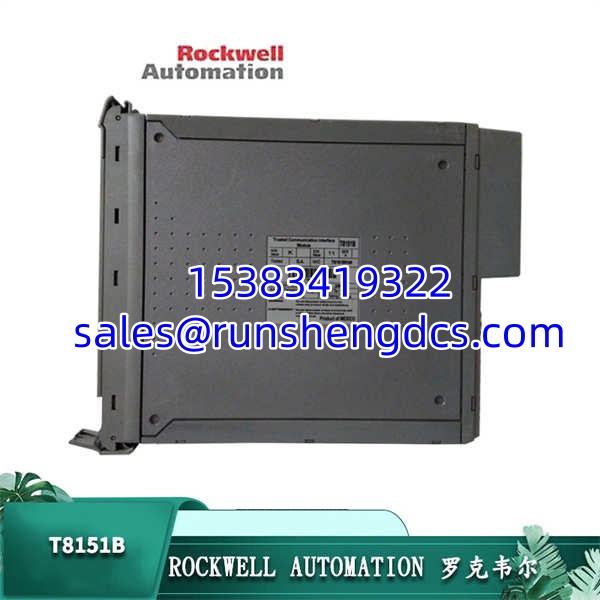
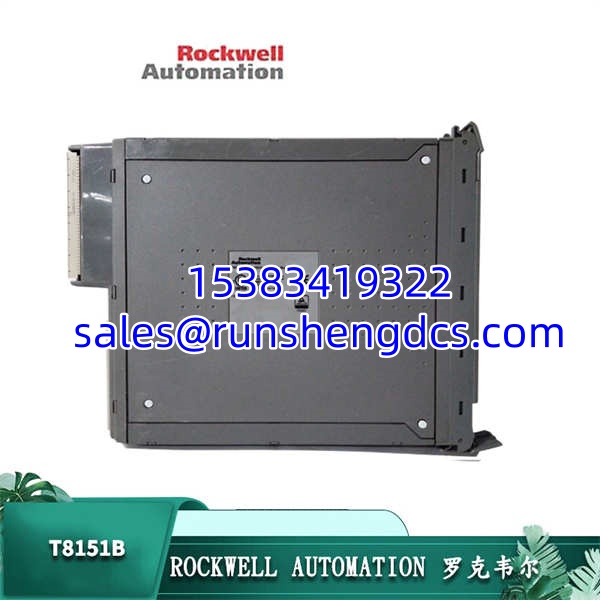
- Product Model: T8151B
- Manufacturer: ICS TRIPLEX
- Product Type: Communication Interface Module
- Network Interfaces: Dual Ethernet Ports
- Serial Interfaces: 4x Serial Ports
- Supported Protocols: Modbus (Master/Slave), SOE (Sequence of Events)
- System Compatibility: ICS TRIPLEX Trusted Controller (TMR)
- Redundancy Support: Integrates with Triple Modular Redundancy (TMR) architecture
- Diagnostics: Front-panel serial diagnostic port and status LEDs
- Installation Method: Rack-mounted backplane interface
Product Introduction
When a safety instrumented system (SIS) starts dropping packets, the last thing you want is your safety logic getting bogged down in network chatter. The ICS TRIPLEX T8151B was designed specifically to prevent this bottleneck. Acting as an intelligent Communication Interface (CI), this module intercepts and processes network traffic independently, keeping the primary TMR processors focused entirely on executing critical safety logic without communication overhead.
In high-risk environments like refineries and power plants, deterministic execution is non-negotiable. The T8151B handles the heavy lifting of protocol translation and data routing via its dual Ethernet and four serial ports. Bottom line — it keeps your SIS responsive and compliant. If your Trusted ICS rack is showing comm timeouts, swapping in a verified T8151B is usually the fastest path to restoring network stability without touching the safety logic.
QA/QC Transparency SOP
Safety system components require zero tolerance for failure. Every ICS TRIPLEX T8151B undergoes a rigorous validation protocol:
- Intake & Origin Verification: We inspect the PCB for physical damage, verify the T8151B designation, and check for signs of thermal stress or capacitor leakage.
- Live Functional Testing: The module is installed in a Trusted ICS test rack. We verify dual Ethernet connectivity and serial port functionality under load.
- Protocol Validation: We test Modbus Master/Slave communication and verify SOE timestamp accuracy to ensure deterministic performance.
- Diagnostic Verification: Front-panel LEDs and the serial diagnostic port are tested to confirm fault reporting works correctly.
- Final QC & Anti-Static Packaging: The module is cleaned, placed in an ESD-safe bag, and sealed with a tamper-evident label to prevent transit damage.
Field Engineer Gotchas
- TMR Synchronization: The must be configured identically across all three redundant processors. A mismatched firmware revision or configuration parameter will cause the TMR voter to flag a fault. Always verify all three CIs match before powering up.
- Modbus Address Conflicts: When configuring Modbus Slave addresses, ensure no two modules on the same network segment share an address. I’ve seen entire safety networks go offline because a tech copied a config file without updating the slave ID.
- Serial Port Wiring: The four serial ports support multiple protocols. Verify your wiring matches the configured protocol (RS-232 vs RS-485). Wiring an RS-485 device to an RS-232 port will damage the transceiver.
- Diagnostic Port Access: The front-panel serial diagnostic port is your best friend for troubleshooting. Use it to pull real-time comm statistics before replacing the module. I’ve saved countless hours by checking the diagnostic log and finding a simple cable fault instead of a dead board.

ICS TRIPLEX T8151B
Application Scenarios
- Refinery Safety Instrumented Systems: The connects the SIS to the DCS via Modbus TCP, allowing operators to monitor safety status without compromising the deterministic execution of the TMR processors.
- Power Generation Turbine Protection: In steam and gas turbine control, this module handles high-speed SOE recording, capturing millisecond-precise event timestamps during trip conditions for post-event analysis.
- Oil & Gas Pipeline Monitoring: The dual Ethernet ports allow redundant network connections to remote RTUs, ensuring continuous communication even if a primary network link fails.
Real-World Case Study: A Gulf Coast refinery experienced intermittent SIS communication dropouts that were causing nuisance alarms. The maintenance team replaced the DCS interface card and re-terminated all network cables with no success. During a weekend outage, an engineer used the ‘s front-panel diagnostic port to pull the comm log. The log showed a pattern of CRC errors correlating with a nearby VFD starting up. The root cause was EMI coupling into the unshielded Ethernet cable. Replacing the cable with shielded, grounded Ethernet restored stable communication instantly. Total downtime avoided: ~16 hours.
FAQ
No. While the Trusted ICS system supports hot-swapping of I/O modules, communication interface modules should be replaced during a planned maintenance window. Pulling a CI live can cause a temporary loss of network visibility and may trigger a TMR fault if the voter detects a communication timeout.
Does this module support OPC?
The natively supports Modbus TCP/IP. For OPC connectivity, you will need an OPC server/gateway on the network to translate Modbus to OPC. The module itself does not have native OPC server functionality.
Check the front-panel status LEDs. A solid green indicates normal operation. Flashing or red LEDs indicate a fault. Use the front-panel diagnostic port with a terminal emulator to pull detailed error codes. Common failures include Ethernet port degradation or serial transceiver damage.
Generally, yes. The is backward compatible with most Trusted ICS firmware versions. However, always verify the firmware revision matrix with the OEM documentation before upgrading. A mismatch can cause the TMR voter to reject the module.
We usually have these in stock and can ship same-day. If out of stock, refurbished units typically take 2-3 weeks to source and test. Always verify current inventory before scheduling your outage.
Can I use this module for non-safety communications?
Technically, yes, but it’s not recommended. The is designed for safety-critical communication. Using it for non-safety traffic can introduce unnecessary load and potential security risks. Reserve this module for SIS-to-DCS or SIS-to-HMI communications only.