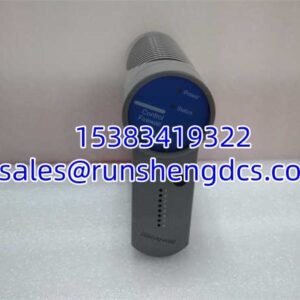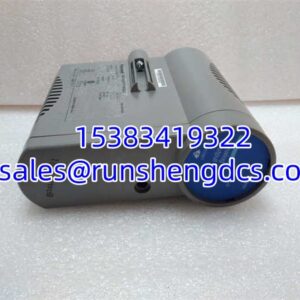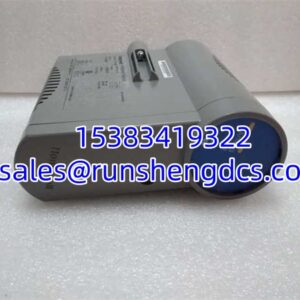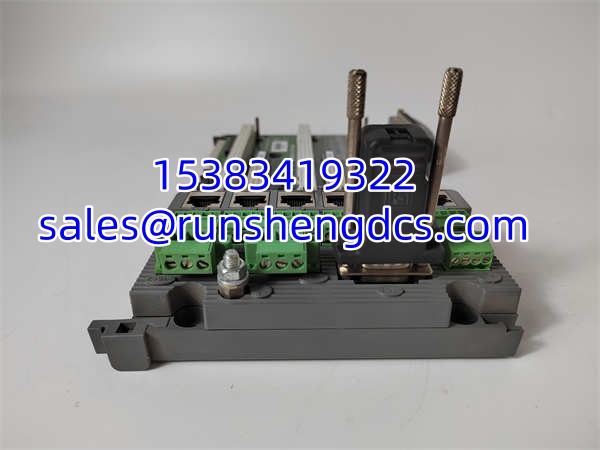

Description
Key Technical Specifications
| Specification | Detail |
|---|---|
| Part Number | 9100 / T9100 / T9100@F2 |
| Product Type | Triple Modular Redundant (TMR) Controller / Processor Module |
| System Platform | ICS Triplex TMR Safety Control System |
| Redundancy Architecture | Triple Modular Redundancy (TMR) — 3 independent processors + 3 independent memory modules + 2 independent buses |
| Safety Certification | SIL 4 (IEC 61508) — highest safety integrity level |
| Fault Tolerance | Hardware-Implemented Fault Tolerant (HIFT) architecture; 3-2-0 fault-tolerant operation |
| Fault Switching Time | ≤1 millisecond |
| Processor | Dual-core ARM Cortex-M3 (variant-dependent); legacy variants used 80486DX4 @ 96 MHz |
| Processor Clock Speed | 96–100 MHz (variant-dependent) |
| Memory | 512 KB max (legacy); 128–256 MB recommended (newer variants) |
| NV-RAM | 256 KB (legacy variant) |
| Boolean Execution Speed | 0.4 microseconds per boolean function (legacy variant) |
| Discrete I/O Capacity | Up to 2K points (any combination) |
| Analog I/O Capacity | Up to 8K points |
| Communication Interfaces | RS-232 (×1), RS-485 (×2), Ethernet; supports Modbus TCP/IP, Modbus RTU, Ethernet/IP, PROFINET, DeviceNet (variant-dependent) |
| Power Supply | 24V DC (some legacy variants draw 5V DC @ 3.1A from backplane) |
| Power Consumption | 25–50W (variant-dependent) |
| Operating Temperature | -40°C to +70°C (some variants rated to +85°C) |
| Storage Temperature | -40°C to +85°C |
| Dimensions | 100 × 120 × 30 mm (module); 300 × 200 × 100 mm (with housing, variant-dependent) |
| Weight | ~5 kg (with housing); ~0.23 kg (module only, variant-dependent) |
| Self-Diagnostics | Built-in self-test and fault diagnosis; automatic fault detection, isolation, and correction |
| Programming | Proprietary ICS Triplex programming software (IEC 61131-3 compatible) |
| HS Code | 8537.10 (Programmable controllers) |
| Status | Legacy/discontinued — available as surplus or refurbished |
Product Introduction
You’re standing in the control room of an offshore gas compression platform in the North Sea. The compressor anti-surge control system is the single most critical safety function on the platform — if a compressor surges, it can destroy a $2 million machine in seconds and potentially trigger a catastrophic gas release. The existing controller is an ICS TRIPLEX 9100 TMR module, and the maintenance team has been watching its diagnostic LEDs closely for weeks. The 9100 isn’t just another PLC — it’s a Triple Modular Redundant (TMR) safety controller certified to SIL 4, the highest safety integrity level under IEC 61508. Three independent processors inside the module execute the exact same control logic simultaneously, comparing results on every scan. If one processor disagrees with the other two, it’s automatically voted out — and the system keeps running without a bump, without a trip, without the operators even noticing. That’s Hardware-Implemented Fault Tolerance (HIFT), and it’s what separates a safety controller from a standard PLC.
Let’s clarify what the 9100 is and what it isn’t, because there’s significant confusion in the market. The 9100 is a TMR processor/controller module — it’s the brain of an ICS Triplex safety system, executing control logic and making safety-critical decisions. It is NOT a standard single-processor PLC. It is NOT an I/O module (though it connects to I/O modules in the same rack). It is NOT a DCS controller in the traditional sense — it’s a dedicated safety instrumented system (SIS) controller. Some online listings incorrectly describe it as a “dual processor module” — this is misleading. The TMR architecture uses THREE independent processors, not two. The “dual processor” description likely refers to a different variant or is simply incorrect. The T9100@F2 suffix indicates a specific hardware revision or firmware variant — always verify the exact suffix when ordering a replacement.
The TMR architecture is the core of the 9100’s value proposition. In a standard redundant (dual) system, you have two processors — if one fails, the other takes over. But there’s a vulnerability: what if the failure is undetected, and the “good” processor is actually producing wrong results? In a TMR system, three processors run in lockstep, and a majority-vote circuit compares their outputs on every scan. If Processor A says “valve closed” and Processors B and C say “valve open,” the vote is 2-to-1, Processor A is flagged as faulty, and the system continues with B and C. If a second processor fails, the system can still operate with the single remaining good processor (3-2-0 operation). This is fundamentally different from hot-standby redundancy — it’s continuous, online fault detection and correction without any switchover delay. The ≤1ms fault switching time means that even in the worst-case scenario of a processor failure, the control output is maintained within 1 millisecond — fast enough that no process upset occurs.
The SIL 4 certification is not a marketing claim — it’s a rigorously audited safety integrity level under IEC 61508. SIL 4 requires a probability of dangerous failure on demand (PFD) of less than 10⁻⁵ to 10⁻⁴ — meaning the safety function must work correctly at least 99.999% of the time when called upon. Achieving SIL 4 requires not just redundant hardware, but also rigorous software development practices, comprehensive diagnostics, and proven-in-use field data. The 9100’s HIFT architecture, combined with its continuous self-diagnostics and automatic fault isolation, is what enables this certification. For industries like oil & gas, chemical processing, and power generation, SIL 4 certification is often a regulatory requirement for safety-critical functions like emergency shutdown (ESD), fire & gas (F&G) detection, and compressor anti-surge control.
The communication capabilities of the 9100 are worth noting. Unlike some safety controllers that are isolated from the rest of the plant network, the 9100 supports multiple communication protocols — Modbus TCP/IP, Modbus RTU, Ethernet/IP, PROFINET, and DeviceNet (variant-dependent) — allowing it to exchange data with the plant DCS, HMIs, and historians. This means operators can monitor the safety system’s status in real-time from the control room, and the DCS can receive process variables from the safety controller for trending and alarming. The RS-232 and RS-485 serial ports provide legacy connectivity for older devices or for direct laptop connection during commissioning and troubleshooting.
Power requirements vary by variant. Some 9100 modules draw 24V DC directly (25–50W consumption), while legacy variants draw 5V DC @ 3.1A from the rack backplane. Always verify the power requirements of your specific variant before installation — connecting a 5V module to a 24V supply will destroy it. The operating temperature range of -40°C to +70°C (some variants to +85°C) means the 9100 can handle unheated offshore platforms in winter and desert-mounted compressor stations in summer — environments where commercial electronics would fail within months.
Here’s the practical reality: ICS Triplex was acquired by Rockwell Automation, and the ICS Triplex product line was later transferred to Schneider Electric. The 9100 is a legacy product — it’s no longer in active production. But thousands of ICS Triplex TMR systems are still running worldwide in oil refineries, gas pipelines, chemical plants, power stations, and water treatment facilities. For maintenance teams managing these brownfield safety systems, the 9100 is a critical spare. If the processor module fails and there’s no replacement, the entire safety function is lost — and in many jurisdictions, operating a process plant without a functional SIS is a regulatory violation that requires an immediate shutdown. Third-party distributors in Xiamen, Shenzhen, and Guangzhou stock new surplus and refurbished 9100 modules, typically with 12-month warranties and full functional testing.
One thing to watch: the 9100 is part of a larger ICS Triplex TMR system that includes I/O modules, communication modules, and power supplies. The processor module alone is not a complete system — you need compatible I/O modules (digital input, digital output, analog input, analog output) and a compatible rack/backplane. When replacing a failed 9100, verify that the replacement variant (T9100, T9100@F2, etc.) is compatible with your existing I/O modules and system firmware. Also, the 9100 requires proprietary ICS Triplex programming software for configuration and logic development — this software may be difficult to source for legacy systems. Having a backup of your existing control logic and configuration is essential before attempting any module replacement.
Troubleshooting Quick Reference
| Fault | Likely Cause | Probability | Quick Check | Fix |
|---|---|---|---|---|
| Module not powering up (no LEDs lit) | Power supply failure, loose power connection, or incorrect voltage | ~25% | Verify power supply voltage at module terminals; check power cable connections | Confirm correct voltage (24V DC or 5V DC depending on variant); check power supply output; verify power cable is securely connected; replace power supply if faulty |
| Fault LED illuminated (red) | Processor disagreement, memory fault, or internal hardware failure | ~20% | Check diagnostic software for fault codes; verify all three processors are running | Connect to programming software and read diagnostic log; if single processor fault: system may continue operating in degraded mode — schedule replacement at next outage; if multiple processor faults: immediate replacement required |
| Communication failure (module not responding to HMI/DCS) | Network cable fault, IP address conflict, or communication module failure | ~15% | Ping module IP address from engineering workstation; check Ethernet cable connections | Verify Ethernet cable is connected and undamaged; check IP address configuration; verify communication settings (Modbus address, baud rate for serial); replace communication module if faulty |
| I/O readings erratic or incorrect | I/O module fault, field wiring issue, or signal interference | ~15% | Compare readings across redundant I/O channels; measure field signal at I/O terminal block | Check field wiring connections; verify signal cable shielding and grounding; replace faulty I/O module; check for EMI sources near signal cables |
| Module overheating | Excessive ambient temperature, blocked ventilation, or internal component failure | ~10% | Check ambient temperature at rack location; feel module case temperature | Ensure ambient temperature is within -40°C to +70°C spec; verify rack ventilation fans are operating; clean air filters; relocate rack if in direct sunlight or near heat sources; if module is hot despite normal ambient: internal fault — replace module |
| Programming software cannot connect to module | Wrong COM port, baud rate mismatch, or cable fault | ~5% | Verify COM port settings in programming software; test cable with known-good device | Check RS-232/USB cable connections; verify COM port and baud rate settings match module configuration; try different cable; restart programming software |
| Intermittent fault LED flickering | Loose module seating, backplane connection issue, or power fluctuation | ~5% | Verify module is fully seated in rack; check backplane connectors | Reseat module firmly; clean backplane connectors with contact cleaner; verify rack power supply is stable; replace backplane if connectors are damaged |
| System trip without apparent cause | Safety logic executed correctly (process variable exceeded trip setpoint) or spurious trip due to I/O fault | ~5% | Check trip log in programming software; review process trends around trip time | Review trip cause in diagnostic log; if legitimate process trip: investigate root cause of process upset; if spurious trip: check I/O modules and field instruments for faults |
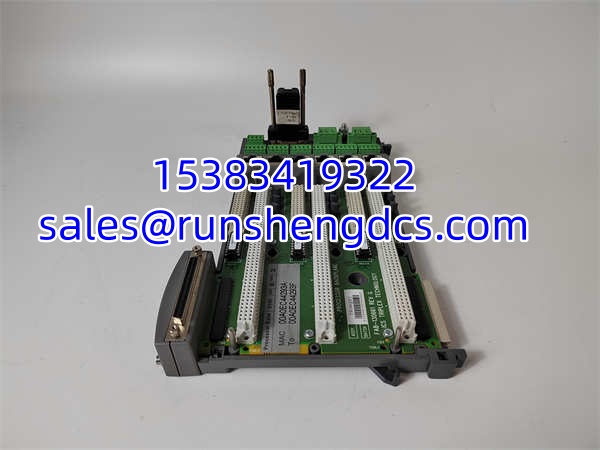
ICS TRIPLEX 9100
Application Scenarios & Pain Points
Offshore Gas Compression — Anti-Surge Control. An offshore gas platform in the Gulf of Mexico uses an ICS Triplex TMR system with 9100 processor modules to control anti-surge protection on three gas compressors. Each compressor has a dedicated 9100 module executing anti-surge logic with a 50ms scan time. The TMR architecture is critical here — a single processor failure cannot cause a spurious compressor trip (which would cost $200,000/hour in lost production) or fail to trip when needed (which could destroy the compressor). When one 9100 module developed an intermittent processor disagreement fault after 18 years of service, the TMR architecture kept the system running on the remaining two processors while the maintenance team sourced a refurbished replacement from a Xiamen distributor. The module was replaced during a scheduled compressor outage, and the system returned to full TMR operation. The lesson: the TMR architecture bought them time to plan a safe replacement rather than forcing an emergency shutdown.
Chemical Reactor — Emergency Shutdown System (ESD). A chemical processing plant in Texas uses an ICS Triplex TMR system with 9100 modules as the reactor ESD system. The 9100 monitors reactor temperature, pressure, and level, and executes emergency shutdown logic if any parameter exceeds safe limits. The SIL 4 certification is a regulatory requirement under OSHA PSM (Process Safety Management). When the plant underwent a SIL verification study, the 9100’s proven-in-use field data and comprehensive diagnostics documentation made the SIL 4 recertification straightforward. The plant’s maintenance team keeps a refurbished 9100 module on the shelf as a critical spare — the cost of a spare module (~5,000–8,000) is negligible compared to the cost of an unplanned reactor shutdown (~$1 million/day).
Power Plant — Turbine Protection System. A combined-cycle power plant uses an ICS Triplex TMR system with 9100 modules for steam turbine overspeed protection. The 9100 monitors turbine speed from three independent speed sensors, and if the speed exceeds 110% of rated, it trips the turbine stop valves within 50ms. The ≤1ms fault switching time of the TMR architecture ensures that a processor failure never delays the trip decision. When the plant’s original 9100 module failed after 20 years of service, the maintenance team had to source a refurbished unit from a Shenzhen distributor. The replacement module was configured with the existing logic backup and commissioned within 4 hours. The plant’s insurance provider specifically requires TMR-certified safety controllers for turbine protection — a standard PLC would not satisfy the insurance requirements.