
Description
Key Technical Specifications
| Parameter | Typical Value / Note |
|---|---|
| Manufacturer | Honeywell |
| Part number | 51306673-100 |
| Module type | EPNI — Enhanced Process Network Interface |
| Function | DCS network communication interface |
| Host system | Honeywell DCS platform; confirm against site documentation |
| Network interface | Ethernet/process network, depending on build |
| Protocol support | System-dependent; may include Honeywell process-network protocols and standard Ethernet services |
| Mounting | DCS cabinet / system rack slot |
| Redundancy | May support redundant network paths depending on system configuration |
| Condition | Typically surplus / used / as-tested unless stated otherwise |
Product Introduction
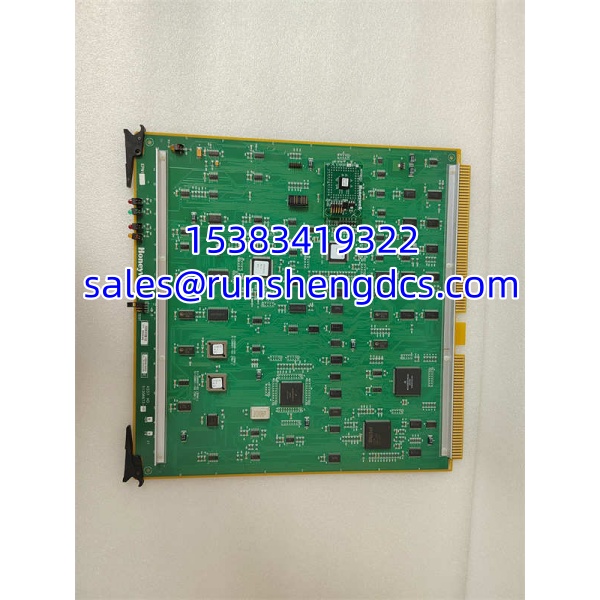
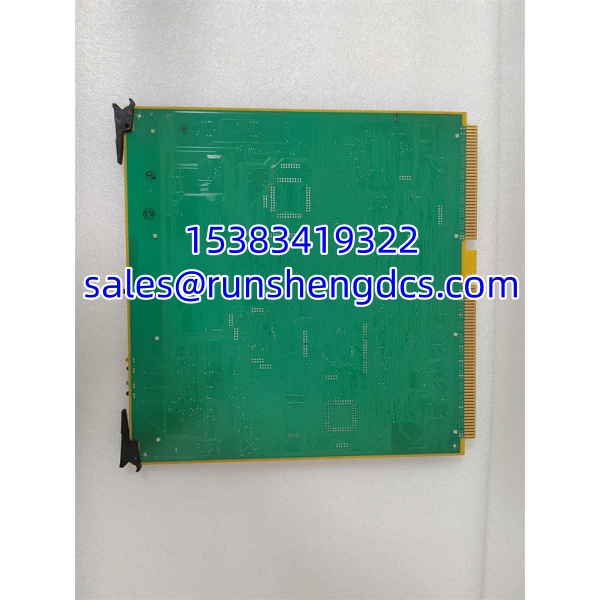
The Honeywell 51306673-100 EPNI is an Enhanced Process Network Interface module used in Honeywell distributed control systems. Its main job is to carry process data, alarms, operator commands, and system communication between controllers, stations, and the plant network. In a live DCS, this kind of module is rarely a standalone spare; it belongs to a specific cabinet, slot, and network segment.
EPNI modules are often listed under Honeywell DCS communication cards or network interface modules. However, the exact host system, firmware level, and network role must be verified before installation. A module that physically fits the rack may still be incompatible if the firmware, network address, or system option does not match the existing configuration.
QA/QC Transparency SOP
- Label Verification — Photograph the front label, rear label, part number 51306673-100, revision, serial number, and any firmware or option codes.
- Visual Inspection — Check for damaged connectors, bent pins, corrosion, overheating marks, and missing retainers.
- Power-Up Test — Install in a compatible Honeywell DCS rack or test fixture. Verify power LEDs, fault LEDs, and boot behavior.
- Network Communication Check — Confirm Ethernet/process-network link activity, IP or node recognition, and communication with the host controller or station if a test environment is available.
- Configuration Validation — Verify that the module is recognized by the system and does not carry locked or corrupted settings.
- Final Packaging — Pack in ESD-safe materials with desiccant. Include label photos, test summary, and revision details.
Field Engineer Gotchas
- EPNI is not a generic Ethernet card — It is a Honeywell DCS network interface. Do not treat it like a standard PC NIC or PLC Ethernet module.
- Platform dependency — The same part number may appear in different Honeywell DCS families. Confirm the exact host system before ordering.
- Firmware mismatch — A replacement EPNI with older firmware may fail to join the network or reject the system configuration.
- Network address conflict — DCS network nodes usually require specific addresses. Installing a module with an existing address can cause communication faults.
- Redundancy impact — If the system uses redundant EPNI paths, replacing only one side without verification may leave the network in a degraded state.
HONEYWELL 51306673-100 EPNI
Application Scenarios
- Honeywell DCS communication maintenance — Replace a failed EPNI module after confirming part number, revision, and network role.
- DCS network troubleshooting — Use as a verified spare when Ethernet/process-network communication is lost.
- System migration or expansion – Support additional network interfaces during DCS upgrades.
- Spare pool management — Keep tested EPNI modules for legacy Honeywell DCS installations with long lead times.
FAQ
What is HONEYWELL 51306673-100 EPNI?
It is a Honeywell Enhanced Process Network Interface module used to provide network communication within Honeywell DCS systems.
Is it a PLC module?
No. It is a DCS network interface module, not a standard PLC communication card.
Can I replace it with any EPNI module?
Not automatically. The part number, revision, firmware, and system configuration must match the original module.
Does it support Ethernet?
EPNI modules typically provide Ethernet/process-network connectivity, but the exact protocol support depends on the DCS platform.
Is this new or surplus?
Listings for 51306673-100 are commonly surplus or used. Request nameplate photos and test records before purchase.
How do I confirm compatibility?
Check the host DCS platform, cabinet type, slot position, firmware version, and network configuration against the removed module.