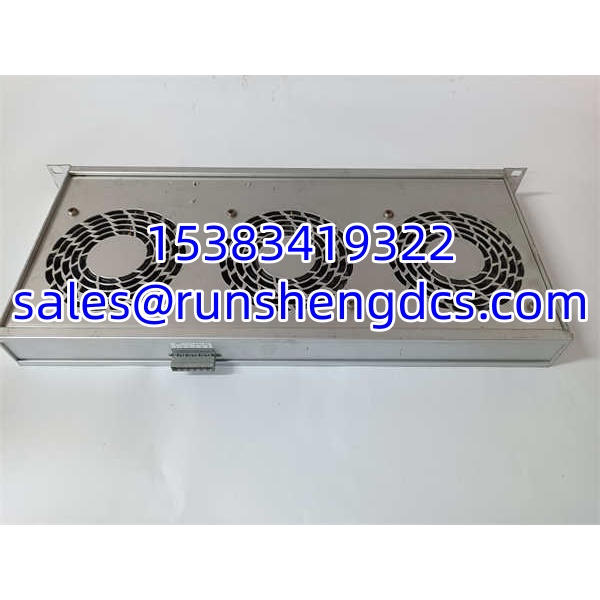

Description
Key Technical Specifications
| Parameter | Value |
|---|---|
| Product Type | Safety Logic Controller Module |
| Series | HIMax (HIMA) |
| Part Number | K9203 / 996920302 |
| Architecture | Triple-Modular Redundant (TMR) |
| Safety Certification | IEC 61508 SIL 3 |
| Application Domain | SIS, ESD, BMS, F&G |
| Redundancy Mode | 2oo3 voting (triple channel) |
| Programming Tool | HIMA toolset (HIMax/H40q ecosystem) |
| Communication | System bus / safety network (verify per rack config) |
| Operating Temp | Verify with OEM datasheet |
| Power Input | Verify with OEM datasheet (typically 24 VDC) |
| Diagnostic Coverage | High (verify exact % with HIMA manual) |
Product Introduction
A safety controller failure in an ESD or BMS loop is not a “swap and pray” situation — it is a plant integrity event. The HIMA K9203 (996920302) sits at the heart of a HIMax safety system, executing voted safety logic across three independent processor channels. If one channel diverges, the TMR architecture masks the fault without tripping the process. That is the difference between a nuisance alarm and an unplanned shutdown.
This module is deployed where IEC 61508 SIL 3 compliance is non-negotiable: refinery ESD networks, burner management systems, fire and gas detection panels, and high-integrity process interlocks. The triple-channel design means diagnostics run continuously in the background, catching latent faults before they become dangerous failures. For procurement teams, the key diligence item is firmware and application revision matching — a K9203 with mismatched safety logic will not simply “work” when dropped into a live HIMax rack.
QA/QC Transparency SOP
- Intake & Origin Verification — Confirm HIMA branding, K9203 model designation, 996920302 assembly number, serial number, and manufacturing date. Photograph all labels. Reject units with corrosion, burnt traces, or non-HIMA labeling.
- Live Functional Testing — Install in a compatible HIMax test rack with proper backplane power. Verify channel synchronization, TMR voting status, and system bus communication. Confirm the module reaches a stable “run” state without channel disagreement faults.
- Electrical Parameter Tests — Measure supply current draw per channel at nominal voltage. Check backplane connector continuity and insulation resistance. Flag any channel with abnormal current consumption or intermittent backplane contact.
- Firmware/Config Verification — Read firmware revision, application version, and diagnostic history via the HIMA engineering tool. Archive the readout. Do not reprogram surplus safety controllers without explicit customer authorization and a validated backup.
- Final QC & Anti-Static Packaging — Seal in ESD bags with desiccant. Include test summary, firmware revision, channel status log, and label photos. No generic “tested OK” sticker — every unit ships with logged data.
Field Engineer Gotchas
- Firmware/Application Revision Mismatch — A K9203 with a different safety application or firmware revision will either refuse to sync with the rack or generate persistent channel disagreement faults. Fix: Read the revision from the existing module before removal. Warning: Never flash a safety controller in a live SIS rack without a validated backup and management-of-change approval.
- TMR Channel Sync During Insertion — The three internal channels must synchronize after power-up. A module with a marginal channel may appear to boot but never reach full TMR consensus. Fix: Monitor channel status LEDs and diagnostic readout for at least 5 minutes after insertion. War story: A refinery tech swapped a K9203 during a turnaround; the rack showed “run” but one channel was in disagreement. They caught it before restart — but only because they waited for the full diagnostic cycle.
- Backplane Connector Seating — HIMax modules use dense backplane connectors. A partially seated module can cause intermittent channel faults that look like processor failures. Fix: Remove power, reseat firmly, and verify mechanical locking. Blunt advice: If you force it, you are bending pins.
- Safety Logic Backup Discipline — Unlike a standard PLC, you cannot simply “download” new logic to a safety controller without proper authorization and verification. Fix: Always export the current application and configuration before any module swap. Warning: A without a known-good application backup is a paperweight.
- Counterfeit/Relabeled Risk — The surplus market for HIMA safety modules attracts relabeled or non-OEM units. Fix: Verify HIMA holographic labels, serial number format, and backplane connector quality. War story: A procurement team bought three “new” modules from an unauthorized reseller; two had non-HIMA PCBs and failed within days of installation.
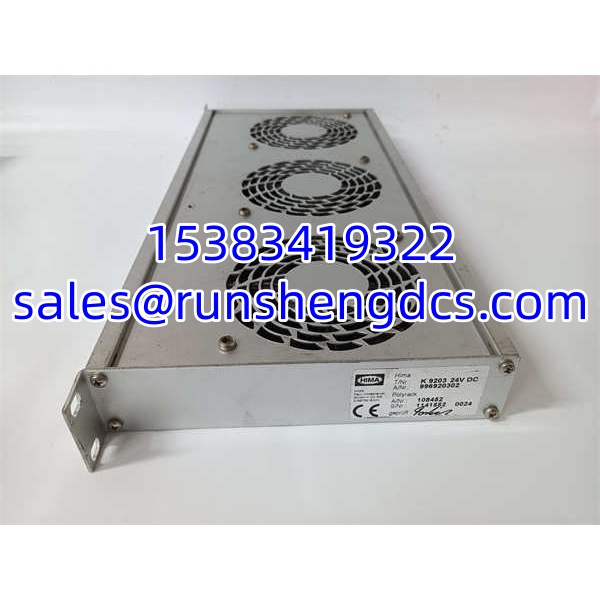
HIMA K9203 996920302
Application Scenarios
- Refinery ESD system module replacement — A failed in a crude unit emergency shutdown rack must be replaced during a planned turnaround while maintaining SIL 3 integrity and TMR voting.
- BMS controller upgrade in a fired heater — The HIMax rack requires a verified with matching flame supervision logic and firmware revision to maintain burner safety interlocks.
- Fire and gas detection logic solver — Multiple F&G zones feed into the HIMax rack; the executes voted logic for deluge activation and alarm annunciation.
- Pipeline compressor station SIS — The handles overpressure and overspeed protection logic with TMR fault masking to avoid spurious trips on remote unmanned stations.
FAQ
A: No. The (996920302) and K9203A (996920360) are different part numbers within the HIMax family. Do not substitute one for the other without HIMA engineering approval.
Q: What safety certification does this module carry?
A: IEC 61508 SIL 3. Verify the exact certification documentation with the HIMA datasheet for your specific application.
A: HIMax modules are designed for modular replacement, but safety controller swaps require strict adherence to HIMA procedures and site safety protocols. Never hot-swap without confirming the rack configuration supports it.
Q: What programming tool is used?
A: HIMA’s HIMax engineering toolset. The exact software version depends on the firmware revision and application.
A: Check HIMA holographic labels, serial number format, PCB quality, and backplane connector. Request a firmware readout and diagnostic history before purchase.
Q: Does this module support remote diagnostics?
A: HIMax systems provide diagnostic data through the system bus to the engineering station or HMI. The exact diagnostic capability depends on the rack configuration and software version.
Q: What happens if one TMR channel fails?
A: The remaining two channels continue to execute voted safety logic. The system degrades gracefully but should be repaired promptly to restore full TMR redundancy.