Description
Key Technical Specifications
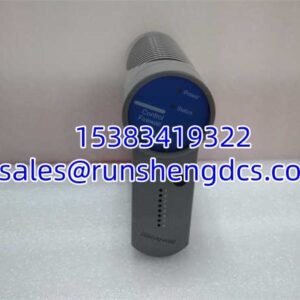
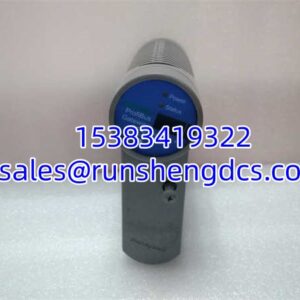
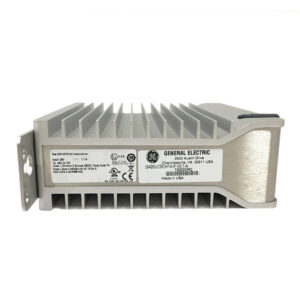
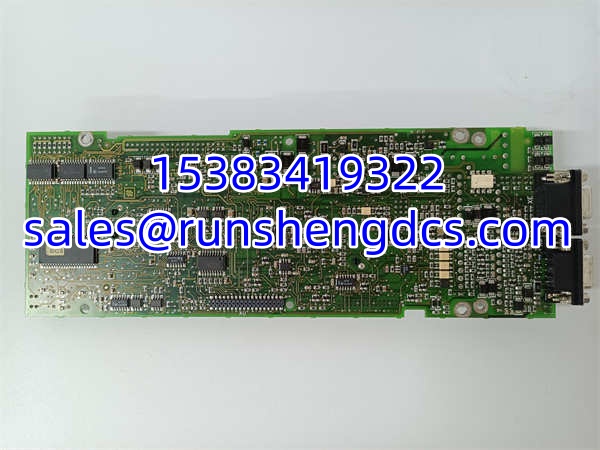
- Product Type: Drive Control Power Supply Board
- Platform: GE AV-300i Variable Speed Drive System
- Manufacturer: GE / GE Fanuc (General Electric)
- Driver Architecture: Discrete IGBT driver with optocoupler isolation (TLP-series, HCPL-series type devices)
- Protection Functions: Undervoltage protection, overtemperature protection, overcurrent/short-circuit protection
- Alarm Output: Single undifferentiated alarm signal (cannot distinguish overtemp vs. overcurrent vs. undervoltage)
- Switching Characteristics: High switching speed; snubber circuit required to suppress L·(di/dt) turn-off surge voltage
- Overload Rating: IGBT rated current defined at 80°C ambient (vs. 25°C for IPM modules)
- Drive Resistor: Adjustable gate drive resistance for optimizing switching time, EMI, and efficiency
- Operating Temperature: -10°C to +50°C (per available listings; verify against your specific revision)
- Input Voltage: 120V/240V AC (per available listings)
- Output Voltage: 24V DC control supply
- Communication Interface: RS485 (per available listings)
GE RV33-1
Product Introduction
Your AV-300i drive trips on overcurrent at 2 AM. The motor stops. The line stops. You pull the drive cover and stare at the RV33-1 board — a compact slab of optocouplers, gate drivers, and protection circuitry sitting between the control logic and the IGBT power stage. This board does two jobs: it supplies regulated control power to the drive’s internal logic, and it fires the IGBT gates with precisely timed pulses to produce the inverter output that controls motor speed and torque. When this board dies, the drive is dead.
The IGBT architecture gives it real flexibility — you can tune gate drive resistance to balance switching losses against EMI, and the 80°C current rating means it handles thermal stress better than IPM-based designs rated at 25°C. The trade-off is that protection thresholds are hardwired at the factory. No field adjustment. The single alarm output tells you something went wrong but not what. For a board that has been out of production for years, that lack of diagnostic granularity hurts more today than it did when it was new.
Troubleshooting Quick Reference
| Fault | Cause | Relevancy | Quick Check | Fix |
|---|---|---|---|---|
| Drive won’t start, board unresponsive | Board power input failure or connector seating issue | ~60% chance it’s power delivery | Measure DC voltage at board input terminals | Check upstream power supply output; reseat connectors |
| Overcurrent trip on startup | IGBT shorted, load-side fault, or driver circuit failure | ~55% if trip is immediate | Power down and measure IGBT collector-emitter resistance | If IGBT is shorted, replace both IGBT module and driver board — the driver likely took damage too |
| Overtemperature trip | Failed cooling fan, clogged heatsink, or drifted temp sensor circuit | ~50% in high-ambient installations | Check fan rotation; feel heatsink temperature; inspect for dust buildup | Clean heatsink; replace fan; if temps are normal but trip persists, the board’s temp detection circuit has drifted |
| Intermittent motor speed fluctuation | Aging optocoupler or drifted gate drive resistor | ~45% if fault is sporadic | Scope the IGBT gate drive waveform for glitches | Replace RV33-1 board; check gate drive resistor values |
| High turn-off voltage spikes | Degraded snubber capacitor or excessive stray inductance | ~40% if you see voltage ringing on scope | Inspect snubber film capacitors near IGBT module | Replace snubber capacitors; confirm they are mounted close to the IGBT |
| Alarm active but fault type unknown | Single alarm output design limitation | 100% — this is a design constraint, not a fault | Cross-reference with external current clamps and temp probes | Use external measurement tools to identify the specific fault condition |
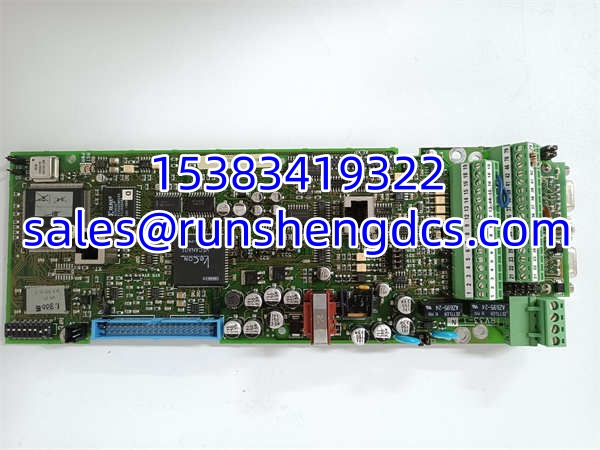
GE RV33-1
Application Scenarios & Pain Points
- Aging drive systems in manufacturing: AV-300i drives running 15+ years in factory environments. Electrolytic capacitors on the RV33-1 dry out. Optocouplers degrade. The board starts throwing intermittent faults that are nearly impossible to reproduce on a bench — and as a discontinued part, finding a matching revision on the surplus market can take weeks.
- IGBT连带 failure during short circuits: When an IGBT module shorts, the fault current can back-feed through the gate driver traces and destroy the optocouplers on the RV33-1. Bottom line — if you replace the IGBT without checking the driver board, the new IGBT will likely die too. Always test both.
- Fixed protection thresholds in special applications: Some processes need a lower overcurrent trip point than the factory default. The RV33-1 doesn’t offer field-adjustable thresholds. You’re stuck working around it in the drive software or adding external protection — neither of which is ideal.
- Real-world case: An engineer at a cement plant dealt with an AV-300i drive tripping on overcurrent every 6 to 8 hours. Replaced the IGBT module. Tripped again. Replaced the current sensor. Still tripping. Finally scoped the gate drive signals and found intermittent glitches on the IGBT firing pulses — the optocouplers on the RV33-1 had degraded from years of thermal cycling, causing occasional timing errors that produced transient overcurrent events. Swapping the driver board killed the problem. Total downtime before the fix: three shifts. A scope on day one would have found it in an hour.