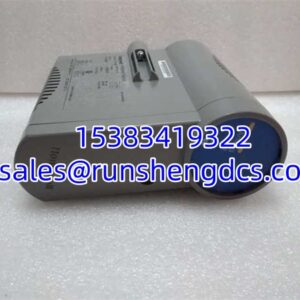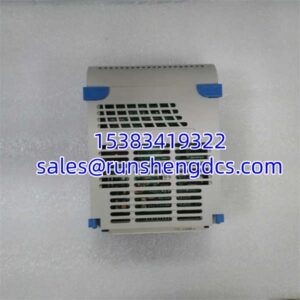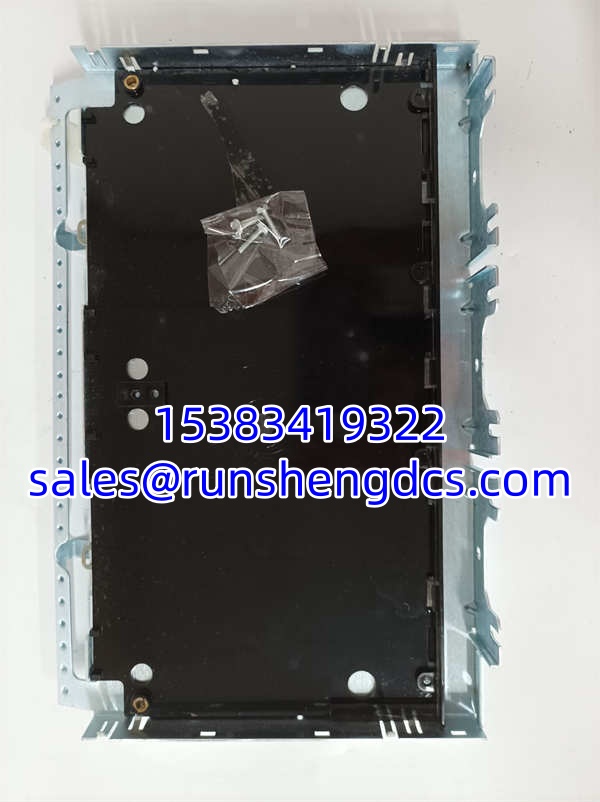

Description
Key Technical Specifications
- Manufacturer: GE Boards & Turbine Control
- Product Type: Discrete Input/Output Terminal Board
- System Series: Mark VI (Speedtronic)
- Input Channels: 24 Group-Isolated Contact Inputs
- Input Voltage: 125 VDC Nominal
- Output Channels: 12 Relays
- Protection Components: 49 Metal Oxide Varistors (MOV), Input Filters
- Connectors: TB1/TB2 (Side-by-Side), JE1, JW1, JW2
- Mounting: DIN Rail or Direct Metal Plate Bolt
- Hardware Config: No Jumpers or Configurable Hardware
Product Introduction
Turbine protection logic fails when I/O boards introduce noise or lose isolation. The GE IS230TDBTH6A eliminates this risk by providing 24 group-isolated discrete inputs specifically designed for 125 VDC control circuits. It acts as the physical interface between field contacts and the Mark VI processor, ensuring that a ground fault in one sensor loop doesn’t cascade through the entire control panel. This board is the workhorse for critical safety and status signals in steam and gas turbine applications.
Unlike older terminal boards that required jumper changes for different configurations, the GE IS230TDBTH6A comes pre-configured with no field-adjustable hardware. It includes 49 MOVs and dedicated input filters to suppress surge and high-frequency noise, protecting the downstream I/O core. With 12 relay outputs and a robust DIN rail mounting design, it handles both monitoring and control duties in a single, compact footprint. Bottom line: it’s a set-and-forget component that keeps your Mark VI system clean and responsive.
QA/QC Transparency SOP
We don’t trust “new old stock” without verification. Here is how we validate every GE IS230TDBTH6A:
- Intake & Origin Verification: We inspect the PCB for moisture damage, verify the revision matches the order, and check for counterfeit markings.
- Live Functional Testing: The board is mounted on a Mark VI test rack. We verify communication with the I/O core via the JE/JW connectors and confirm the processor recognizes the board type.
- Electrical Parameter Tests: Using a calibrated source, we inject 125 VDC into each of the 24 inputs to verify isolation and signal detection. We also energize all 12 relays to check for contact welding or coil failure.
- Protection Component Check: We verify the MOVs and input filters are intact and not shorted, ensuring surge protection is active.
- Final QC & Anti-Static Packaging: After passing, the GE IS230TDBTH6A is sealed in an ESD bag with desiccant and shipped with terminal block covers to prevent pin damage.
Field Engineer Gotchas
- No Jumpers, No Fixes: This board has zero configurable hardware. If you’re trying to find a jumper to change the input voltage or relay logic, stop. The GE IS230TDBTH6A is fixed-function. If it doesn’t match your application, you have the wrong board. Verify the full part number, including the suffix.
- MOV Failure After Surge: If you’re replacing this board after a lightning strike or major electrical fault, check the upstream protection first. The 49 MOVs on the GE IS230TDBTH6A are sacrificial. If they blew, the surge may have already damaged the I/O core. Always test the I/O core before installing a new terminal board.
- TB1/TB2 Wiring Confusion: The inputs and outputs are on two side-by-side terminal blocks (TB1 and TB2). Mixing these up during wiring is a common cause of “board not recognized” or “output stuck” errors. Use the Mark VI wiring diagram, not memory. Label every wire before disconnecting.
- Relay Coil Back-EMF: The 12 relay outputs can generate significant back-EMF when switching inductive loads. While the board has internal suppression, external flyback diodes are still recommended for large solenoids. Don’t assume the board’s internal protection is bulletproof. Protect your relays.
GE IS230TDBTH6A
Application Scenarios
- Gas Turbine Emergency Shutdown: Provides isolated contact inputs for vibration, over-speed, and flame-out signals, ensuring the Mark VI processor receives clean, noise-free trip commands.
- Steam Valve Control: Uses the 12 relay outputs to directly control solenoid valves for steam admission and extraction, with built-in surge suppression to prevent coil damage.
- Auxiliary System Monitoring: Tracks status of lube oil pumps, cooling fans, and heater elements across 24 isolated channels, preventing ground loops between different auxiliary panels.
FAQ
No. This is a Mark VI-specific terminal board. Mark V uses entirely different I/O architectures (like the TBQA/TBQC series). Do not attempt to install this in a Mark V rack.
Can I use this board for 24 VDC inputs?
No. The is designed for 125 VDC nominal inputs. Applying 24 VDC may not trigger the input threshold, and applying higher voltages will destroy the MOVs. Verify your field voltage matches the board spec.
Does this board support hot-swapping?
No. Mark VI discrete I/O boards do not support hot-swapping. Replacing the requires a controlled shutdown of the affected I/O core. Plan for a brief process interruption or use redundant I/O if available.
What happens if an MOV fails?
A failed MOV typically results in a shorted or open input channel. The Mark VI system will flag the channel as “Bad Value” or “Open Circuit.” Replace the board immediately. Do not attempt to replace individual MOVs in the field.
Are there any firmware updates for this board?
No. The is a purely hardware-based terminal board with no firmware. All logic and configuration reside in the Mark VI I/O core and processor. Focus your troubleshooting on the I/O core and wiring, not the board itself.
Can I use generic terminal blocks with this board?
No. The uses proprietary TB1/TB2 terminal blocks with specific pin spacing and locking mechanisms. Generic blocks will not fit and may damage the backplane connectors. Always use OEM terminal blocks.